






The Nigerian House of Representatives has directed the Nigerian Communications Commission (NCC) to mandate all internet service providers (ISPs) in the country to immediately block access to websites hosting contents that are obscene or contain pornography.
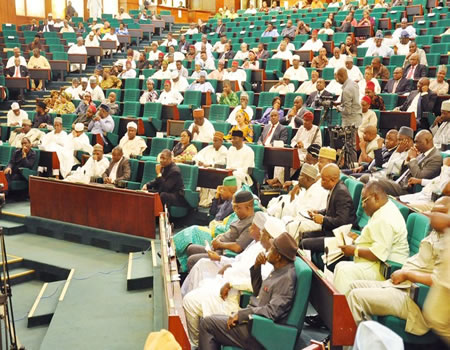
The resolution, passed during Tuesday’s plenary session follows a motion sponsored by Honourable Dalhatu Tafoki, a lawmaker from the All Progressives Congress (APC) representing Katsina State.
Tafoki, who represents the Faskari/Kankara/Sabua Federal Constituency, presented his argument with a strong emphasis on Nigeria’s cultural and religious identity.
“Cyber pornography is fast becoming a global problem, and no concrete steps have been taken to curb this phenomenon in Nigeria,” he stated while leading the debate.
He described Nigeria as a “highly religious country” where major faiths, including Islam and Christianity, prohibit nudity and obscenity, underscoring the need for immediate action to protect societal values.
Tafoki’s motion highlighted the growing global concern over the accessibility of explicit material online and Nigeria’s perceived lag in addressing the issue. He pointed to examples of countries across Asia, Africa, and the Middle East that have already implemented stringent laws to ban pornography, suggesting that Nigeria should follow suit.
“Many nations have recognised the dangers of unrestricted access to such content and have acted decisively. Nigeria cannot afford to remain behind,” he argued.
The lawmaker also referenced warnings from psychologists and sociologists about the detrimental effects of pornography on individuals and society, including its potential to foster adultery, prostitution, and addiction.
“Renowned experts worldwide have issued stern warnings about the psychological, sociological, and mental consequences of consuming pornographic content,” Tafoki added, lending academic weight to his case.
The motion resonated with lawmakers, who voted overwhelmingly during a voice vote presided over by Honourable Tajudeen Abbas, the Speaker of the House of Representatives. Following the vote, the House formally resolved to direct the NCC to enforce the ban and ensure compliance among telecommunication providers.

The resolution also empowers the NCC to apply penalties under the Nigerian Communications Act and the National Information Technology Development Act against any ISPs that fail to restrict access to pornographic websites. This move signals a strong intent to regulate digital content in line with Nigeria’s moral and cultural framework.
The decision aligns with broader concerns about the impact of unregulated online content on Nigerian youth. Tafoki emphasised that young Nigerians have increasingly become addicted to explicit material, which he argued could hinder their psychological and social development.
“Unrestricted access to such content is eroding the societal and moral values of our citizens,” he said, echoing sentiments shared by many lawmakers who supported the motion.
The House’s action reflects a growing push by Nigerian authorities to address what they perceive as harmful digital influences, particularly in a country where internet penetration continues to rise.
Pornography consumption in Nigeria
Nigeria consistently ranks among the top African countries for visits to adult websites, with popular platforms such as Pornhub, Xvideos, and XNXX drawing significant traffic monthly. According to data from SimilarWeb and Alexa rankings up to early 2024, Pornhub alone recorded millions of visits from Nigeria monthly, making it one of the most accessed adult sites in the country. Xvideos and Xnxx followed closely, with user-friendly interfaces and mobile accessibility contributing to their widespread use.
A 2022 report by Statista highlighted that Nigeria was among the top 20 countries globally for adult website traffic, with an estimated 20-30% of internet users in the country accessing such content at least occasionally.
Given Nigeria’s population of over 200 million and an internet penetration rate exceeding 50% (approximately 100 million users as of 2023), this translates to roughly 20-30 million Nigerians potentially engaging with pornographic material. The proliferation of affordable smartphones and data plans has further fuelled this trend, particularly among younger demographics in urban centres like Lagos, Abuja, and Port Harcourt.

The House’s directive raises questions about implementation and enforcement. The NCC, tasked with overseeing telecommunications and internet regulation, will need to collaborate with ISPs like MTN, Airtel, and Glo to filter and block offending websites. However, experts note that such bans can be circumvented through virtual private networks (VPNs), which are widely available and affordable in Nigeria.
Previous attempts to restrict online content, such as the suspension of Twitter now known as X in 2021, demonstrated both the government’s resolve and the technical challenges of controlling internet access.
Critics of the motion argue that it may infringe on personal freedoms and fail to address underlying social issues, while supporters assert that it is a necessary step to safeguard public morality. The NCC has yet to issue a formal statement on the timeline for compliance, but the imposition of penalties suggests a rigorous approach to enforcement.
As Nigeria proceeds to tackle cyber pornography, the effectiveness of this resolution will depend on technological execution, public cooperation, and the government’s ability to balance regulation with individual rights.
