



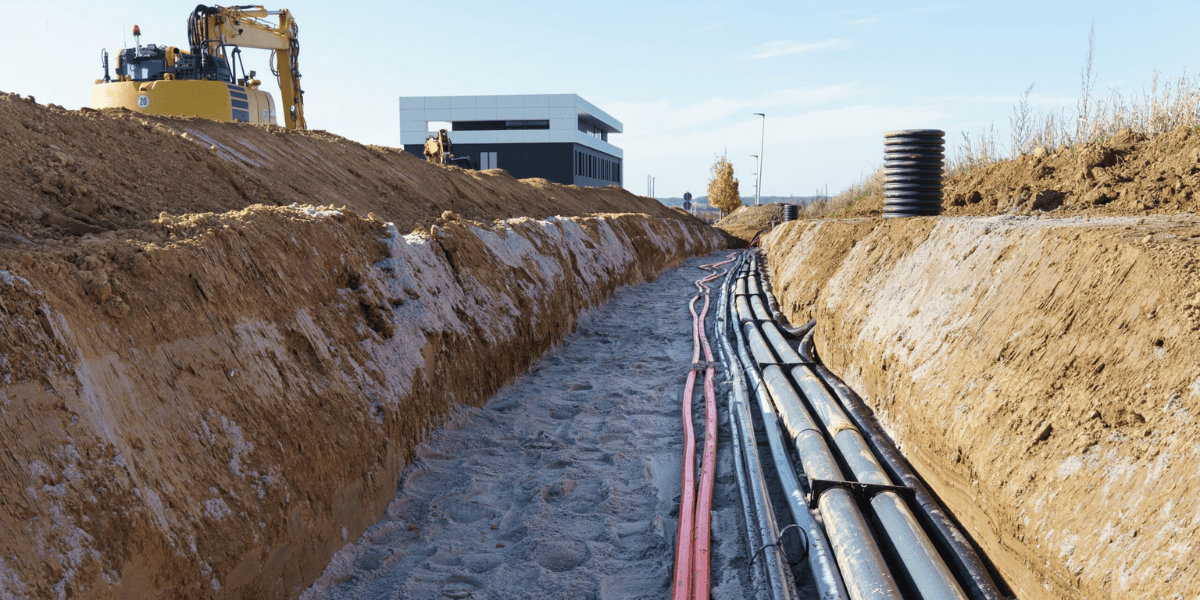
Since the National Economic Council (NEC) set the ₦145 per linear meter Right of Way (RoW) benchmark in 2013, the federal government has yet to achieve a uniform price across all states. For over a decade, this issue has been a heavy battleground between federal agencies, state governors, and telecom operators due to its profound impact on the nation’s digital landscape.
The decision, reached during a National Economic Council (NEC) meeting, followed recommendations from a joint committee of State Governors and Ministers tasked with resolving multiple taxation in the telecoms industry.
However, most states initially ignored the resolution and continued charging between ₦3,000 and ₦8,000 per meter.
In January 2020, following a critical intervention by the then Federal Minister of Communications and Digital Economy (FMCIDE), Dr Isa Pantami, the Nigeria Governors’ Forum (NGF) re-negotiated and unanimously agreed to finally implement and enforce the ₦145 policy across all states.
Between 2022 and 2024, the FMCIDE and the Nigerian Communications Commission (NCC) tried to push the NEC benchmark rate, with ₦145 as the country’s maximum. At some point, the FG lobbied state governors to achieve a ₦0 rate, in a bid to fast-track fibre optic rollout.
By 2025–2026, a third of the states (12 governors) waived the RoW charges entirely. Yet, several states still charge more or have rebranded them as expensive application costs.

Also Read: 12 Nigerian states waive right of way fees to bridge digital divide – but challenges persist.
Hidden fees, RoW levy disparities across states
Data from the NCC’s Ease of Doing Business portal exposes differences in Right of Way levy placed by states. While some states abide by the ₦145 per linear metre benchmark, others charge beyond the threshold.
Below is the list of states and a description of their fees.
- 12 States, namely Adamawa, Anambra, Bauchi, Benue, Enugu, Jigawa, Kaduna, Katsina, Kebbi, Nasarawa, Niger, and Zamfara, charge zero levy, with no state joining the umbrella in 2026.
- 16 States are charging the ₦145 per linear metre threshold: Abia, Borno, Cross River, Ebonyi, Edo, Ekiti, Gombe, Imo, Kogi, Kwara, Ondo, Oyo, Plateau, Sokoto, Taraba and Yobe.
- Ogun State (₦6,600) leads in the nine States charging above the threshold. Others Akwa Ibom – ₦2,000; Bayelsa – ₦850; Delta – ₦2,706; FCT Abuja – ₦950; Kano – ₦2,754; Lagos – ₦850; Osun – ₦1,500 and Rivers – ₦2,256.
- However, hidden fees such as Application fees are being charged, especially by states with ₦0 and ₦145 RoW levies. For instance, both Adamawa and Enugu states collect application fees of ₦100,000 despite having a ₦0 RoW charge.
- For states charging a ₦145 fee, Ekiti collects the highest at ₦700,000. Others are Cross River (₦250,000), Edo (₦10,000), Gombe (₦10,000), Lagos (₦20,000), Ondo (₦20,000), Oyo (₦50,000) and Yobe (₦25,000).
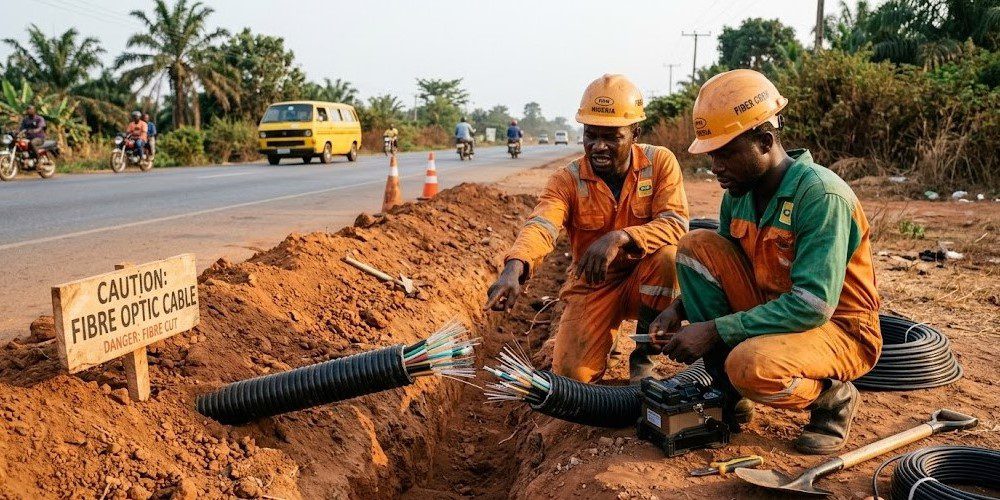
Also Read: How Right-of-Way delays and fibre cuts stall Nigeria’s fibre-to-the-home connection at 265,000
Why the difference?
To understand the dynamics of the differences and hidden fees, Olayinka Amoo, a telecom site engineer, in conversation with Technext, said that for the NCC to have these disparities on its portal shows it’s aware of the hidden levies.
“We should also know that RoW is a land matter, and land belongs to the states. What we have is a policy agreement with no uniform enforcement behind it,” he said.
Amoo noted that the hidden fees and other rigorous application processes are what fibre operators and contractors actually feel on the ground. “The real issue is the total cost to deploy, which varies widely from state to state.”
With consideration of the cumbersome process, telecom operators mostly prefer deploying their fibre in industrialised, concentrated cities where they can get the highest returns.
Roughly 80-85% of Nigeria’s fibre-to-the-home deployment is concentrated in big cities such as Lagos, Rivers and FCT Abuja, highlighting the digital divide.
Recent data shared by MTN Nigeria on its FibreX availability nationwide showed that while the service is available across 15 states and 232 locations, Lagos, Rivers and FCT had 83, 32 and 65 locations where FibreX is present.

That the three cities had 77.6% of all FibreX locations in Nigeria reflects the huge concentration in cities and where RoW approval posed minimal issues.
“For investors, that unpredictability is the real risk,” Amoo expressed.
He advised that a clear and published fee schedule in every state, backed by NCC and the Governors’ Forum, would make FTTH rollout far more bankable.
“In my experience, the states that make the process clear and predictable are the ones where fibre gets in the ground first,” he added.
For internet users, when a state or local government charges exorbitant fees to lay internet cables, it’s not just about taxing big telecom operators; they are taxing citizens’ internet speed, video quality, and data tariffs as well.
