




Before we get to 6G, let us talk about 5G for a moment, because the story of how people received 5G tells you everything about how they will likely receive 6G.
When 5G started rolling out globally around 2019 and 2020, the backlash was immediate and, in some cases, extreme. In the United Kingdom, more than 70 mobile phone towers were set on fire. Engineers were verbally abused while working on masts.
A conspiracy theory linking 5G to COVID-19 spread so fast that Facebook, YouTube, and Twitter had to remove thousands of posts and videos about it. None of it had any scientific basis; 5G uses non-ionising radio waves, the same category as FM radio and Wi-Fi, which cannot damage cells or spread viruses. But the fear was real, and the destruction was real.
South Korea, the United States, and China all deployed 5G commercially in 2019. Nigeria launched its own 5G networks in 2022, with MTN and Mafab Communications receiving spectrum licences. Even then, misinformation circulated locally about health risks. The reality, borne out by years of deployment and research, is that 5G has not caused the health crisis its critics predicted.
What it has done is make networks faster, reduce latency, and begin enabling technologies like smart cities, connected vehicles, and industrial automation that were previously impractical.
The reason the 5G history matters is that 6G is coming, and what researchers are now describing about its capabilities will make the 5G panic look tame by comparison.

Why 6G is fundamentally different
Current mobile networks, including 5G, are primarily built for one thing: moving data. Calls, messages, video streams, files, and information go from one place to another, and the network’s job is to move it quickly and reliably. 6G researchers want to change that fundamental design.
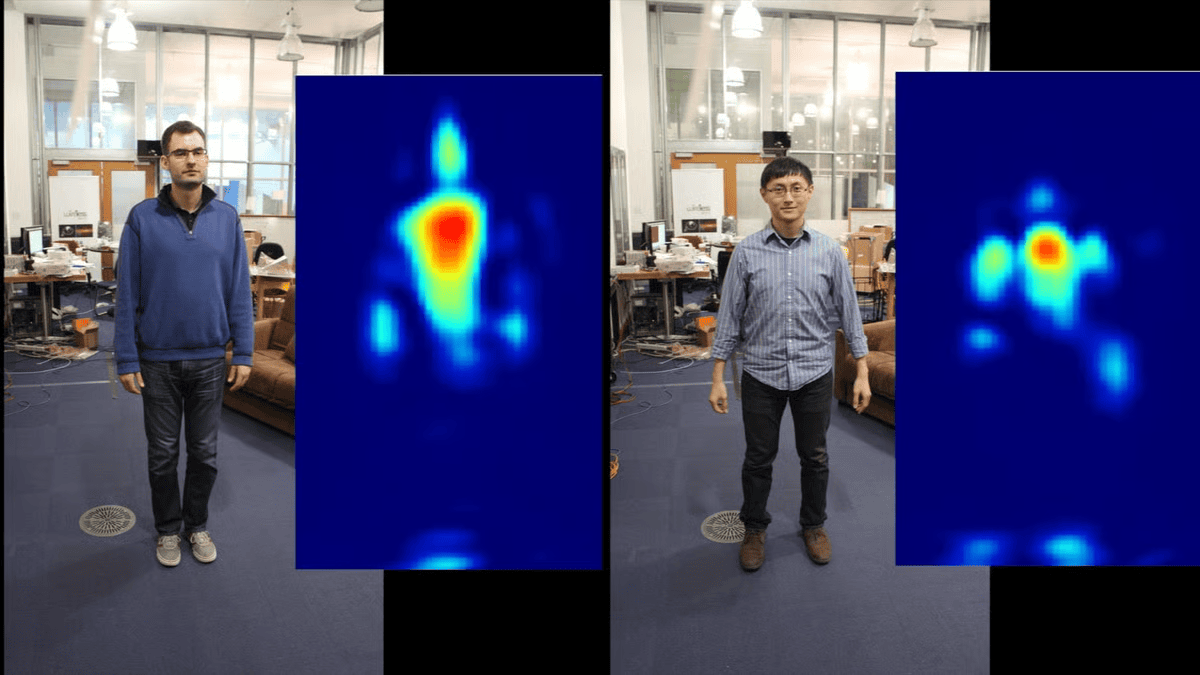
The next generation of wireless technology is being built with integrated sensing capabilities. Using extremely high-frequency radio signals, a 6G network would not just carry information, it would actively sense the environment around it. And the environment it can read includes you, even if you are on the other side of a wall.
Here is how it works in simple terms. Radio waves travel through solid objects like walls and bounce back when they hit something, including a human body. By analysing how those waves return, a 6G system can determine that a person is present, where they are located, and how they are moving. The movements it can detect are not just large ones like walking. It can detect the subtle rise and fall of your chest as you breathe. In more advanced implementations, researchers believe it could detect the rhythmic movement associated with your heartbeat.
Also read: How 5G connections in Sub-Saharan Africa are expected to grow 11x to 370 million by 2031
This goes significantly beyond what current Wi-Fi sensing technology can do. Scientists have already demonstrated that Wi-Fi signals can detect movement and rough breathing patterns in controlled environments, but the results have been inconsistent, limited in range, and unable to work with multiple people at once. 6G is designed to be far more precise, work across longer distances, and handle many subjects or devices simultaneously.
Polymarket, the prediction market platform, has been tracking public and expert expectations around 6G sensing capabilities, and the consensus among researchers and analysts is that through-wall detection of vital signs is a realistic near-term capability of commercial 6G systems rather than a speculative distant future.
The cases for it are genuinely compelling
Set aside the discomfort for a moment and consider what you could actually do with this.
A hospital ward where nurses do not have to attach sensors to every patient to monitor their breathing and heart rate during the night. The network in the building does it passively, flagging abnormalities in real time. For patients who are elderly, confused, or resistant to having things attached to their bodies, this is a meaningful improvement in care.
A collapsed building after an earthquake. Rescue teams outside cannot see inside and cannot hear anyone calling for help. A 6G-enabled device scans through the rubble and detects the breathing pattern of a person trapped beneath debris, giving rescuers a precise location to dig toward. In disasters where every minute matters, that capability could save lives that would otherwise be lost.
An elderly parent living alone. Their family is worried about falls, which are one of the leading causes of serious injury and death among the over-65s. A 6G home sensing system detects an unusual movement pattern, someone falling and not getting up, and sends an alert. No camera in the bedroom. No wearable that gets forgotten or taken off. Just the network, doing what networks will do.
These are not hypothetical cases. They are the use cases that researchers, hospitals, emergency services, and smart home developers are actively designing for. The technology addresses real gaps in healthcare, disaster response, and elderly care that existing systems handle poorly.
The 6G privacy problem is not hypothetical either
A system that can detect your presence, track your movement, and monitor your vital signs through a wall is, by definition, a surveillance system of extraordinary power. The fact that it does not use cameras does not make it less invasive; it arguably makes it more so, because the absence of a camera gives people a false sense of privacy that the technology would silently violate.
Think about what this means in practice. A landlord who has a 6G router in a building could theoretically know when tenants are home, when they are in bed, and how many people are in the apartment, without anyone knowing they were being monitored. A government with access to network data could track the movement and presence of individuals in their own homes without needing to physically enter those homes or install any visible surveillance equipment.
An abusive partner could use a consumer 6G device to monitor someone who has left and is hiding from them.
Read also: Coverage gap: Only 30% of 5G-enabled smartphones connects to 5G network in Nigeria
These are not paranoid scenarios. They are logical extensions of the technology’s capabilities into the hands of people who have demonstrated, historically, that surveillance tools get misused. And unlike cameras, which people can see and cover, 6G sensing is invisible. You cannot put tape over a radio wave.
Researchers acknowledge this directly. The consensus among those developing the technology is that strong regulatory safeguards, data governance frameworks, and user consent mechanisms will need to be in place before 6G sensing is deployed commercially. What those safeguards look like in practice, who can access the data, how it is stored, what uses are permitted, and how violations are punished are still being worked out.
Commercial 6G networks are not expected to be widely available until the early 2030s. That window is not long, and given how slowly regulation tends to move relative to technology, the policy work arguably needed to start yesterday.
The history of 5G shows that people’s fears about new wireless technology can be wildly misdirected, towards imaginary health risks while ignoring real ones. With 6G, the health risks are not the concern. The privacy risks are entirely real, and they deserve the kind of serious, specific, technically informed public conversation that 5G never got.
