





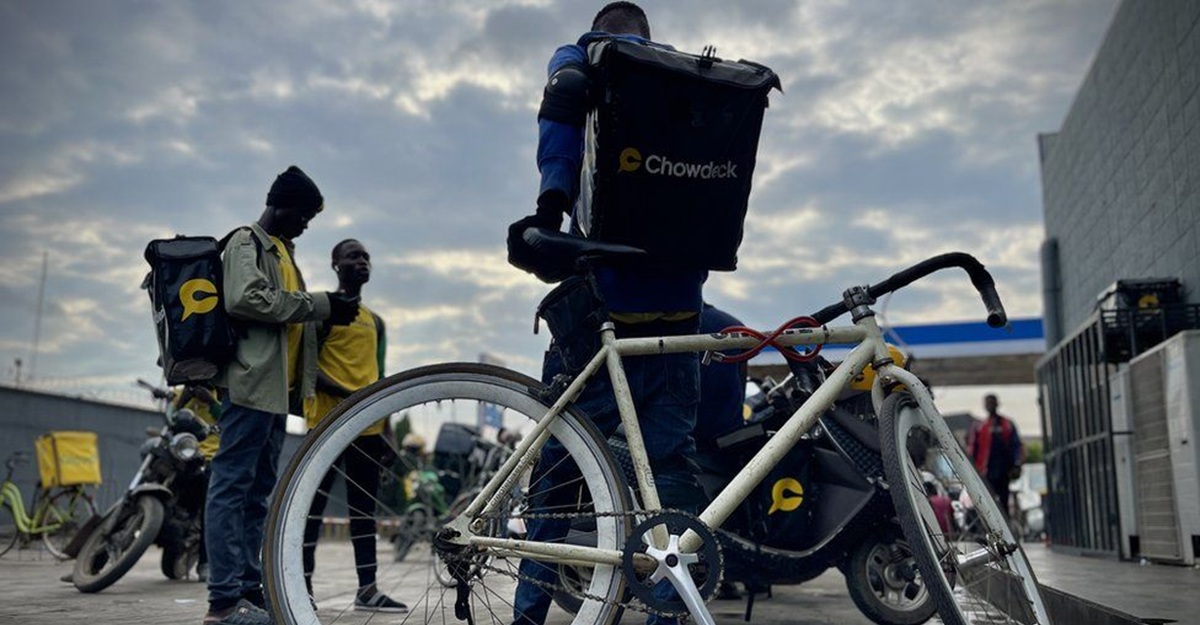
In a recent interview on Channels Television’s Business Morning show, Femi Aluko, chief executive officer of Chowdeck, a rapidly growing food delivery service in Nigeria, shared surprising insights into earnings in the gig economy.
Aluko revealed that Chowdeck’s delivery riders earn an average of ₦100,000 each week, which translates to around ₦400,000 a month, significantly more than many public sector doctors, especially those just starting their careers.
Aluko emphasised that while being a delivery rider can be financially rewarding, it comes with its own costs. Riders need to maintain their bicycles, which can cut into their profits. Despite these expenses, Aluko’s statement about riders potentially out-earning medical professionals sparked a notable reaction among viewers.
For some Nigerians, hearing the CEO of a tech startup assert that bike delivery riders could make more money than doctors felt troubling. It raised serious questions about the overall state of the country’s economy and working conditions.

Since its launch in October 2021, Chowdeck has quickly become one of Nigeria’s top food delivery platforms. Founded by Aluko, alongside co-founders Lanre Yusuf and Olumide Ojo, the company has grown its user base from less than a million to over two million in a remarkably short time. Its recent success included a $9 million investment in a Series A funding round, helping to expand Chowdeck into new cities across Nigeria.
Similar read: Chowdeck unveils accident insurance for 20,000 riders in partnership with MyCoverGenius
The idea that delivery riders can earn higher wages than trained doctors is difficult for many to digest. It highlights a disturbing reality about job prospects and compensation in Nigeria’s economy. As the gig economy continues to thrive, it prompts us to reflect on the value we place on different professions and what this means for the future of work in the country.
Why the Chowdeck comparison struck a nerve
The reactions to the statement by the Chowdeck CEO split into two clear camps, and both sides have valid points.
On one side, there’s a wave of anger. Many people feel disrespected by the comparison made between doctors and delivery riders. One commenter expressed frustration, saying, “After years of medical school and housemanship, this is how you’re mocking the few doctors who have decided to stay and work in Nigeria.”
Another voice captured the sentiment perfectly: “Imagine dedicating seven years to studying medicine, only for your pay to be compared to that of a Keke rider. Nigeria!!” A third person added, “This comparison isn’t needed. The issue of doctors not earning well is part of a larger systemic problem impacting everyone. Throwing shade at them just makes it worse.”
On the other side, some people felt that the outrage was overblown. “The comments here are filled with too much emotion. The CEO is simply stating facts about the economic reality in the country,” one user argued. Another boldly asked, “How many doctors really make over ₦400,000 a month? Why do some of you think the CEO is mocking doctors?”
Both groups have important truths. Those who defend the CEO are right that his statement about income levels reflects a real issue: Nigerian doctors are severely underpaid. It’s a leading cause behind the mass exodus of medical professionals in what’s commonly referred to as the “japa wave.” For those who remain, strikes and threats of strikes have become a common occurrence. If delivery riders truly make an average of ₦400,000 a month, then that amount is certainly higher than what many government-employed doctors earn. A harsh reality indeed.
However, those who are angry have valid concerns too. There’s a big difference between acknowledging that doctors are underpaid and interpreting a rider’s earnings as evidence that delivery work is a better career option. The former critiques a broken system, while the latter almost frames dysfunction as something positive, which many people found pretty upsetting.
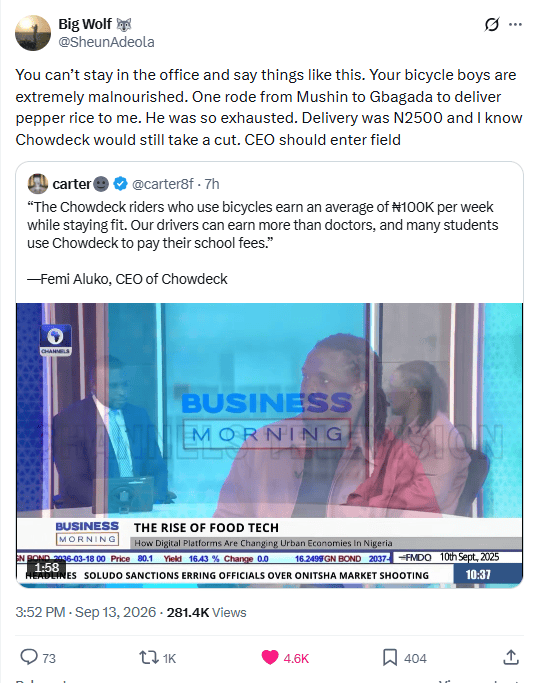
There’s also scepticism around the figure of ₦100,000 per week that the Chowdeck CEO mentioned. Some users, who are either riders or regular customers, challenged the accuracy of that number. One individual remarked, “It’s hard to find riders making more than ₦50,000 a week. After they buy fuel and repair their bikes, there’s hardly anything left.” Another shared their experience watching a rider deliver food from Mushin to Gbagada, coming in exhausted after earning just ₦2,500 for the delivery, and criticised the CEO for not seeing the tough realities these riders face.
A rider recounted a particularly tough day delivering food during heavy rain for just ₦1,200, expressing, “I had to close up and go home. I was so angry.” Comments like these highlight a reality that averages can sometimes hide. While some top-performing riders may earn ₦100,000 a week, they’re likely doing 10 to 20 deliveries in bustling areas with higher-value orders. Most riders, however, are grinding through tough conditions in traffic or rain for much less.

One thoughtful commenter raised an important question about those impressive Chowdeck delivery figures: “Ten to twenty deliveries a day, how much is the food? How much are they actually keeping after expenses?” This question points to a critical distinction between gross earnings and take-home pay, especially when fuel costs, bicycle repairs, and platform fees are factored in.
Another observer made a comparison that goes beyond the specific case of Chowdeck. “Doctors will always be needed; it’s an insult to their profession to compare them to riders who can easily be replaced by technology.” This comment reflects a broader concern about the gig economy: it’s valuable today but doesn’t offer the long-term stability that a medical career provides.
Ultimately, the underlying message that neither camp has fully articulated is this: Nigeria’s economy has reached a troubling point where gig work is often more lucrative than traditional professional jobs, not because gig jobs are exceptionally well-paying, but because professional salaries have stagnated while the cost of living continues to rise.
Delivery riding seems to pay relatively well because the overall economic system is broken. This isn’t a success story; it’s a clear indication of economic dysfunction when gig jobs thrive while structured professions struggle.
As one user aptly concluded, “Only the Nigerian economy can make you compare dispatch riders with medical doctors.”
Aluko has built something significant with Chowdeck: 2 million users, a growing network of riders, and a service that Nigerians have clearly embraced. The ₦100,000 weekly figure, even if it’s more aspiration than reality for most riders, is noteworthy in a country where survival is a daily challenge.
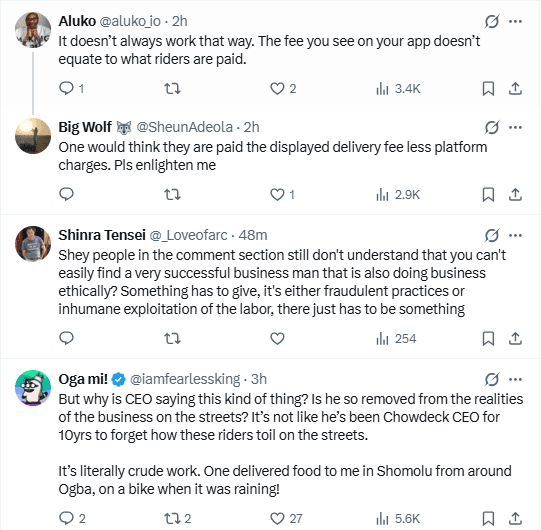
Comparing bike riders to doctors, even if meant as a light-hearted comment about earnings, might sound clever in a business meeting but feels completely out of touch in everyday life. In a country where many doctors are leaving for better opportunities abroad, it’s frustrating to hear a successful entrepreneur suggest that becoming a bike rider could be a way to address underpayment issues in the medical field.
The backlash on social media goes beyond just the Chowdeck founder’s statement; it reflects a deeper frustration within society. People have followed the paths that were encouraged, like training for years to become a doctor, only to find themselves undervalued and overshadowed by unrealistic comparisons.
