





Long before Kenya’s Directorate of Criminal Investigations (DCI) arrived in Roysambu to arrest the two directors of Flexitech Group Limited, many customers were already expressing their frustrations.
Back in July, one customer reached out to a Kenyan blogger, desperate for assistance after he had been waiting six weeks for a KES 13,000 ($100) refund from FlexPay, a platform run by Flexitech that allows customers to save up for purchases. He explained that although he had contacted the company repeatedly, he was continually met with promises that his refund was being processed, but without any clear timeline.
By August, another customer shared a similar experience, saying she had been waiting for the return of KES 24,700 ($190) that had not been returned since July. Because of this delay, she was unable to send her child back to school, and her calls to customer service went unanswered.
On Wednesday, police arrested Martin Kariuki Maina and Johnson Gituma Mwangi, the two founders of Flexitech Group Limited. They are accused of stealing KES 31,213,700.95 ($242,345) belonging to an unnamed major retail chain. The arrests took place during an operation conducted by detectives from the DCI Nairobi Regional Office in Roysambu, Nairobi.

According to the DCI, the suspects, who serve as directors at Flexitech, were acting as agents for the retail chain. Investigators allege that they received funds from customers who had purchased and picked up goods from several branches of this retailer, but instead of forwarding this money to the company, they allegedly diverted it for their own personal use.
Similar read: Police trace alleged ₦3.6bn crypto fraud proceeds to USDT through Bybit P2P, fintechs
The directors are set to face charges of stealing by an agent under Section 283(b) of Kenya’s Penal Code at the Milimani Law Courts. Additionally, other individuals believed to be involved in this scheme are still at large. It’s important to note that an arrest or a charge does not imply guilt; these allegations will be thoroughly examined through the legal process in Kenya.
A pattern that FlexPay’s customers had already spotted
What makes this story more than just a criminal case is the clear buildup of warning signs that were largely ignored.
FlexPay operates like a modern twist on the old lay-by system. Customers deposit money in instalments on the platform until they reach their savings goal. Once they do, they can collect their purchased items from partner merchants. The company also offers goal-based savings products and a group savings feature known as FlexPay Chama. FlexPay identifies itself as a payment facilitation and savings platform rather than a lender.
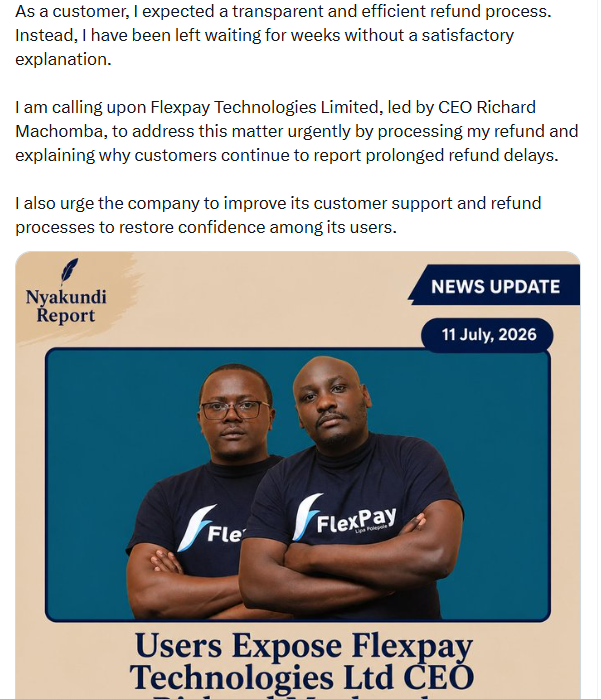
The entire model relies heavily on trust. Customers deposit their money over time, and the platform holds onto it until they’re ready to make a purchase or withdraw it. However, when that trust is broken, like when refunds are delayed and customer service becomes unresponsive, customers find themselves without support, often turning to social media and bloggers to voice their frustrations.
This breakdown in trust became evident through customer reviews on Google Play, especially leading up to mid-2026. Feedback from users consistently mentioned that their withdrawal requests were taking much longer than anticipated, and responses from customer support were noticeably lacking.
One customer shared their experience of waiting for a KES 15,000 ($115) refund from June, which still hadn’t arrived by July. According to FlexPay’s terms, refunds are supposed to be processed within 14 working days through the original payment method, yet many customers reported waiting for months without any resolution.
The Directorate of Criminal Investigations (DCI) is currently looking into allegations that money was supposedly collected on behalf of a retailer but never delivered to them. While the DCI has not confirmed a direct link between this investigation and the customer withdrawal complaints, the timeline is concerning.
It spans months during which customers were unable to access their own savings. This was followed by police uncovering that millions of collected funds allegedly never reached their intended destination.

FlexPay’s journey: navigating challenges in the fintech landscape
FlexPay is not just another short-lived startup. Founded in 2013 by Johnson Mwangi and Richard Machomba, both graduates of Kenyatta University’s Chandaria Business Innovation and Incubation Centre, the company has gained substantial attention from investors and has received significant recognition within the fintech industry.
By September 2023, FlexPay had partnered with over 600 merchants and served more than 200,000 customers. Their impressive list of supporters includes the Acacia Group, LoftyInc, Expert Dojo, Google’s Black Founders Fund, and Renew Capital. In 2023, the company was even chosen for TechCrunch’s Startup Battlefield 200 and had set its sights on expanding into Uganda and Nigeria.
The connection to Nigeria is particularly important. If it weren’t for the recent challenges, FlexPay’s innovative model could have successfully introduced similar save-to-buy products to Nigerian markets, which are still largely unexplored.
Also read: Startup funding: Fintechs raised 41% of Africa’s total $1.37bn in H1 2026
This situation highlights a broader issue that extends beyond Kenya. When a financial technology platform, which manages customer savings, faces difficulties, be it due to mismanagement, fraud, or a combination of both, the most affected individuals are often the smallest customers. Consider the person anxiously waiting for KES 24,700 (about $190) to send their child back to school. They typically don’t have quick access to a lawyer or a regulatory agent. Instead, they have a blog comment section, and their phone often goes unanswered.

The recent arrest by the Directorate of Criminal Investigations (DCI) does not solve the problem for these customers. The investigation into the alleged misappropriation of KES 31.2 million (around $240,345) and the pressing question of when ordinary customers will see their money returned are actually two separate issues that are unfolding at the same time.
