



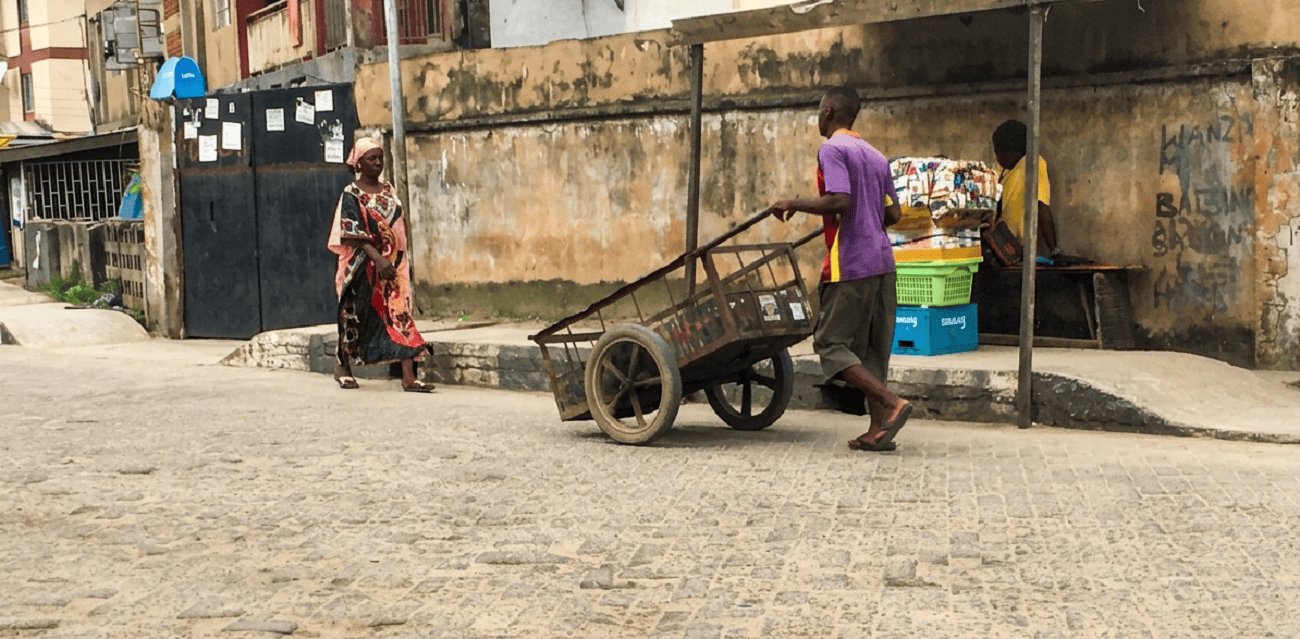
Abdullahi pushed his metal truck down the street. In it were rusted parts of a microwave oven and a condemned Philips pressing iron. He hit the metallic top of the truck several times with a rod. Even though he no longer needed to advertise himself. He and other scrap metal scavengers have become well-known to society. Yet, he let out the all-too-familiar call: “iron condemn, aluminium condemn”.
His friends call him ‘Camry’ because he had vowed to make enough money to buy himself the car one day.
“With which work?” I asked.
“Walai, money dey for this market oga,” he succinctly replied.
He wasn’t wrong. There is no definitive, government-published estimate of the total value of Nigeria's scrap metal industry. However, the best available estimates suggest the industry is worth around ₦200 billion, with significant room for growth.
I also learnt from the scavengers in the streets to the metal merchants in the big markets that the scrap metal industry has produced billionaires, pulled ordinary people out of poverty, provided a better life for thousands of families, and built businesses that the next generation is willing to take over.
For example, Edozie, a 21-year-old, helps his father run his scrap iron business at Owode Onirin Metal Market, along Mile 12 in Lagos. He has been helping his father run the business since Secondary School. Once done with school, he decided to focus on the business full-time.
“I like doing it. I have no mind of changing business or schooling for now because if you are doing this business and you know what you are doing, there is money in it. In a good week, I make in excess of 1 million naira after expenses. In a bad week, about 900,000. So in a good month, give or take, I can be making 4 million or more,” he said.
The scrap metal hierarchy
Despite Abdullahi’s optimism, his section of the industry represents the lowest rung of the food chain. His kind moves from street to street with their trucks for used metals and pays a small fee for them.
At the end of each day, they make between N5,000 and N12,000.
Above them are junkyard owners. These are of two types:
- Those in the street who buy from scavengers, electricians and other repairers
- Those in and around large electronics and auto markets (e.g. Alaba International and Ladipo) who buy from traders
At the apex are the scrap metal merchants; these are dealers in scrap metal markets like the Owode. They buy from all the dealers above. They also pay for the exclusive right to scavenge demolished buildings and structures for the metals and other useful materials.
Some junkyard owners collect an upfront payment, secure the metals and supply them to the merchants.
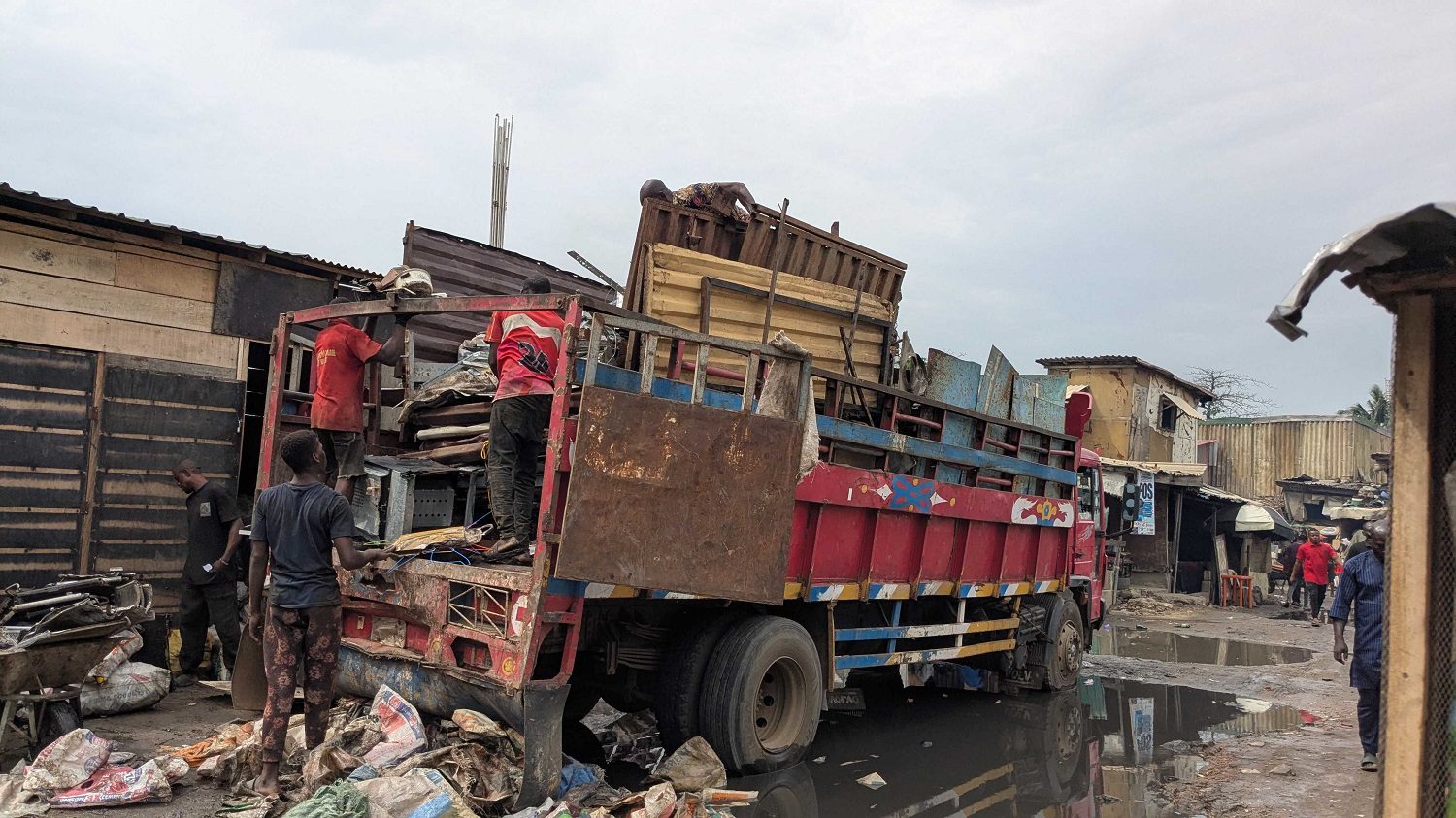
Merchants also buy from large corporations and factories when they dispose of old hardware and equipment from time to time.
“Some companies do clearance of their equipment every year and sell it as scrap. They sometimes ask for as much as 50, 200 or even 500 million. Only the big ‘ogas’ (merchants) can afford that. We even collect money from them to buy so that we all make a gain,” Inuwa Ibrahim, a scrap metal dealer at Alaba Arago, told me.
The companies that control the scrap metal industry
The companies that control the industry are of two types.
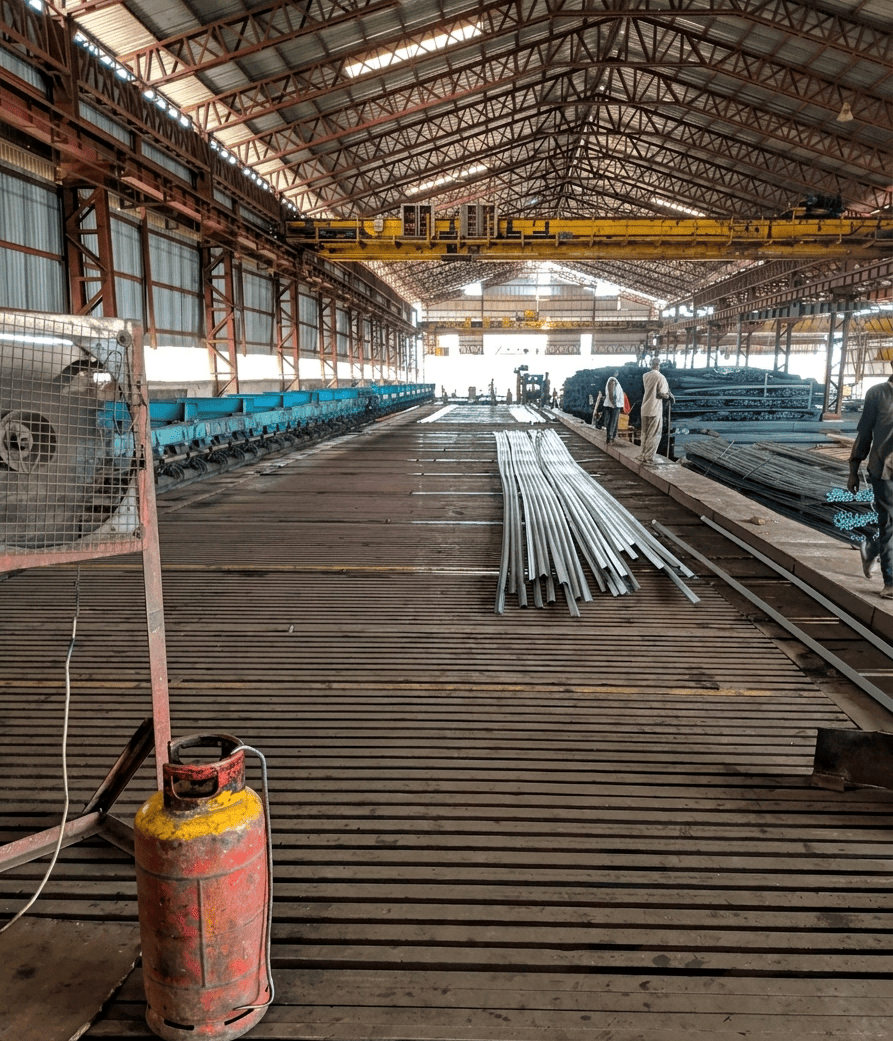
The first are those that recycle scrap metals, notably iron, to manufacture building materials like steel bars, rebars, iron nails, coil screw iron wires, structures, etc. Examples include Hongxing Steel Company (Amuwo-Odofin), a subsidiary of Inner Galaxy Group, Landcraft (Ikorodu) and Monarch Steel in Ogijo.
The second type buys other metals such as copper, brass, aluminium, etc for export. An example is Steel MAX SMS, which is, in fact, one of the biggest in the country.
To understand this industry, it is important to know that scrap metal is an umbrella for various types of metal, all of which are always in demand. Steel and iron are the most common kinds and one of the least expensive.
Merchants currently buy iron for between N700 and N800 per kilo.
Then there is aluminium, which costs N2,000 per kilo and brass, which costs about N8,000 per kilo.
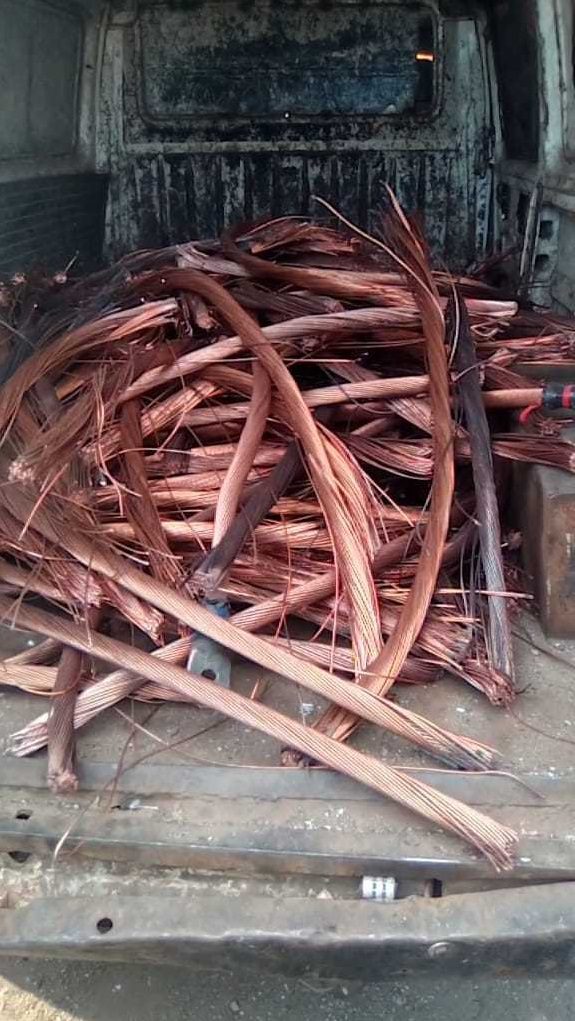
Copper is one of the more expensive metals. A kilo currently sells for between 14,500 and 15,500/kilo, depending on the type. Armoured cable is the highest quality of copper, and merchants buy it for N15,500. Then there is the neat copper, which they buy for N15,000 per kilo and the mixed copper, the lowest quality, which sells for N14,000 per kilo.
While the merchants negotiate with the scavengers and junkyard owners, they do not really decide how much they are eventually sold for. These companies eventually control the market because, without their factories, the entire scrap metal industry would crumble.
Describing how the companies determine the prices, Chuks, a merchant at the scrap market in Owode-Onirin, said each has its own buying price.
“There is a group chat which is updated every day before 7 am with prices of each company. So it is up to us, the sellers, to decide which one is better. There are also other factors to consider. Some companies will give you a good price, but their checking system is so strict that they won’t buy some of your wares. But some other company’s price may not be as good as the first, but you know they will buy more of your goods because they are lenient with their checks,” he explains.
He added that the companies don’t pay upfront. They pay only after delivery.
“I buy in bulk, and I buy cheaper, like 14,000. Then, I target when the price is high on the company side. Then, I sell everything. There are a lot of people who buy and sell as they get. Maybe that is what works for them,” he concluded.
Processing the scrap metal
After verifying the scrap metals, the companies carry out a process called sweeping. Here, they sort the metals and separate them into ferrous (iron and steel) and non-ferrous (copper and aluminium) items.
Then, they are put through the mill.
This is a huge electric machine that melts the metals into liquid at over 1000 degrees Celsius. Then, the liquid iron is purified and poured into moulds, where it cools and assumes a solid form called billets.
The billets are reheated. Then, they are compressed with heavy machines. Finally, they are stretched into finished products like iron bars, nails, metal pipes, etc.
Describing how it is processed for export, Wallid Kasim, Assistant Manager of Steel MAX SMS, said that after sweeping, the metals will be separated into copper (the company’s staple), brass, aluminium and foil. Here, the rejected metals and sand are take out.
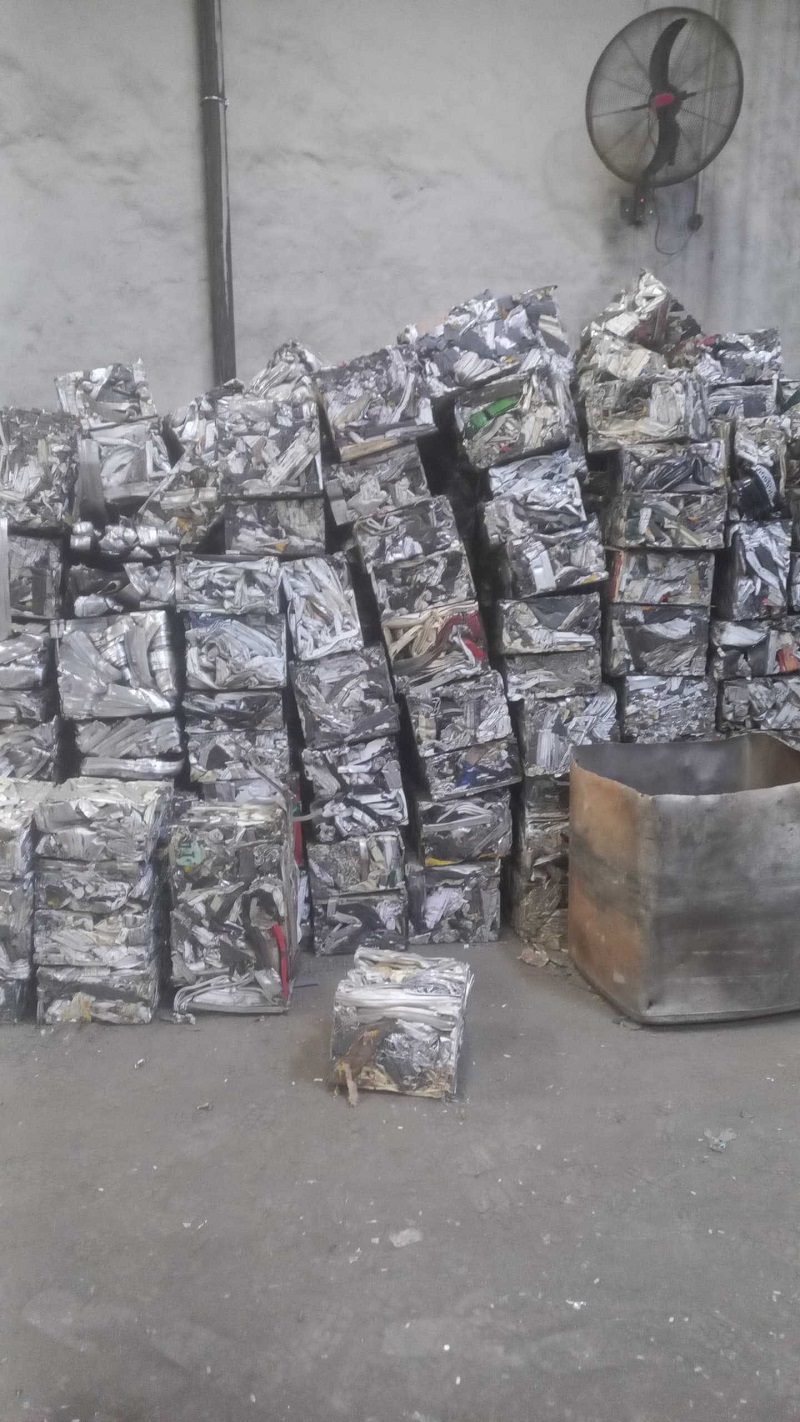
The copper and brass would then be fed into a compressing machine, which moulds them into the shape in which they would be exported.
The quality of foil, on the other hand, depends on the presence of water, oil, sand and dirt. If the foil does not contain any of these blemishes, it is considered of good quality and fed into the compressor machine, which will compress it into box shapes ready for export.
Aluminium treatment is quite straightforward, as they are processed in an automated furnace burning at more than 1,000 degrees Celsius. The liquid is left to solidify in readiness for export.
Indeed, the demand is so huge that the local scrap metal market cannot satisfy. In fact, some companies import to sustain their operations. This huge demand has kept the scrap industry going and made many very rich.
“We buy large quantities of copper and cable, sometimes 40 to 50 tonnes at once. Sometimes three truckloads. 150 tonnes of copper and UPC cans, aluminium and foil, in one day. In a month, we buy up to 500 tonnes. The largest trailer costs about N400 million. Total copper in my factory alone is about three million dollars. We have almost 10 items. And we export everything to China, Japan, Indonesia, Malaysia and others,” Wallid said.
Evaristus, a player in the market for over 20 years, corroborates this: “It is profitable. That is why I have remained in it. It is buying and selling, and as long as there is a willing buyer, there will be business,” he said.
The merchants also confirmed that other than periodic visits by government officials, there is minimal government interference in the industry.
However, they lament the constant harassment by police and other law enforcement agencies. They often confiscate and extort the drivers before allowing them to go.
“They always stop my trucks. Last week, my truck was in police custody for about 4 days. They said we should go and bring receipts for the scrap. We eventually have to pay,” Chuks said.
An unregulated market is an unpredictable turf
As the scrap metal market grows, internal competition becomes stiffer.
As with any lucrative business in an economically volatile country, many entrants are jostling for the available scraps. Consequently, the prices are on a steady rise.
“Many people are now in the business. Now, when you deposit money to buy from suppliers, someone goes back to offer them a higher price. Then, when you go to get them, they will tell you they have already sold them. This has happened to me a few times, and it is quite bad,” Evaristus said.
Yet, younger scrap metal entrepreneurs are discovering new metals. Chuks, for instance, says he is now focusing on the rarer silver metal, since not many people can recognise it among scraps and most mistake it for brass.
It took him 5 years to finally understand how to recognise real silver.
“We used to find them among brass and copper, and we sell them together, not knowing it is silver and costlier. I’m not even sure the companies we sell them to know what they are. They probably throw them away. But one gram of it is about 1500 naira. For one kilo, we are talking about 1.5 million,” he said.
Read also: Lagos to prosecute BRT, train commuters paying cash from August 1
