


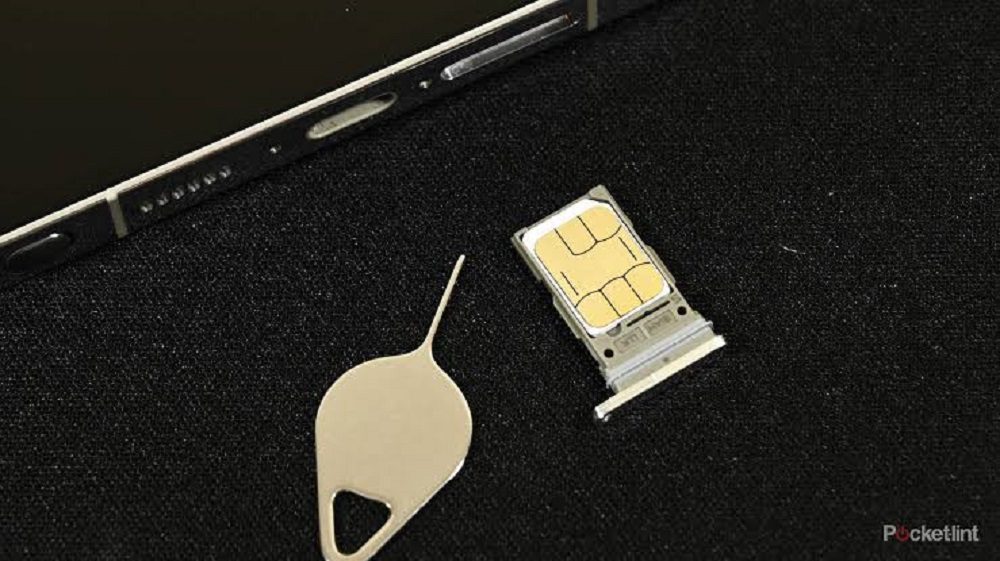
John has saved up for months to upgrade to upgrade his regular smartphone to a UK-used iPhone 14 Pro. Like most Nigerian buyers, John, at a gadget shop in Lagos, inspected the screen for scratches, checked the battery health percentage, and slipped his physical SIM card into the slot.
The iPhone booted and worked normally, and John happily bought the phone. But something went wrong later on. The signal bars began disappearing in the middle of calls, and internet connections became epileptic.
John thought it was probably a glitch with the network provider and didn’t think much of it. What he didn’t know was that that iPhone didn’t leave Apple’s factory (in the U.S.) with a SIM slot. It was a U.S. model manufactured only for digital eSIMs and was only surgically fitted with a SIM slot by engineers in an unofficial workshop.
Beginning with the iPhone 14 series in 2022, Apple permanently removed the physical SIM card tray from its U.S. model iPhones, switching them to eSIM-only activation as the industry standard for the country. But in Nigeria, where millions of users still rely on plastic SIM cards despite the presence of eSIM, iPhone redesigners suddenly found a profitable endeavour for themselves.
These redesign engineers (in Nigeria and the U.S.) are exploiting Nigeria’s penchant for physical SIMs, leaving unsuspecting buyers to deal with the fallout.
“A lot of Nigerians, especially iPhone buyers, just pick up gadgets without even knowing the trap they are falling into,” said Yusuff Uthman Adekola, a Nigerian Consumer Tech Specialist known on X for educating buyers on smartphone hardware and laptops.

While some Nigerians deliberately pay engineers to modify their devices, Uthman explained that the real danger lies in the undisclosed aftermath of these reassembling processes.
“Where the problem lies is when a vendor wants to sell to you, and he fails to disclose that this phone has been converted,” he explained in a conversation with Technext.
Also Read: eSIMs: 55% of consumers are still unaware of the technology, report says.
US-doctored iPhone: Tracing the path
Tracing how these doctored iPhones find their way into Nigeria reveals one of the biggest myths in the Nigerian gadget economy: most devices marketed locally as UK used rarely come directly from users in Britain. Many are second-hand units sourced from the United States, Canada, Germany, or China, and passed through international refurbishment hubs before reaching Nigerian stores.
Uthman explained that in most cases, U.S. eSIM-only iPhones are bought in bulk, shipped to workshops in China where technicians mill the aluminium on a physical SIM reader, and then exported to emerging markets such as Nigeria. Now, this doctoring has been adopted by Nigerian engineers.
While the conversion process is not a simple plug-and-play swap, the aftermath largely depends on how they become failed devices.

And these outcomes do not always end in failed devices. There are some buyers who knowingly pay skilled technicians for the conversion and report smooth performance, while others end up with compromised devices that fail months after purchase.
“Everybody cannot have the same experience,” Uthman said. “Based on the responses I have gotten from some of my posts, a lot of people complain that it gives them some problems like network issues and a lot of screen issues and so on.”
“At the same time, some people say that their own is also converted, but it has been working for them. But for a lot of people, it’s problematic.”
Survival mode
Avoiding a doctored iPhone doesn’t require opening the phone. It only requires checking a five-character code inside the software.
However, not every iPhone from the 14 series upward with a physical SIM slot has been tampered with.
Apple configures manufacturing style to comply with local telecoms regulations around the world. While U.S. models are strictly eSIM-only, those made for Canada, Europe, and parts of Asia still ship from Apple’s factories with physical SIM slots.
Before paying for any iPhone 14, 15, 16, or newer model, buyers can verify its origin in seconds by navigating to Settings > General > About and checking the Model Number, especially the letters right before the slash.
For instance, if an LL/A (code for U.S.) iPhone 14 or newer has a physical SIM slot, it has been doctored.
The versions for other regions, like Canada or the European versions, have physical SIM slots as well as eSIM enablement. The Chinese versions also have two SIM slots.
“And these things are made by Apple themselves, based on the regulations of each country,” Uthman said.
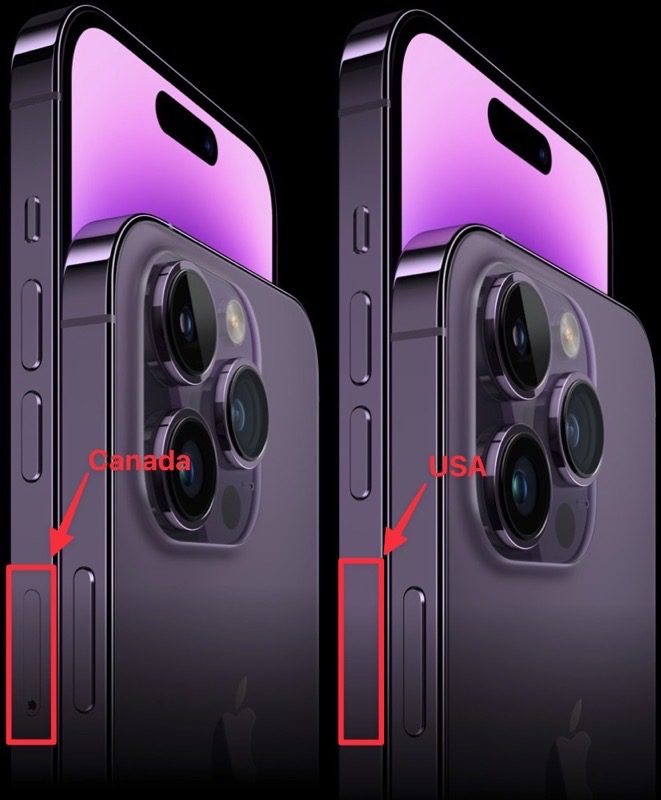
He further advised Nigerians to always protect themselves by conducting personal research as a form of basic technical literacy. And with the knowledge acquired, they can avoid such scams in case the vendor does not disclose it.
“When you check the model number and see LL/A, you already know that it’s American and, starting from the 14 series, it will not have a physical SIM slot at all. With that knowledge, you can easily avoid such scams in case the vendor does not disclose it,” he said.
Also Read: eSIM: All you need to know and how to onboard in Nigeria.
