



MTN Nigeria has been at the centre of a major conversation which has surrounded telecoms companies in recent times. And at the centre of the public outcry and conversation lies the familiar question that a large percentage of its 100 million subscribers are demanding an explanation for:
Why does mobile data sometimes finish faster than expected?
Separate legal actions and threats of lawsuits have since emerged from Nigerian subscribers and lawyers challenging MTN over what they describe as rapid or unexplained depletion of large data bundles.
The increasing demand for explanation is driven by several factors, some of which are the recent rise in telecom tariffs, which has increased the cost of mobile data, and the emotions that come from realising that mobile data meant to last for a month only lasted a week. Also, the increasing call-outs by subscribers who are demanding explanations are giving others the strength to do the same.
The conversation becomes crucial at a time when “data is life”.
As of June 2026, about 82% (157 million) of Nigeria’s 192.2 million telecom subscribers are now online. A number that continues to expand with digital expansion and a rise in broadband coverage. In June, Nigeria recorded its highest monthly data consumption to date, at 1.53 million terabytes.

For many Nigerians of different demographics, data is essential for online learning, communication, academic research, social media, entertainment, digital payments, online work, streaming and small businesses.
At a time when house rent, transportation and feeding take about 70% to 90% of an average Nigerian worker’s salary, leaving little to nothing for savings or emergencies. Sometimes, these three survival essentials routinely exceed total earnings for minimum-wage earners, forcing reliance on debt, side hustles, or family support.
Given how important mobile data has become, subscribers are likely to continue questioning data depletion that they believe is unexplained. They want telecom operators to explain how their data is being deducted and whether those deductions accurately reflect their usage.
On the other hand, data revenue has become a significant part of telecom operators’ overall revenue. During the first half of the year, MTN Nigeria and Airtel Nigeria saw a combined ₦2.4 trillion in data revenue, powering growth in service revenue and profits.
Also read: MTN Nigeria pays ₦545.89bn dividend to 203k shareholders for H1 2026.
MTN must do something different
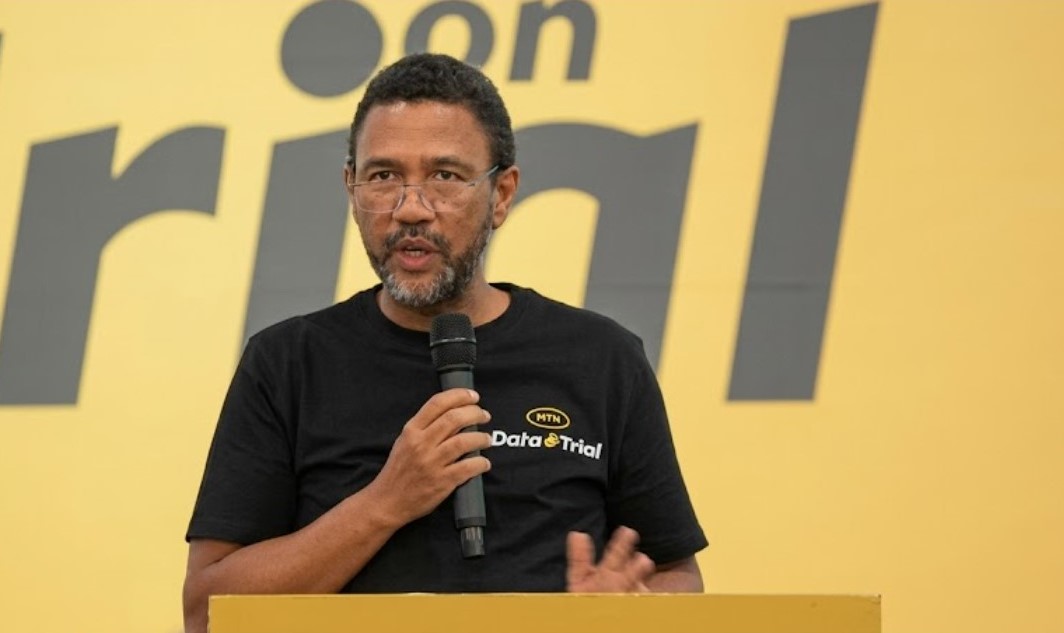
June’s “Data on Trial” was MTN Nigeria’s first major attempt to deepen consumer understanding of mobile data consumption and billing. The summary of that event was the operator stressing that there was no billing glitch or data theft and that its systems were subjected to external scrutiny by KPMG.
Chief Executive Officer Karl Toriola explained that 4G/5G speeds, new smartphones and their default high-definition settings can increase data consumption for images, audio, and video, which require more data. He added that continuous cloud/WhatsApp background backups are the main drivers behind rapid bundle depletion.
Recently, MTN Ghana CEO Stephen Blewett joined the discussion and tried to explain why data depletes faster. He explained that TikTok depletes data quickly because the app automatically preloads upcoming videos in the background while a user watches the current one.
Following June’s “Data on Trial”, claims over data depletion seemed to gain new momentum. Subscribers, particularly of MTN Nigeria, took to social media platforms to express their displeasure at why data keeps disappearing faster than expected.
However, the operator’s latest response revealed a mismatch in understanding what subscribers really want. In its own move to expand what it did in June, MTN decided to replicate “Data on Trial” across the country. This time around, it’s bringing the court to Nigerian universities.
On Thursday, August 27, 2026, the first took place at Ahmadu Bello University (ABU), Zaria, to address student complaints about rapid data depletion and billing transparency. A mock courtroom session where Law and Engineering students acted as the prosecution, and MTN staff formed the defence team.
MTN said it plans to do the same across selected universities nationwide, an attempt to prove accountability and put its integrity to the test.
Meanwhile, MTN is missing a vital link. And it’s about what Nigerians want. The problem is not necessarily that Nigerians don’t have the money to get data (even with the economic conditions); they only demand an explanation and accountability for a data depletion calculation they find strange.
While the operator has explained that high-speed networks, auto-play, and background apps are the ones sucking their data, the bigger question subscribers are asking is whether the volume of data deducted from their bundle accurately corresponds to the traffic generated.

Beyond its “Data on Trial” or awareness-creation that keeps preaching the same sermon, MTN must explain why data meant to last a year got exhausted within three months. And it must be in the easiest way every subscriber will understand.
It’s high time MTN realised that “Data on Trial” isn’t going to change the feeling of data theft as long as Nigerians are still on social media demanding explanations for unethical data deductions.
Data depletion claims: no end yet
Claims of data disappearance have been increasing in recent months and might not end anytime soon.
In an ongoing legal battle trending on X, a Nigerian lawyer and MTN Nigeria subscriber, Zaenab Olawunmi Adams, Esq, challenged the unexplained depletion of 708.55GB of an 800GB annual data allocation in just 104 days. She demanded that the operator provide detailed records explaining how the data was consumed.
In a formal complaint sent to MTN Customer Care on August 27, 2026, Zaenab, a Barrister and Solicitor of the Supreme Court of Nigeria, said she subscribed to MTN’s 800GB annual data plan for ₦125,000 on May 15, 2026. Zaenab argues that the rate of depletion is unusual, which warrants an investigation into the accuracy and integrity of MTN’s data-accounting system.
A similar claim by the Special Assistant on Digital Communications to former President of Nigeria Muhammadu Buhari, Bashir Ahmad, had come weeks earlier. His complaint centred on an SMS from MTN Nigeria reporting that he had used 58.83 GB of data via the cellular network on Tuesday, August 11, 2026.

The situation raised more concerns after MTN’s daily data report initially supplied an inflated accumulation of data consumption for Tuesday, August 11, to customers before sending another report with corrected figures.
Also, human rights activist Omoyele Sowore has led major protests and issued ultimatums over rapid data depletion. In the “Occupy MTN” protest, Sowore accused MTN Nigeria and other telecom operators of rapid and unexplained data exhaustion, calling them “data thieves”.
The leading operator needs to do something different. Its 100 million subscribers want to hear a new and genuine explanation. It must go back to its drawing board and ensure that.
