



South African Labour Court has stayed disciplinary proceedings against three employees of the Matjhabeng Local Municipality after lawyers for the defendants found prima facie evidence that the chairperson of the hearing may have relied on hallucinated AI-generated legal authorities in key rulings.
The lawyer demonstrated that, except for one, the legal authorities cited by the hearing’s chairperson in a June ruling either did not exist or stated nothing close to what he claimed they had said, challenging two rulings made by the chairperson, raising serious questions about the integrity of the disciplinary process.
In her judgement, Judge K Allen-Yaman did not go as far as declaring outright that artificial intelligence had written the chairperson’s reasoning for him. But she came close enough, warning that if an AI tool had produced those citations, “the ruling cannot stand” and that blind reliance on a chatbot would be unacceptable by the standards South African courts have already set.
This comes barely three months after South Africa’s Department of Communications and Digital Technologies was forced to pull its own Draft National Artificial Intelligence Policy after News24 discovered that a chunk of its 67 academic references were fabricated or pointed to journals that did not publish such work. The document had already cleared Cabinet and been gazetted for public comment before anyone thought to check whether the scholarship underpinning it was real. Two senior officials in the department were later named in a Rapport investigation and given until the end of April to explain themselves.
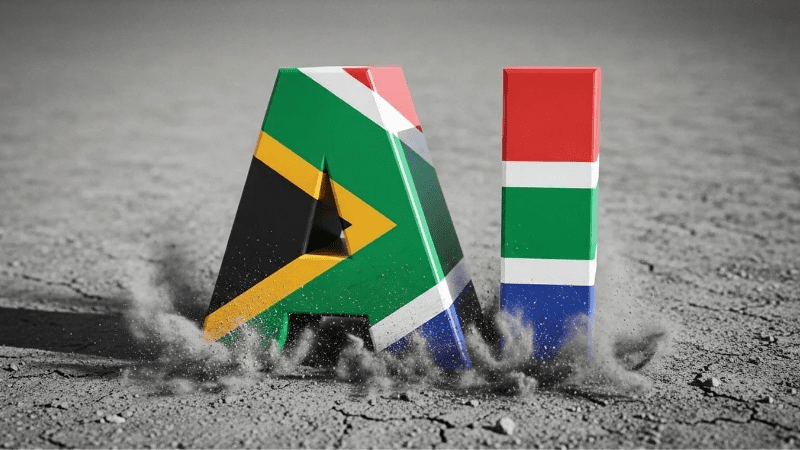
It was not an isolated embarrassment inside the country’s government either. Home Affairs had gone through a near-identical episode not long before, when journalists flagged more than a hundred invented references sitting in the reference list of the Revised White Paper on Citizenship, Immigration and Refugees. The department’s defence, that the fabricated citations were confined to a standalone list and did not touch the substance of the policy, will sound familiar to anyone who followed the AI policy saga. It is the same argument: the wrong sources, but the right conclusions.
The judiciary itself has been fighting this battle since at least January 2025, when the KwaZulu-Natal High Court’s judgement in Mavundla v MEC for Co-Operative Government and Traditional Affairs exposed a candidate attorney’s ChatGPT-drafted heads of argument, complete with an invented case, “Hassan v Coetzee”, built around a legal principle that sounded entirely convincing and was entirely made up.
Since then, the Johannesburg High Court has sent lawyers to the Legal Practice Council for using fake legal cases in Northbound Processing v South African Diamond and Precious Metals Regulator, with one judge even showing how ChatGPT can easily make up cases by running live prompts in the courtroom.
South Africa keeps witnessing AI citation scandals
None of these episodes involves a uniquely reckless individual. They involve a shared institutional habit: outsourcing verification to the very tool that cannot be trusted to verify anything. Generative AI models are built to produce fluent, confident text, not accurate text, and a fabricated constitutional court judgement reads exactly like a real one until somebody actually goes looking for it. South Africa’s courts and government departments are discovering, one scandal at a time, that sounding correct and being correct are not the same thing.
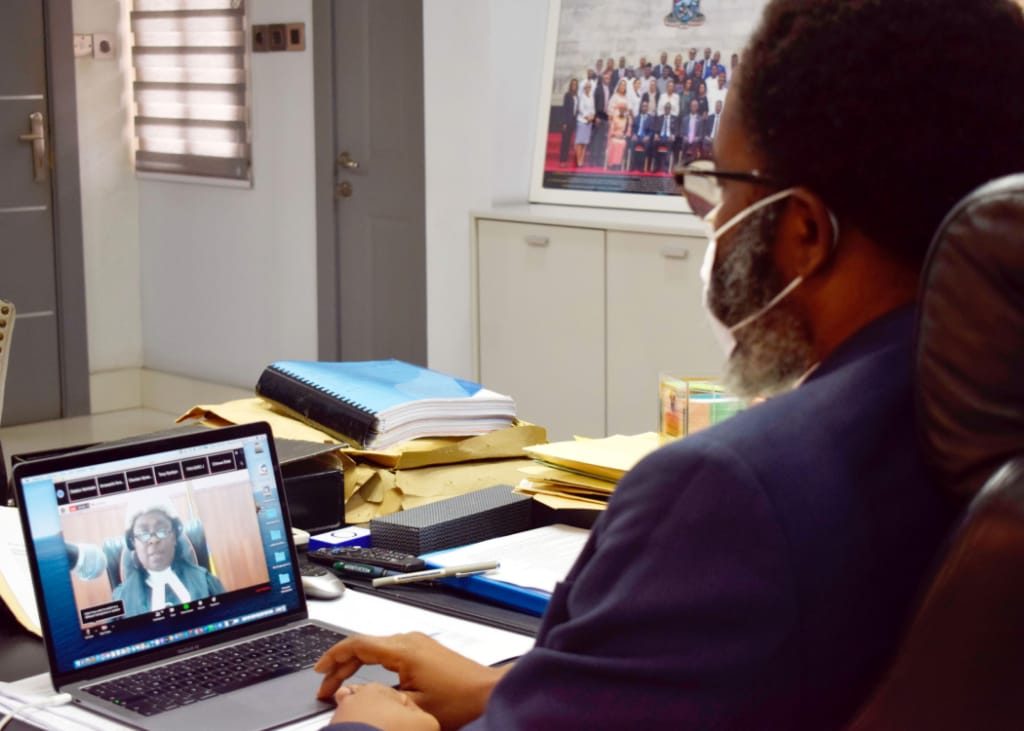
For a country whose Legal Practice Council and Labour Court have now repeatedly signalled zero tolerance, the Matjhabeng case is a warning that the problem has moved beyond junior lawyers under deadline pressure and into quasi-judicial decision-making itself, the space where ordinary workers’ jobs and livelihoods are decided.
If a disciplinary chairperson can lean on a hallucinated citation to justify a ruling affecting three people’s employment, the same failure can happen anywhere a public official is expected to apply an independent mind rather than paste in whatever a chatbot produced.
Global data suggests the exposure is only growing. Damien Charlotin’s database has now logged more than 1,300 confirmed AI-hallucination cases in courts worldwide, and Nature-published research found the share of academic papers with at least one fabricated citation rose roughly ninefold between 2024 and 2025.
South Africa is not an outlier in this story. It is simply one of the clearest illustrations of how fast institutional trust in AI-assisted work can outrun institutional capacity to check it.
