





Every listed company eventually produces a number large enough to travel on its own, detached from the transaction that created it. First Bank’s parent company gave the market one this August.
RC Investment Management began selling down 10.43 billion of its First HoldCo shares at ₦110 apiece, a block worth ₦1.15 trillion, and within a day parts of the financial press had turned it into a story about First Bank raising fresh capital.
First HoldCo issued no new shares. It received none of the proceeds. The trade belonged entirely to a company most Nigerians had never heard of, built specifically to make an old and bitter fight over First Bank’s ownership disappear without a headline of its own.
The fight had a decade behind it. Oba Otudeko chaired First Bank from 2009 and its holding company, First HoldCo, from 2012 until the Central Bank dissolved both boards in April 2021 over corporate governance breaches tied to his conduct. What followed him afterwards read like a slow siege rather than a single event.
The EFCC filed a ₦12.3 billion fraud case with First Bank itself listed as complainant. Ecobank pursued his personal collateral through the courts. By the time a judge finally struck out the EFCC charge in July 2025, Otudeko’s exit from the bank he once ran had already happened, and the man selling was doing so from a position of exhaustion rather than choice.
Alongside him sat Tunde Hassan-Odukale, whose Leadway Assurance and its related pension vehicles held a smaller but still significant slice, roughly 2.28 billion shares built up across seven separate entities. Leadway’s departure carried none of Otudeko’s legal weight. It carried a balance sheet calculation instead, driven by fresh capital requirements under the new insurance reforms and a pending acquisition of PAL Pensions that needed room to breathe.
Holding a passive, non-controlling stake in First Bank’s parent, now firmly under Femi Otedola’s direction, had stopped making strategic sense long before it stopped being profitable.

Read also: How ₦60 Billion in ‘Electronic purse’ deposits vanished from First Bank without an audit note
The bridge nobody built alone for First Bank
Between them, Otudeko and Hassan-Odukale controlled roughly a quarter of First Bank’s holding company, and no single buyer could absorb that in one move. Regulatory limits on concentrated bank ownership ruled out any one institution stepping in wholesale, and dumping that volume onto the open market would have crushed the share price before the sale even finished.
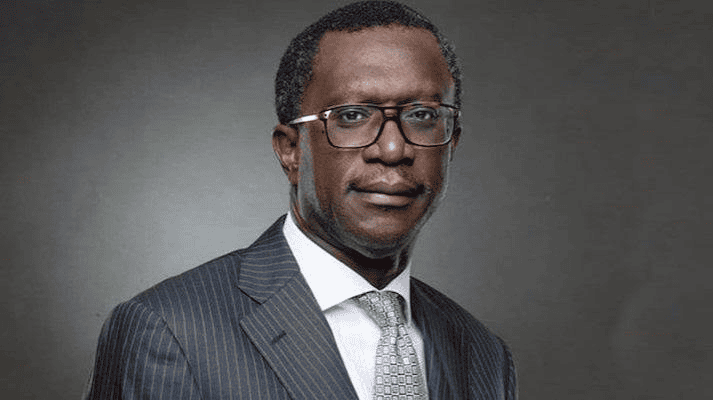
Investment banks exist to solve exactly this kind of bottleneck, and Renaissance Capital did what the job required. It stood up an entity called RC Investment Management Limited, incorporated in Nigeria on May 8, 2024, with Renaissance Capital Africa’s chief executive, Samuel Sule, listed as the person with significant control, and used it to absorb the entire block in one negotiated move.
In July 2025, across 17 off-market transactions, RC Investment paid ₦31 per share for all 10.43 billion units of First HoldCo, a total outlay of roughly ₦323 billion. Otudeko’s camp, through Barbican Capital and related nominee accounts, sold close to 7.79 billion shares.
Hassan-Odukale’s camp, through Leadway Holdings, Leadway Assurance and a run of pension custodial accounts, sold the remaining 2.28 billion. Both men walked away with cash immediately, and their stake in First Bank’s parent went into a holding pattern while regulators worked through what would happen to it next.
That holding pattern is what has now ended. With Central Bank and SEC approvals cleared, RC Investment is releasing the same 10.43 billion First HoldCo shares back onto the exchange at ₦110 each, a 15 to 18% discount to where the stock has been trading, which explains why investor appetite for the block has been strong.
The arithmetic behind the trade is where the real story sits. RC Investment bought at ₦31 and is selling at ₦110, a spread that turns into a gross gain of roughly ₦824 billion once the full ₦1.15 trillion in proceeds is set against the original ₦323 billion outlay. That gain does not belong to First Bank or its parent, has nothing to do with the group’s separate recapitalisation programme, and will not appear anywhere on First HoldCo’s own balance sheet. It belongs to whoever actually financed RC Investment’s purchase 13 months ago, and the company’s own filings do not say who that is.
While CAMA 2020’s Persons with Significant Control (PSC) guidelines mandate that a trustee like Samuel Sule be listed on CAC filings, Nigerian nominee and SPV rules permit the underlying financial backers to remain undisclosed to the general public. Indeed, public CAC records show RC Investment Management listed as "inactive", a common hallmark of purpose-built warehouse SPVs that execute a single billion-dollar asset pass-through without bothering to maintain routine annual return filings.
The question First Bank’s trade doesn’t answer
Some of the confusion around the deal is understandable, since a ₦1.15 trillion transaction naturally invites assumptions about capital raises, and rounding the offer price up toward the prevailing market price produced the inflated ₦1.4 trillion figure that circulated in several outlets.
First HoldCo has already moved to correct the record directly with NGX Regulation, confirming that neither Otedola nor any government agency has any stake in RC Investment, and that the entity is an independent third party executing a secondary sale rather than a primary one.
What the correction does not do is answer the more interesting question underneath it, which is who carried the risk on that ₦323 billion purchase for 13 months and is now positioned to collect the return on First Bank’s shares.
Samuel Sule’s name satisfies a disclosure requirement without answering the actual question, and the most reasonable assumption, that Renaissance Capital was fronting for a pool of client financiers, remains an assumption rather than a confirmed fact, because private SPV structures of this kind carry no obligation to say more.

What is not in dispute is what the trade does for First Bank’s parent company. The ownership overhang that had sat over the stock for more than a year is gone, the free float broadens as the block gets distributed to a wider set of buyers, and the control question that had shadowed First Bank since 2021 is now settled in Otedola’s favour without a single proxy fight.
Leadway exits a position that no longer matched its strategic priorities and frees up capital for its insurance and pension ambitions. Otudeko’s decade at the top of First Bank ends not with a boardroom vote or a court judgement but with a wire transfer processed through a company that barely existed three years ago.
The bridge did what bridges are meant to do, moving a quarter of First Bank’s holding company from one set of hands to another without anyone falling into the river in between. The identity of the toll collector and the size of the toll remain the one part of the story that neither First HoldCo’s clarification nor RC Investment’s filings have chosen to make public.
