



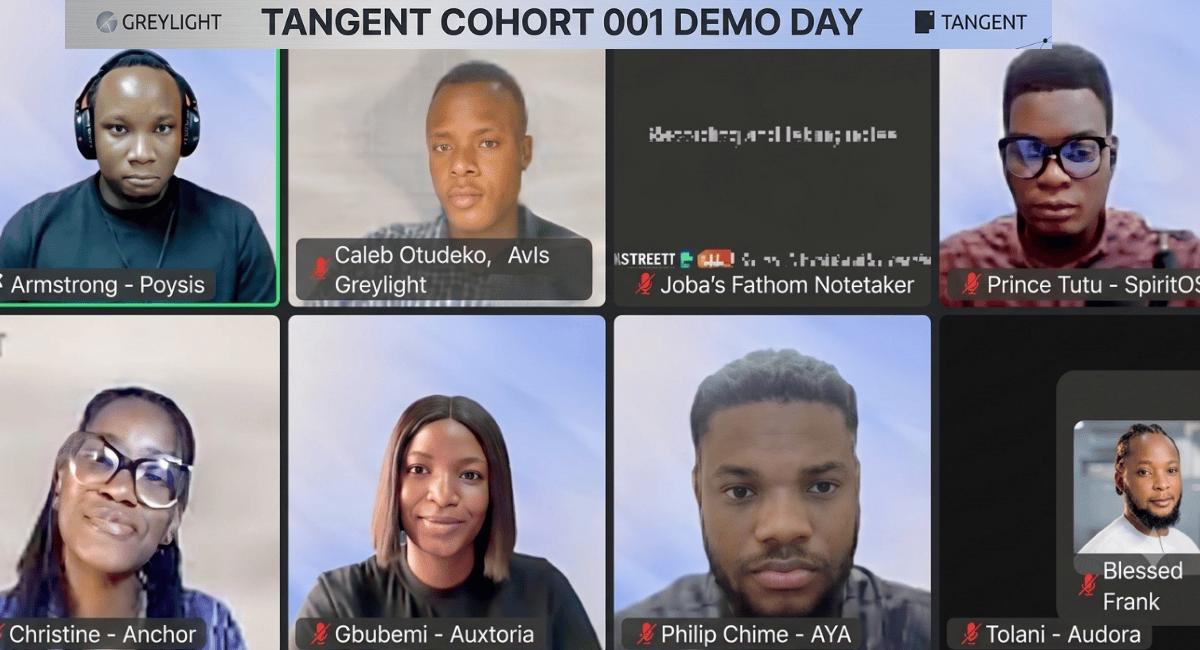
A venture capital demo day usually runs on one currency: traction. At Greylight’s first Tangent Cohort 001 Demo Day in Lagos, it ran on two, traction, and Scripture.
Six founders spent twelve weeks inside Tangent, a new “venture intervention” programme run by Greylight, a venture capital platform sitting at the intersection of media, entertainment and technology. At the end of it, they pitched investors, faculty and a digital room full of guests on Zoom.
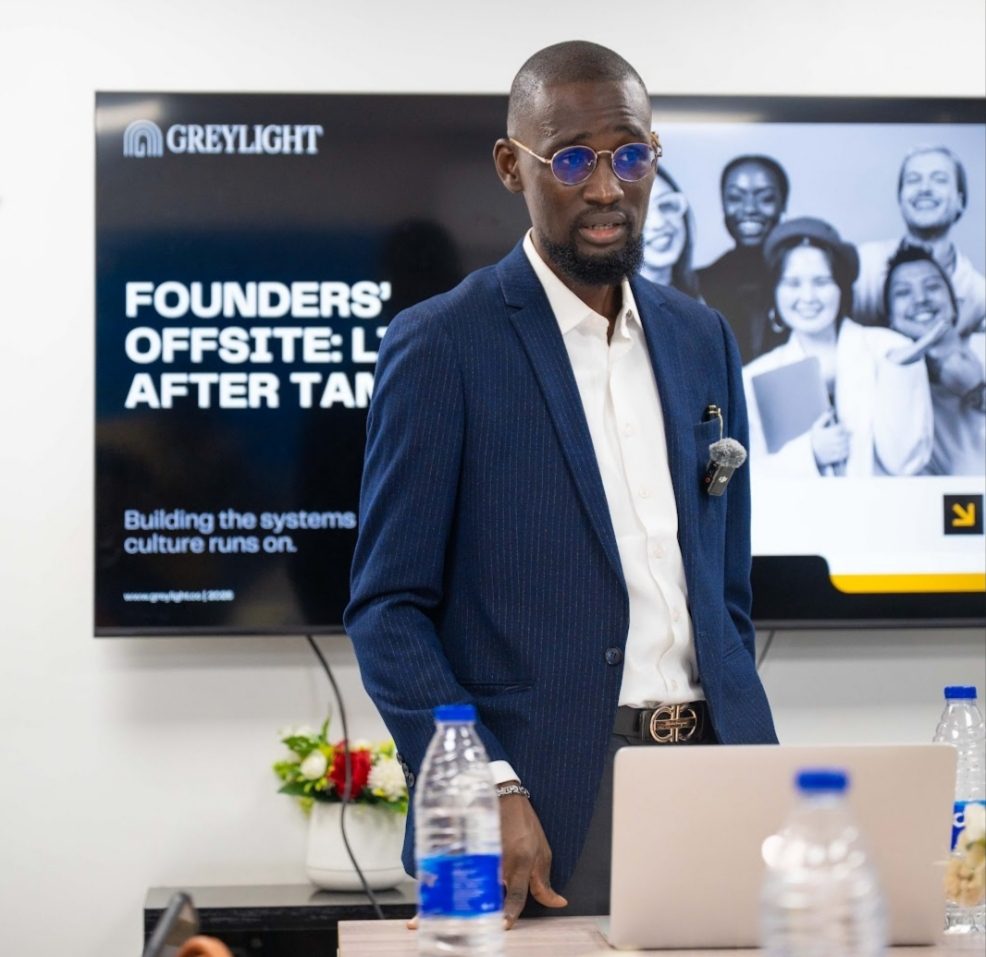
The thesis behind the programme, as Managing Partner Joba Adejumo laid out in his keynote, is unapologetically ambitious: culture follows distribution, and whoever owns the platforms, infrastructure and defaults that determine what scales ends up owning culture itself.
“Whatever becomes culture today, whatever becomes normalised today, is essentially what is most effectively distributed,” Adejum explained. He argued that the platforms controlling media and technology inherently govern human attention, imagination, and behaviour. By intervening at the earliest stages of venture building, Greylight aims to ensure these foundational systems are built ethically and redemptively.
Shola Oshinoiki, Founder of Josh Leadership Academy, echoed this sentiment, reminding the founders of the dual mandate of their entrepreneurial journey. “Yes, we want to see a cheque at some point. We want to see products sold, but ultimately we want to see the will of God being done,” he stated, highlighting the global faculty that helped shape the cohort’s conviction over the past three months.
That framing held for the whole event, but it didn’t spare a single startup from blunt commercial scrutiny once the pitches began.
Greylight: Six pitches, six reality checks
1. Auxtoria: Co-founded by Oritsegbubemi Makpokpomi and Ugochi Onwukwe, is a values-driven platform delivering interactive stories, games and learning content to children aged five to twelve, built around biblical values rather than pure engagement. Noting that most digital content for African children optimises for engagement rather than formation. The platform replaces passive screen time with active formation through interactive stories and games built around biblical values.
The company says it has roughly 2,000 families and five schools and churches, alongside a 200-plus waitlist and a 500-member “Heroes” community of parents and educators; the startup is showing strong early validation. Panellist Susanne Ogunleye, who said she has three children and knows “the battle we have with YouTube,” praised the mission but pushed the team to clarify their user retention strategies and monetisation pathways.
2. SpiritOS: Built by Prince Tutu, is a personalised devotional system combining adaptive scripture study, guided prayer, journaling and reflection into a single daily rhythm. Tutu told the panel the product deliberately avoids general-purpose models like ChatGPT or Gemini, instead running on a retrieval-augmented generation system trained on theological sources to keep answers doctrinally grounded.
The startup’s own profile puts current traction at 45 registered users with an average of 17 active returning users, considerably more modest than the 52 users and hundreds of generated messages and study paths cited during the live pitch. Ogunleye’s question cuts to the core risk of any AI-and-scripture product: “What safeguards exist against a new believer being misled by the model?” While Benjamin Udokwu followed with a harder one: “How Tutu plans to navigate churches wary of AI-backed doctrine?” Tutu’s answer positioned SpiritOS as a service arm to the church rather than a replacement for pastors or Scripture itself.
3. Ayamatch: Pitched by Philip Chime with co-founder Daniel Ayeni, is a faith-based dating platform matching Christians who are pursuing marriage rather than casual dating, using a psychometric onboarding process and identity verification to screen for character and cut down on romance scams.
The company’s official traction sits at 24 registered and active users since launch, against the 60 beta testers Chime referenced on stage. Bolu Olatunji delivered the sharpest structural note of the day here, one that applied well beyond Ayamatch: subscription models, he argued, rarely work in Nigeria unless bundled with hardware, as DSTV has shown, and a credit-based model may work better. He also told founders to stop pitching investors on marketing spend and instead frame fundraising asks around concrete growth milestones, “we want to raise $50k to reach our first $100k in ARR” rather than a vague marketing ask.
4. Poysis: Founded by Armstrong Olusoji, turns scattered institutional knowledge, sermons, legal briefs, and internal documents into a queryable archive that any team member can reason with, citing sources directly. Olusoji says the platform currently has two enterprise conversations ongoing, a far earlier stage than the pitch’s framing suggested.
Olatunji compared the product to a recontextualised Palantir and pushed Olusoji to abandon the wide net in favour of one anchor customer, asking how quickly he could reach $10,000 in monthly recurring revenue. Ogunleye raised the inevitable data-privacy question, which Olusoji said the company is addressing by building toward NDPC compliance, while Udokwu probed the ease of integrating with tools teams already use, Olusoji pointed to planned connections with Google Drive, Slack, Notion and ChatGPT.
5. Shama: From founder Victor Wave, gives ministries a dedicated home for sermon and worship audio, insulated from the algorithmic bias and content-removal risk of platforms built for secular content. Wave cited real precedent on stage: a Nigerian minister who lost a YouTube channel carrying over 1,000 subscribers and 600 sermons, and Canada’s Sermon Index, which suffered a comparable loss. The company’s official numbers put current traction at five ministries onboarded, more than 2,000 pieces of audio content, and partner ministries carrying a combined audience above 100,000, notably lower than the 200,000-plus figure cited during the live pitch.
Olatunji was the most sceptical voice of the day on this one, warning that warehousing thousands of sermons is expensive and that borrowed data can’t function as a defensible moat. Ogunleye asked the harder adoption question: why would a ministry already building its own app choose Shama instead, to which Wave argued that siloed, church-by-church apps fragment content that a centralised platform could otherwise unify. Udokwu noted that even ministries with their own platforms still need reach on YouTube, LinkedIn and Instagram, where the audience already is.
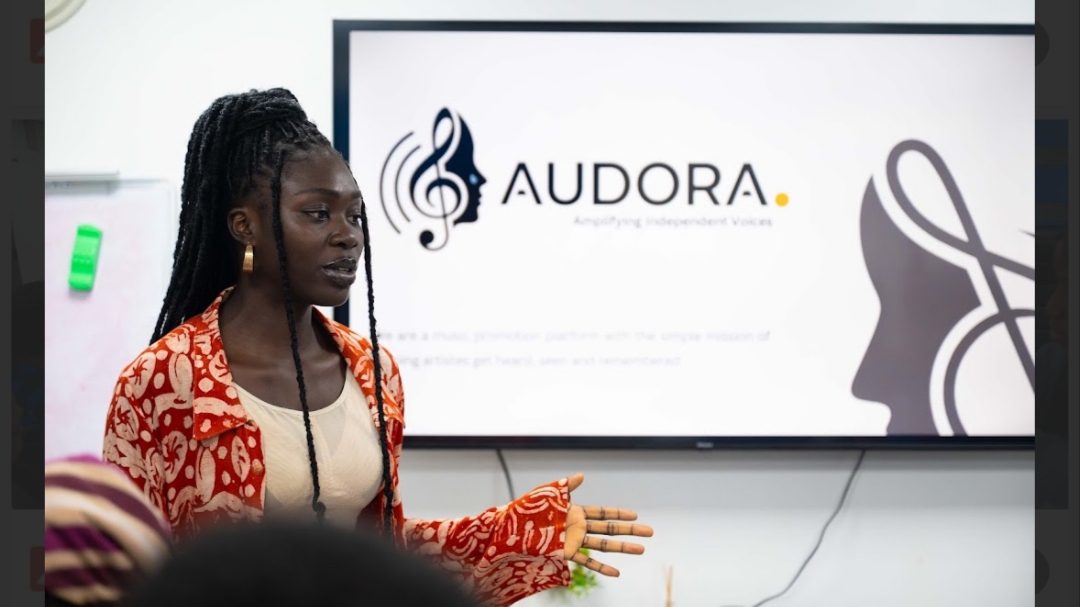
6. Audora: Founded by Tolani Abiodun, connects independent musicians with influencer-led promotion campaigns to solve music discovery rather than talent. Abiodun told the panel the model is built around human-reviewed promotion strategies rather than a purely automated one. Olatunji urged Abiodun to prioritise a first paying customer over chasing large industry partnerships, and to build in quality control so that music promised to reach a wide audience is actually worth sharing.
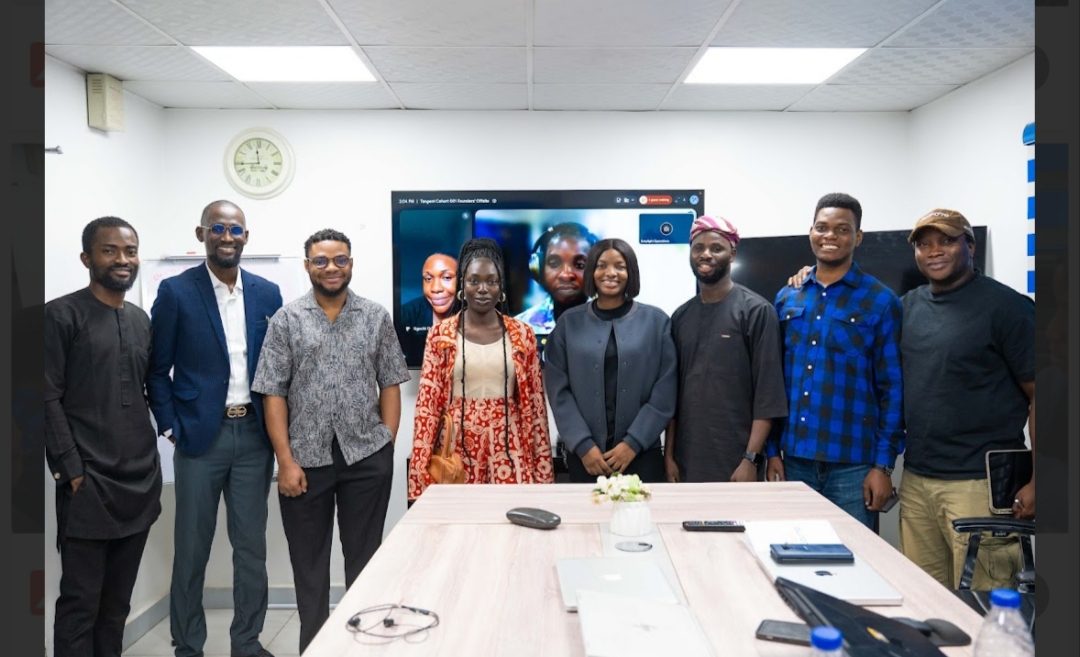
Ogunleye, who said she’d personally paid a promoter who later had to refund her after failing to secure streams for her AI-generated songs, called the market opportunity real and praised Audora’s campus-focused go-to-market approach, but questioned whether a human-centred service model can stay efficient at scale.
What stood out across all six pitches wasn’t the faith framing, it was how little the panel let that framing soften its feedback. Olatunji, Ogunleye and Udokwu pushed every founder toward the same fundamentals: verified retention, one real paying customer, a defensible cost structure, a fundable narrative.
Dr Okechukwu Enelamah, Chairman of ACA and Nigeria’s former Minister of Industry, Trade and Investment, one of the special guests at the occasion, used his address to argue that integrity and commercial success aren’t opposed, pointing to his own decades in the marketplace and public service as proof. “God is looking for ambassadors, people that can really showcase that serving God can lead to a better quality of life,” he encouraged, assuring them that building with absolute integrity inevitably yields long-term dividends.
Greylight is treating this as the opening move in a longer campaign. Adejumo said the firm is targeting a $1 million deployment across its portfolio over the next 12 to 18 months, with Tangent’s second cohort beginning in September 2026. Closing the event, he invited investors, mentors and prospective customers to get involved directly, framing the demo day itself as an attempt to get each founder their first paying customers on the spot.
