




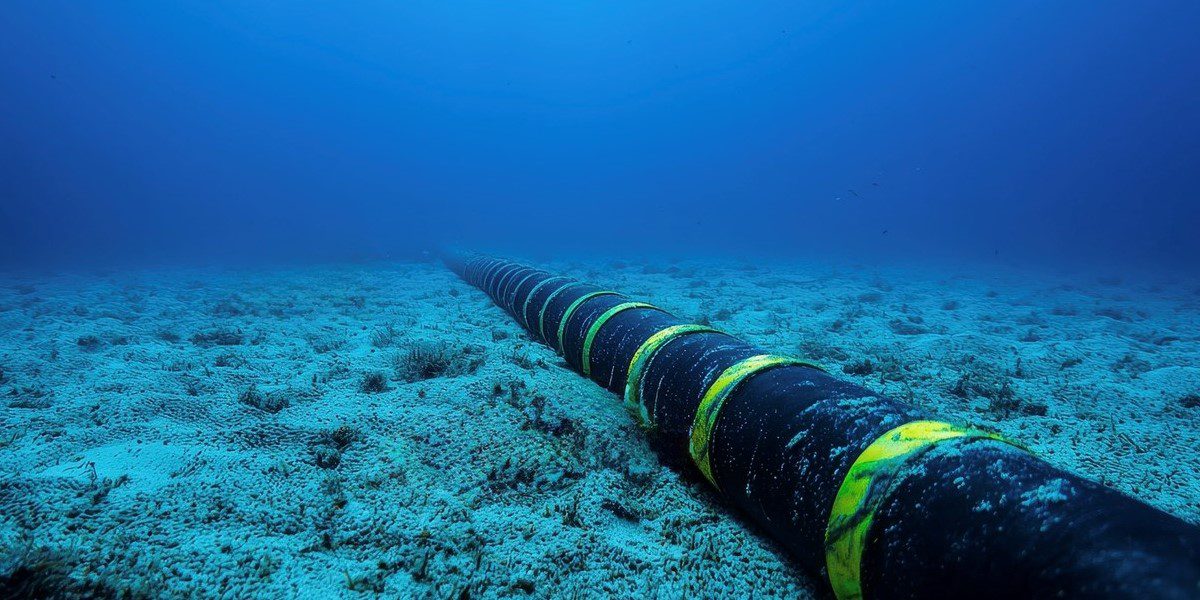
The International Telecommunication Union (ITU) has warned that Africa is critically underserved in terms of submarine cable infrastructure despite recent massive growth in internet penetration.
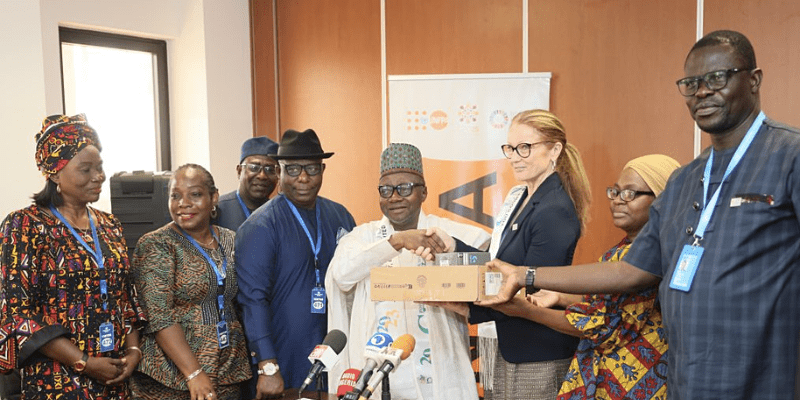
The warning is contained in its latest report on the state of global submarine cable, titled “International Advisory Body on Submarine Cable Resilience: Report of the Working Groups”. Present as the Co-chair of the board is Nigeria’s Minister of Communications, Innovation and Digital Economy, Bosun Tijani.
In its advisory to Africa, the board warned that having only one submarine cable repair firm means Africa could face lengthy internet outages when issues arise. Depending on a single repair firm when a cut happens leaves millions of Africans disconnected or without a quality network.
“Despite growth in internet connectivity, Africa remains critically underserved by submarine cable repair infrastructure,” part of the report reads.
Africa’s entire submarine cable network is only served by Orange Marine’s Léon Thévenin, the Cape Town-based cable layer. While it’s based in the South African city, the ship is not stationed in Africa, but in the south of France. It has been crossing the continent’s coastline for years to fix broken cables.
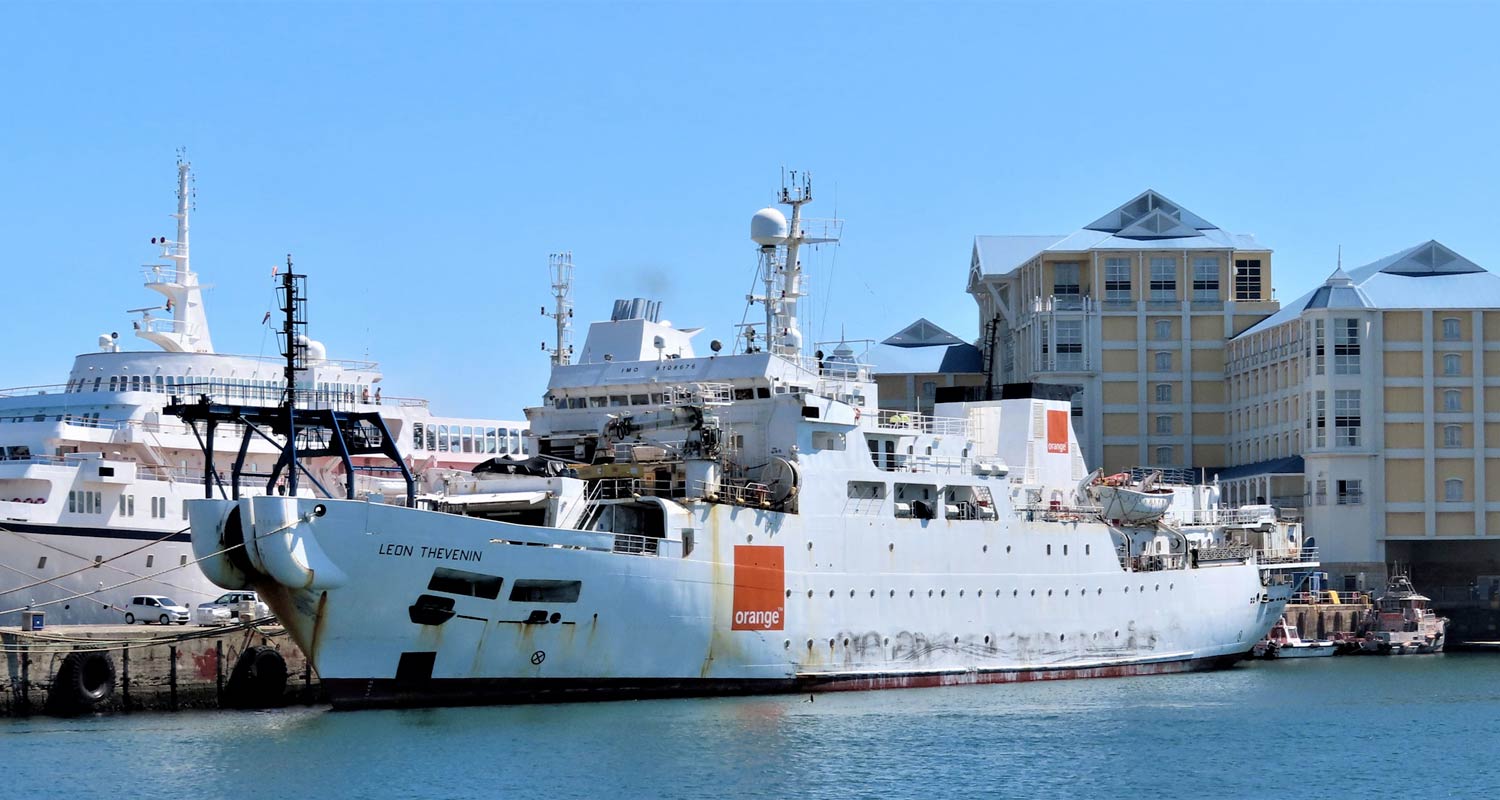
Its recent repair was when it travelled back to Africa and voyaged a long distance to fix rockfall-damaged cables off the Congo River to break off East Africa.
“Many of this region’s cables traverse vast stretches of unprotected waters, with only one permanently stationed repair vessel, based in South Africa, to serve the entire region,” the report noted, spelling the risk of staying offline for a long period.
In another scenario, the ITU report noted that depending on a single-ship submarine cable repair means that when Africa experiences multiple faults across different countries, the repair phase will be slow, as one will have to wait for another.
For instance, if a fault occurs near Dakar, West Africa, while the vessel is repairing a cable in Mombasa, East Africa, the response time would be extremely lengthy.
“At over 10,000km, the immense transit distance would be a journey comparable to a transoceanic route, like Shanghai to Los Angeles,” the ITU report said.
References on Africa’s lengthy submarine cable repair
Internet outages in Africa, stemming from lengthy submarine cable repair times, have shown the infrastructure deficit and what it means for the continent.
The dual cable breaks of 2020 and 2023, caused by rockfalls in the Congo Canyon, left sub-Saharan users with severely throttled connectivity that disrupted financial markets, cloud services and cross-border data flows. The Congo River system had been flagged as an area where climate change could make submarine landslides more likely.

Another example occurred in March 2024, when four cables that served West Africa suffered cuts. The incident disrupted connectivity to 12 countries in the region, with Nigeria losing an estimated $590 million over the four days.
Africa is connected to the world by multiple major submarine fibre-optic cables. The largest is the 2Africa cable, a 45,000 km network that encircles the continent, linking it to Europe and Asia. Other vital systems include Equiano, ACE, and the West Africa Cable System (WACS).
Also Read: Nigeria to invest $2 billion in 90,000 km of submarine cables to connect more Nigerians.
Mechanisms for solution
The ITU report recognised collaboration efforts by the African government in creating funding interventions for more infrastructure. It warned that a disruption that might cause serious outages to drag on for days might occur.
On its own part, Orange Marine has begun renewing its own fleet.
In November 2025, the company ordered two new hybrid-powered cable ships from Sri Lanka’s Colombo Dockyard to replace the 43-year-old Léon Thévenin. Delivery is expected only in 2028 and 2029. This means that there’s no immediate relief for Africa for at least another two years.
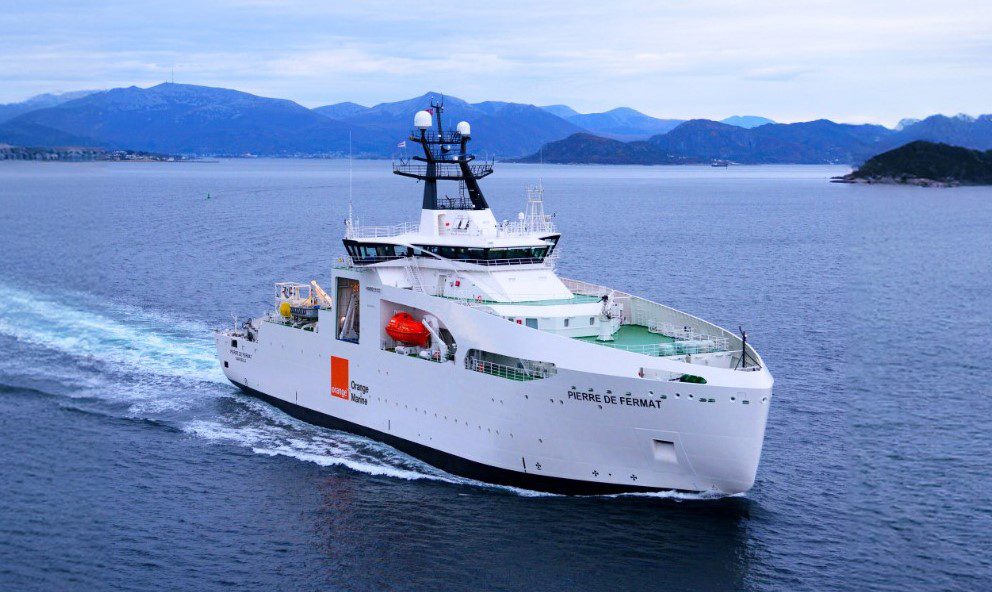
It’s $57 million Sophie Germain, its other fleet that has been in service since 2023, repairs cables in the Mediterranean and Red Sea, including North and East African routes. The company noted that the ageing of the cable ship fleet has been a major concern for all players in the submarine cable industry.
Submarine cable repair gap: not peculiar to Africa
While the submarine cable repair vessel gap exists in Africa, other continents also belong to this group.
Africa, the South Atlantic and the Pacific Islands together account for only about 13% of the world’s active cable repair vessels. The South Indian Ocean and the south-east Pacific have no permanently stationed repair vessels at all.
However, the Asia-Pacific and the North America/Europe/North Atlantic region are still the highest, with about 40% of the world’s repair vessels stationed across the regions.
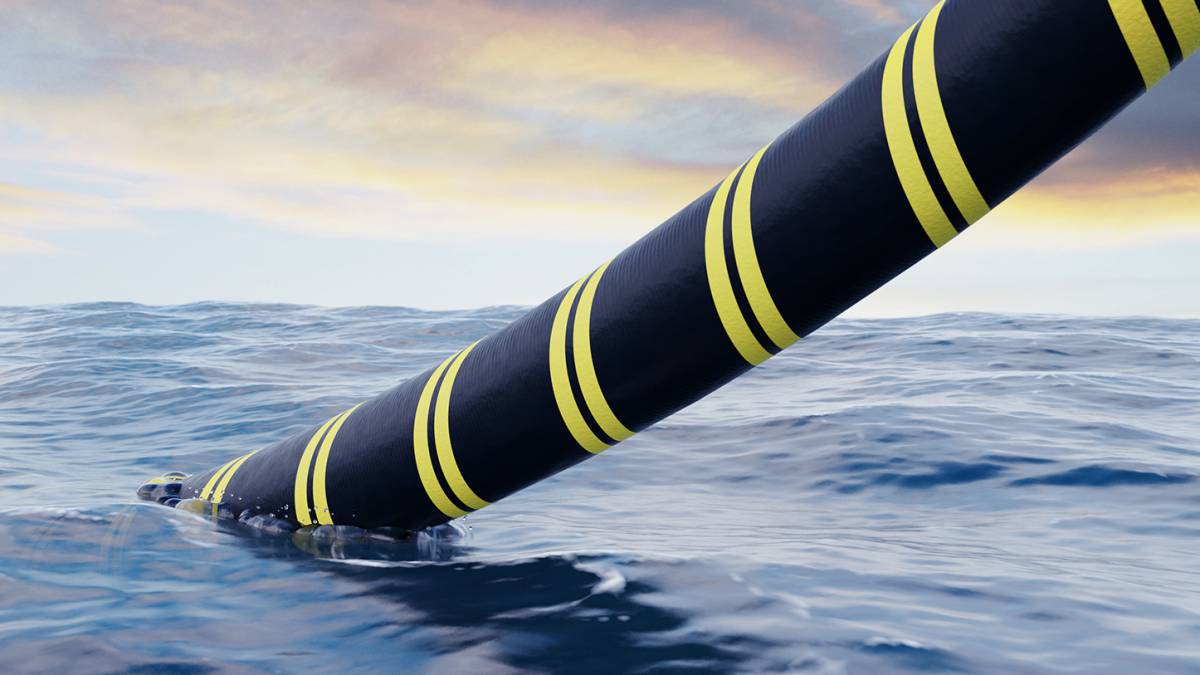
The situation signifies not an Africa-specific gap but a global issue.
The global network suffers 150 to 200 faults a year, with over 80% of them being caused by human maritime activity, attributed to commercial fishing gear and dragged ship anchors. Within this, the average response time globally doubled from less than 20 days to more than 50 days between 2012 and 2024, while repair volumes and the number of available vessels remained stable.
Identified factors contributing to the lengthy repair time include infrastructure deficit, regulatory bottlenecks involving complex and lengthy permitting, taxes, duties on repair vessels and cabotage rules designed for other maritime industries.
