




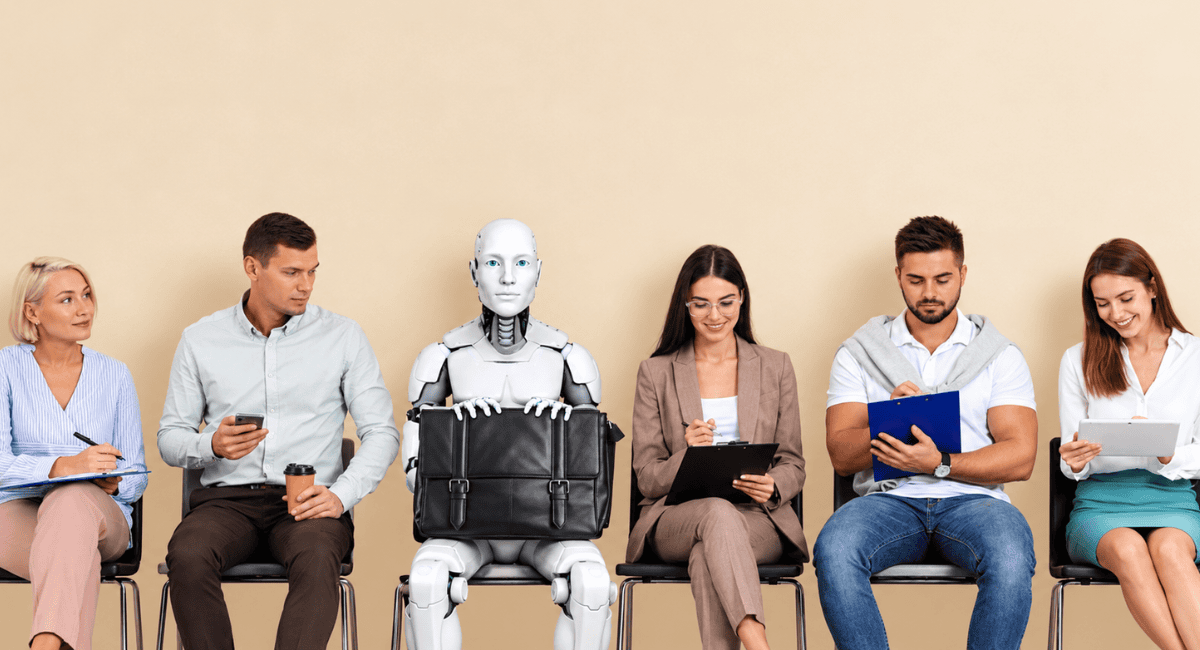
For years, conversations about careers in AI have largely focused on programmers, machine learning engineers and people building sophisticated software. But behind the technology are workers recording voices, reviewing chatbot responses, labelling images, testing products and helping machines understand human behaviour.
The opportunities are emerging as AI adoption grows. A Google-Ipsos survey published in January 2026 found that 88% of Nigerian respondents had used an AI chatbot, highlighting the growing familiarity with the technology among the country’s online population.
Nigeria is also developing its own AI systems, including N-ATLAS, a multilingual language model launched in September 2025 to improve how artificial intelligence understands Nigerian languages.
For people who speak local languages, understand specialist subjects or have strong communication skills, these developments offer opportunities beyond traditional software engineering.
1. AI tutor or trainer

This involves training AI to write and rate answers that help chatbots learn. AI tutors check whether a response is correct, accurate, clear and safe. To be an AI tutor, subject expertise or a deep study beyond a degree is required. A strong command of written English is an added advantage, alongside keen attention to detail and patience to review large volumes of answers carefully.
Landing an AI tutor job usually involves an identity check, CV, language skills test that you must pass without using AI tools. Platforms advertise about $15 to $25 an hour for beginners and $40 to $50 or more for experts in fields such as medicine or law, but this is contract work, so income is not guaranteed and slow periods are normal.
For Nigerians, access depends on the platform, because some, such as Outlier, reject Nigerian phone numbers, and others recruit mainly in the United States. Buying accounts or using VPNs to get around this breaks platform rules and risks a ban. To be an AI tutor, it is important to check that a platform accepts Nigerian workers before you apply, and never pay a fee to apply.
2. Robot-training data collector
Humanoid robots cannot learn household tasks from text alone; they need to see how people do them, and that need has created a new kind of remote work. Collectors film themselves doing everyday tasks at home, such as folding laundry, washing dishes, cooking, ironing and making the bed.
A smartphone is strapped to the forehead so the footage matches what the person sees, and some workers also use a ring light. Robotics companies buy the recordings and use them to teach machines how human hands move and handle objects. Firms such as Micro1, a US-based company, hire workers for this and issue weekly instructions, for example, to keep both hands visible and to move at a natural pace. No degree or coding skill is required. What you need is a smartphone, a head mount, good lighting, a home with enough space to film varied tasks, reliable internet for uploading video, and the discipline to follow the recording guidelines closely.
Reported earnings are about $15 an hour, which is high by local standards, and payment is usually in dollars. The entry barrier is low, the hours are flexible, and workers can stop at any time, so the job can sit alongside studies or another income.
3. Data annotator
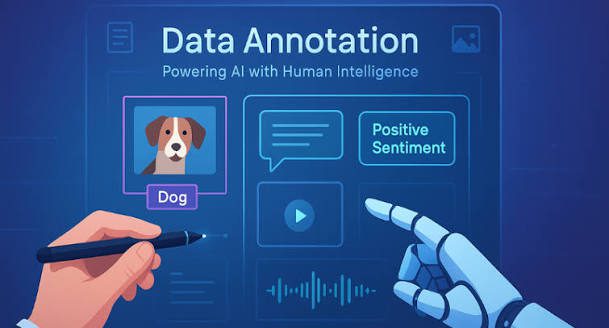
You have probably cleared a “select all the traffic lights” test without thinking about it. It was easy, right? A data annotator does a bigger version of simply selecting images. Data annotators are in charge of labelling images, sorting text, transcribing audio and marking errors so that AI systems learn what they are looking at. It involves detailed tasks where accuracy matters more than speed.
The upside is that you can start without a computer science degree, and the work can be done from home. Beginners on global platforms are often quoted around $15 to $25 an hour, with experts earning more.
Some platforms reject Nigerian phone numbers outright, and others mainly recruit in the US. TELUS Digital lists Nigeria-specific roles, such as AI Community Surfer, which focus on English-language evaluation.
4. AI video and voice-over producer

A small business owner in Lagos can now turn one product photo into a video advert in Pidgin, Yoruba, Igbo or Hausa, and an AI voice can read the script in minutes. The person who makes that process work is the AI video and voice-over producer. This producer uses AI tools to write scripts, generate visuals and voices, edit the result and deliver finished adverts, dubbed videos and social media content for clients.
Producers choose the right tools, write prompts and scripts that sound natural in the target language, fix mistakes in pronunciation and tone, and edit the output so it looks and sounds professional. Many also work in a traditional role as an editor, voice actor or content creator and add AI to speed up delivery. The skills needed include video editing, scriptwriting, and a good ear for local speech.
A single person can do what once needed a camera crew, a studio and a voice artist, which opens the market to small sellers who could never afford a conventional advert.
5. Voice data contributor
Imagine being paid to read sentences aloud in Yoruba, Igbo or Hausa, so that a voice assistant can one day understand or interpret another language the way a native speaker would. That is the job of a voice data contributor.
Nigerian languages are underrepresented in AI because models learn from recordings, and only a few exist. Voice data contributors read prompts aloud in their own language so that developers can train speech systems. Thousands of Nigerians recorded speech in Yoruba, Igbo, Hausa, Efik, Ibibio and Nigerian Pidgin for N-ATLAS, recruited through the government’s 3MTT programme and a platform called LangEasy.
This AI work needs a clear voice, fluency in the language and a quiet room to record professional audio. N-ATLAS was trained on more than 400 million tokens of multilingual data and released as an open base for developers. Awarri, the company behind it, says it reaches more than 80% accuracy across supported languages.
6. Speech annotation specialist
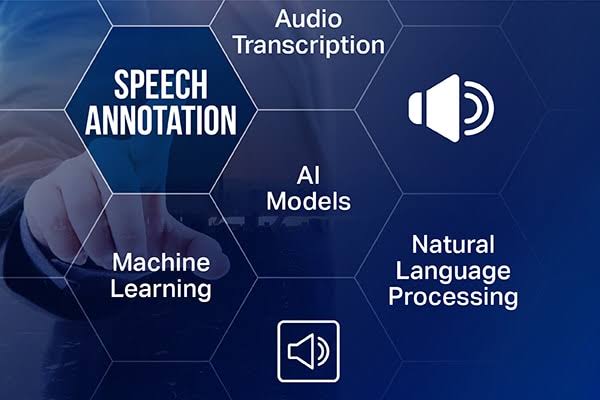
Once recordings exist, someone must label them and determine whether they are usable. A speech annotation specialist listens, transcribes and checks whether what was said matches what was written.
Speech annotation specialists work with real language and can grow into reviewing and quality control. In the NaijaVoices project, the roles included facilitators, sentence writers and reviewers. The challenge is that it takes patience to be a speech annotation specialist, because tone, slang and code-switching between English and Pidgin make transcription harder than it sounds, and the same clip can be heard two ways.
In Yoruba, pitch changes a word’s meaning, so a model cannot learn the language from raw audio alone. Annotators mark tone, pronunciation and context.
This role particularly suits linguists and trained listeners. A background in linguistics matters because systems trained on English-based methods handle tonal languages poorly, and because few of such collections exist for Nigerian languages; each one built makes later models better.
7. NLP engineer for Nigerian languages
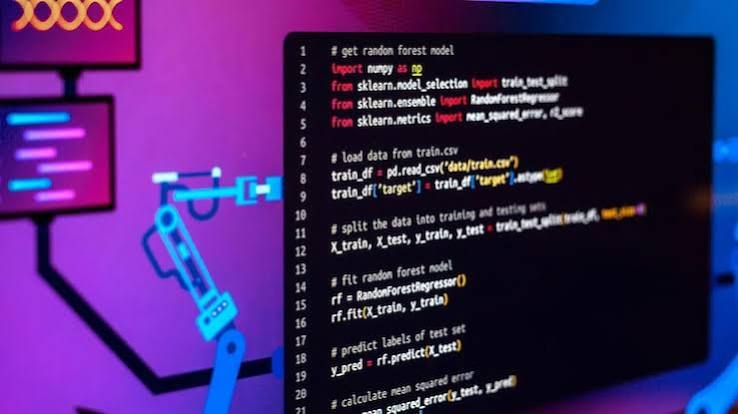
Natural language processing (NLP) engineers build and test models that understand and produce human language. In Nigeria, much of the work is adapting those models to Yoruba, Igbo, Hausa and Pidgin, where far less data exists than for English.
Engineers collect and clean text and speech data, then train, fine-tune and evaluate models for tasks such as translation, speech recognition, text summarisation and chatbots. A large part of the work is checking where a model fails, for example, when it mishandles tone marks in Yoruba, mixes up dialects, or breaks down when a speaker switches between English and Pidgin.
The role calls for programming skills, knowledge of machine learning, comfort with common model-building tools, and patience with small, messy datasets. Fluency in at least one Nigerian language is a strong advantage because you can spot errors that a foreign engineer would miss.
8. AI trainer for health or legal topics
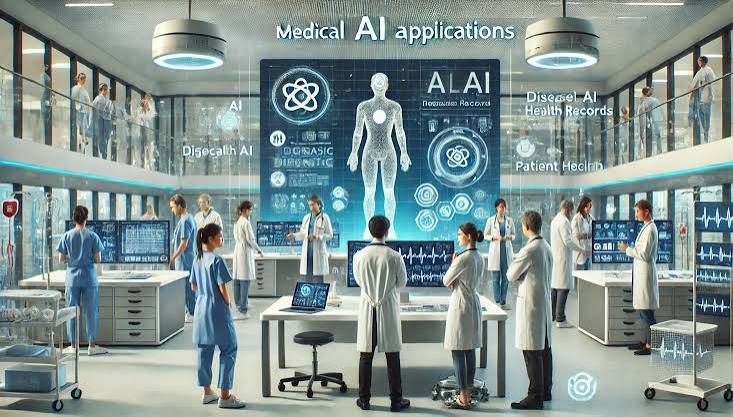
When someone asks a chatbot about a drug dose or their rights as a tenant, a wrong answer can cost them money or harm their health. This is why AI companies hire doctors, nurses, pharmacists and lawyers to train and check their models. An AI trainer for health or legal topics compares AI responses, rates them for accuracy and safety, and rewrites answers that are wrong.
They also flag replies that give advice a model should not give, such as a firm diagnosis or a guaranteed legal outcome. Trainers also write test questions from real cases so developers can measure how well the model performs. Good judgment and clear written English matter as much as the qualification. Most platforms ask for proof of credentials, an identity check and a subject test.
Platforms have advertised rates of about $40 to $50 an hour or more for experts in fields such as medicine and law, compared with about $15 to $25 for beginners, and the work is remote and flexible enough to do alongside a full-time job.
9. Cultural and language consultant for AI
Models trained on foreign data struggle with slang, proverbs and everyday Nigerian speech. Cultural and language consultants check that an AI sounds natural and does not misinterpret local expressions. The team behind N-ATLAS worked with cultural experts to help the model handle this kind of speech.
Writers, translators, linguists and cultural specialists are well placed for this work. Yoruba, for example, depends on tone for meaning, and a model that ignores it will make mistakes that a native speaker would catch at once. Consultants review AI answers, flag errors, rate example responses and explain why an expression is polite, rude or sarcastic in context.
The main challenge is that this is rarely a full-time job with a formal title. It usually comes as short contracts, so income can be irregular, and speakers can disagree about what sounds natural. To start, keep a record of the mistakes you find in popular AI tools, with the correct versions beside them, and use it as a portfolio.
10. AI education solutions developer

Many Nigerian classrooms have too few teachers and too little time, and AI education developers are working on tools that could help. These developers build and adapt AI for teaching, such as tutors that explain a topic, quiz generators and tools that help teachers track progress. The job suits teachers and developers who understand both the technology and the learners. Developers choose and adapt the model, while teachers check that the answers are correct, match the syllabus and are pitched at the right level.
Open models trained on Nigerian languages can be adapted for local lessons without paying a foreign company for every query, which matters for schools with small budgets. Lena launched in September 2025 and has reached two schools and about 380 students. It charges N20,000 per student per term and is building an offline version of its AI for places with poor internet. For Nigerians interested in this field, understanding the local curriculum and the challenges facing schools can be as important as knowing how to use AI tools.
Read also: Podcasts and livestreaming offer Nigerian creators the next growth frontier… with little pay
