



For years, the deal between brands and influencers was simple: build an audience, become popular enough for companies to notice, promote their products and get paid. The bigger the following, the greater the bargaining power.
That model is still working for many creators, but the business around it is changing.
Brands are becoming more careful about what they pay influencers, while audiences are getting better at spotting sponsored content. At the same time, UGC creators are showing that you do not need hundreds of thousands of followers to produce content that works. More businesses are also learning to create the kind of content they previously paid influencers to produce.
These changes are raising a bigger question for Nigerian creators: is influencer marketing losing its value, or is the industry simply changing?
Popular Nigerian influencer Opeyemi Famakin believes the decline has already started.
During a campaign for a business in Abuja, he sat with the owner and discussed how the establishment could stand out online. The owner naturally assumed influencers would be part of the answer. Instead, Opeyemi offered to teach her how to create content herself.
“I will teach you how to create content to the point that you will not need influencers,” he recalled telling the business owner.
It might sound counterproductive for an influencer to teach a client how to do without influencers. But for Opeyemi, that was the point.
According to him, the establishment eventually became capable of generating between 15,000 and 20,000 views on its Instagram and TikTok posts without having to hire an influencer each time it wanted attention.
Opeyemi’s experience points to a broader change in how businesses are approaching creator marketing. Influencers are not suddenly becoming irrelevant. But the advantage of knowing how to create content and attract attention is no longer limited to them.
When everybody can create, influence becomes harder to sell
There was a time when brands needed influencers because they understood social media better than most businesses did. They knew what people watched, how to speak internet language and, most importantly, already had the audience.
Today, that gap is shrinking.
“Founders are now creating content. Your gym coach is now creating content. Doctors are now creating content,” Opeyemi said
His argument is that social media has “democratised” influence.
The size of Nigeria’s creator economy also shows how much the market has grown. Nigeria now has more than 250,000 active influencers and content creators, according to a 2026 industry outlook. The same report noted that brands are increasingly shifting from simple reach towards performance-driven campaigns and measurable results. Yet that does not mean companies have stopped spending on influencers.
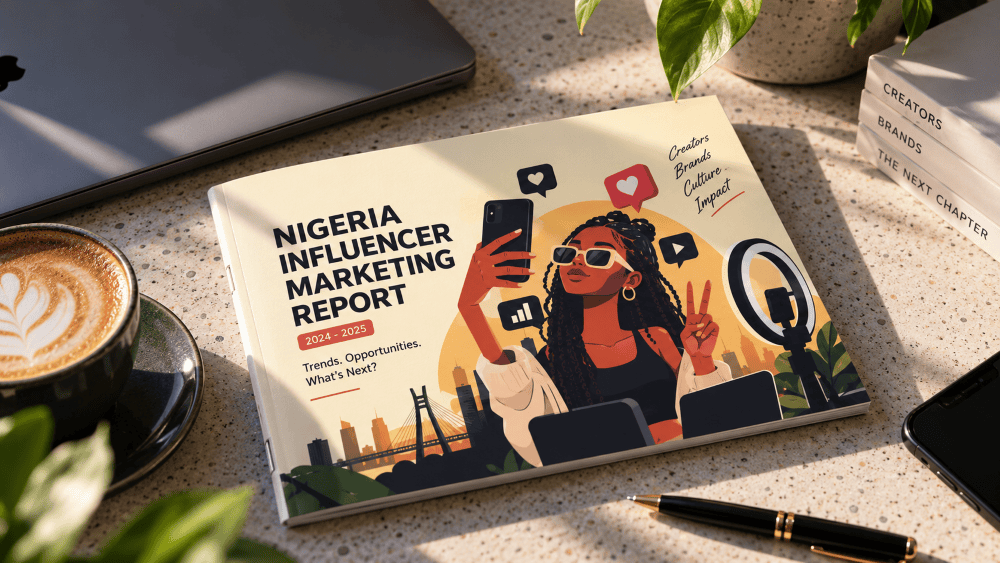
Nigeria’s Influencer Marketing Report says the industry generated an estimated ₦161.4 billion in spending between 2021 and 2025, describing a market that has moved from experimental influencer campaigns towards a more structured and data-driven ecosystem.
The trend is similar globally. IAB expects US creator advertising spending to reach $44 billion in 2026, while its September advertising outlook found creator and influencer partnerships among the areas receiving increased advertiser attention.
Brands are still spending money on creators, but they are becoming more selective about who they pay and what they expect in return.
A large following once answered the question. Now brands want to know whether those followers listen, trust, click or buy. That's where some influencers struggle.
People know when they are being sold to
Audiences have changed too. On Instagram and TikTok, people can often tell almost immediately when a creator has moved from regular content into a paid promotion.
The creator introduces the product, lists its benefits and mentions the company several times, then ends with a discount code or call to action. Sometimes viewers start scrolling before the pitch even begins.
Content creator, Mercy The Influencer, weighing in on the debate, believes this is why influencer marketing has to change.
“Once people sense marketing from the jump, they skip,” she said.
For her, the next stage is storytelling marketing. She points to creator Opeyemi as an example. Instead of opening a video by announcing the store he is promoting, he might begin by telling viewers that he plans to spend more than ₦11 million.
The approach gives viewers a reason to keep watching before they even know what product is being promoted. They want to find out what he is buying, why he is spending that much and where he is going. The brand can then become part of the story rather than the entire story.
“The next big type of marketing coming is storytelling marketing,” Mercy said.
The problem, she argues, is that some brands still commission creators because of their ability to connect naturally with audiences, then hand them rigid briefs that make the resulting content feel like traditional advertising.
That creates a problem for brands and creators alike. Brands still want creators, but audiences are increasingly responding to content that feels less like a conventional advert.
This also explains the growing appeal of UGC.
A brand that needs product demonstrations, testimonials, lifestyle videos, skincare demos, and voiceovers no longer necessarily needs a famous person. It can hire someone specifically because they know how to make relatable content.
The difference is largely in what the brand is paying for. With an influencer, the audience is part of the value. With UGC, the brand is often paying for the content itself, even if the creator does not have a large following. Both can coexist, but the second model gives brands another choice.
Influencers are still valuable, but the rules are changing
This is perhaps where claims that “influencer marketing is dying” become misleading.
There is little evidence that brands are abandoning creators. IAB found that nearly half of creator-ad buyers already consider creators a “must-buy, ” while 40% rank overall return on investment as their most important creator-campaign metric.
The industry is therefore not approaching an obvious death, but a harder standard. It is also why some creators are urging influencers to build beyond sponsored posts.
“Productise yourself. Monetise your knowledge,” Mercy said, arguing that creators should turn influence into products, intellectual property, communities, businesses and other things they actually own.
If influence itself is becoming easier to acquire, merely having a large following is therefore a weaker advantage than it once was.
Brands can now create more content themselves, UGC creators are competing for the same marketing budgets, and audiences are becoming harder to impress. For influencers, the message is becoming clearer: a large following can open the door, but creators now need to show brands what they can do with it.
Read also: 10 Nigerian creators that are building businesses beyond social media
