



Open YouTube on a Friday evening, and there is a good chance that a Nigerian filmmaker has released a new movie. Within hours, thousands of viewers are discussing the storyline, arguing about their favourite characters and suggesting what should happen next, while others are sharing interesting scenes and reviews across TikTok and Instagram.
Some of these movies attract millions of views within days, even though they never appear in cinemas or on subscription streaming platforms. The views have become the foundation of an increasingly competitive filmmaking business fo producers.
One film that demonstrated just how successful this model could become was Omoni Oboli’s Love in Every Word. Released in March 2025, the romantic drama starring Uzor Arukwe and Bamike Olawunmi-Adenibuyan, popularly known as Bambam, quickly became an internet sensation, with expressions such as Achalugo and Odogwu Paranran dominating conversations across social media.
Within three weeks, it had surpassed 20 million YouTube views.
When YouTube published its ranking of Nigeria’s ten leading creator channels in December 2025, nine were dedicated primarily to filmmaking. Omoni Oboli TV led the list, followed by channels including Itelediconstudio, Uchenna Mbunabo TV, Saira Movies, Maurice Sam TV and RuthKadiri247. Comedian Brain Jotter was the only creator whose channel was not primarily focused on movies.
While much of Nollywood’s public attention still revolves around cinema box-office records and expensive streaming productions, these filmmakers have been developing another business, where producers can finance their movies, distribute them independently and earn from audiences they have spent years building.

How Nollywood found an audience on YouTube
Nigerian filmmakers were uploading movies to YouTube long before producing exclusively for the platform became an attractive business.
During the home-video era, distributors made money selling films on VHS tapes, VCDs and DVDs, with markets such as Alaba in Lagos playing an important role in getting Nollywood productions into homes. As internet access expanded, some distributors began bringing their existing catalogues online, allowing people watch films that had already completed their initial commercial runs.
One of the earliest examples was NollywoodLove, a YouTube channel established by entrepreneur Jason Njoku in 2010. Its collection of Nigerian movies attracted substantial interest, particularly from audiences outside the country, before the business expanded into the dedicated streaming service iROKOtv in 2011.
A different experiment followed when Nigerian banks began investing in original online entertainment. GTBank launched Ndani TV in 2012, UBA introduced REDTV in 2015, and Access Bank developed Accelerate TV, using entertainment to connect their brands with younger audiences. Productions such as Gidi Up, Skinny Girl in Transit and The Men’s Club helped establish a following for Nigerian web series, with viewers returning for new episodes instead of waiting for television broadcasts.
These productions were largely supported by corporate marketing budgets, allowing the banks to finance entertainment without depending entirely on advertising revenue from YouTube.
The situation was quite different for independent filmmakers. Rather than producing content to promote another business, they could make movies specifically for YouTube and potentially recover their investment from the audiences watching them.
Ruth Kadiri was among those who began experimenting with this approach before the current popularity of YouTube filmmaking. In a June 2024 interview with BBC Pidgin, she explained that she had become interested in the platform after noticing how other filmmakers were distributing their work online, eventually deciding to develop a space where she could release her own stories.
Kadiri’s decision proved particularly significant as the opportunities available through international streaming services became less predictable. Amazon Prime Video reduced its African original-production activities in 2024, while some Nigerian filmmakers reported that Netflix had suspended or shelved projects, although the company maintained that it was not leaving Nigeria.
So for producers who could not secure favourable distribution agreements, an established YouTube audience offered another way to finance subsequent projects without waiting for international platforms to commission them.
Also read: Here are 10 women dominating Nollywood’s box office in 2026
The business behind the movies people watch for free
Unlike cinemas, where audiences purchase tickets, YouTube allows eligible filmmakers to earn from advertisements displayed around their movies. Under its Partner Programme, creators receive 55 per cent of net advertising revenue generated from advertisements on long-form video watch pages.
The amount earned depends on advertising demand, audience location and how many views generate advertising revenue, meaning a film attracting millions of viewers is not necessarily profitable once production expenses are considered.
Industry estimates suggest that a million YouTube views could generate between $1,500 and $5,000, with channels attracting substantial audiences in higher-paying advertising markets potentially earning more. These are indicative estimates rather than guaranteed rates, and actual earnings can differ considerably between productions.
Ruth Kadiri’s business shows just how significant audiences can become. In January 2026, she disclosed that her English and French channels had attracted more than 4.6 million subscribers and 742 million cumulative views.

Her expansion into Francophone Africa included the November 2025 premiere of Le Désir Ardent du Roi in Gabon, demonstrating how Nigerian filmmakers can build audiences beyond English-speaking markets and develop additional distribution opportunities for their productions.
That international reach has become particularly valuable. In August 2025, YouTube disclosed that more than 70 per cent of views on Nigerian-produced content originated outside the country, while over two million Nigerians were watching the platform on television screens. For producers, viewers in countries with stronger advertising markets can generate higher revenue per monetised view, allowing them to earn foreign currency while paying many production expenses in naira.
Advertising is also becoming only one part of the business.
Earlier this month, MTN Nigeria announced a partnership with Omoni Oboli to support seven Christmas movies scheduled for release on her YouTube channel. Alongside the productions, the telecommunications company is promoting YouTube data bundles that could make watching the films more affordable for Nigerians.
Oboli explained that producing seven films for the festive season would have been considerably more difficult without MTN’s involvement. Although the financial terms were not disclosed, the arrangement shows how an established YouTube channel can attract corporate sponsorship based on the audience it commands, rather than depending exclusively on the advertising revenue generated by individual films.
The pressure to keep producing
Behind the millions of views is a production schedule that leaves filmmakers with little room to slow down.
Oboli, whose channel releases original movies every Friday, disclosed in an interview that her team had completed between eight and ten films before beginning regular releases. This allowed the crew to continue shooting new projects while previously completed productions were being uploaded.
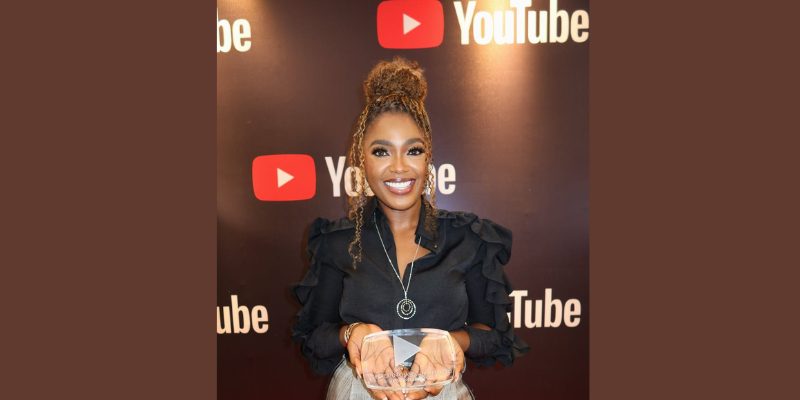
The arrangement provides ongoing employment for writers, directors, cinematographers, editors and other production professionals, although the demanding schedule can leave crews working on several projects within relatively short periods.
The pressure to keep producing also creates financial risks beyond the money spent on filming.
In January 2026, actress and filmmaker Bimbo Ademoye complained that her movie Where Love Lives, which had attracted millions of views, had lost monetisation following a disputed copyright claim involving its soundtrack. A similar problem emerged in November when another copyright claim affected her film My 30th Wedding.
Ademoye alleged that someone had claimed ownership of music produced specifically for her film, interrupting its monetisation until the issue was resolved.
There are also regulatory obligations. Nigeria’s National Film and Video Censors Board requires films distributed in the country, including digital releases, to undergo classification, while its published licensing schedule lists a ₦1 million fee for YouTube operators and a separate ₦50,000 processing fee.
For smaller production companies, these requirements add to the expenses of operating in a business where advertising earnings are already difficult to predict.
YouTube has given Nigerian filmmakers greater control over how their stories reach audiences, but it has also introduced new financial pressures and dependencies. As more producers build their businesses around the platform, Nollywood is entering another phase of its evolution, one whose long-term impact on filmmaking, distribution and creative independence is still taking shape.
