



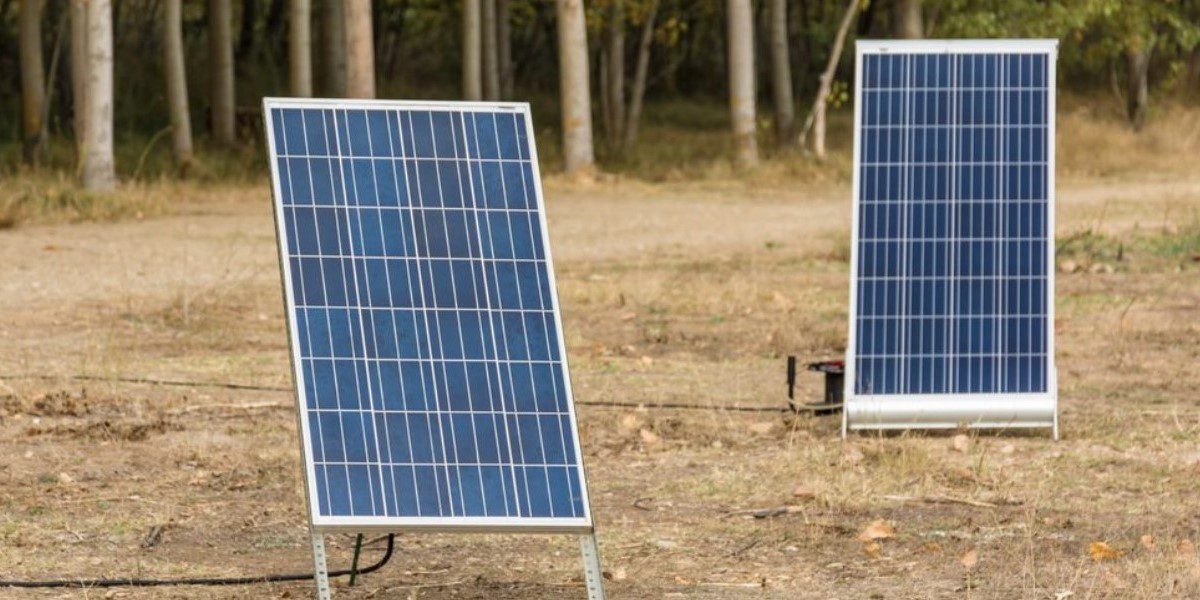
The adoption of solar power has risen significantly in recent years, now accounting for up to 20% of Nigeria’s electricity usage. The deepening embrace of this technology is expected to reach 50% in the next three years.
This was disclosed by Abba Abubakar Aliyu, Managing Director of the Rural Electrification Agency (REA), during the 25th Nigerian Oil and Gas (NOG) Energy Week in Abuja. According to him, the adoption is attributed to strong supply change from public-private partnerships.
He specifically mentioned that manufacturers in the Lagos–Sagamu industrial corridor are building capacity to meet demand across West Africa. After all, demand not only exists in Nigeria but also across African countries.
Aliyu added that the capacity of nearly 3.7 gigawatts of solar photovoltaic (PV) panel manufacturing is under development to support further expansion.
“If you go to the Lagos–Sagamu axis, you will see manufacturing companies coming up,” he said.
This industry update comes at a time when Nigeria has battled incessant cases of grid collapses, spanning decades, with no viable solution. With grid shortages leaving output below 5,000 MW for a population of over 230 million, solar has grown to supply about 20% of the country’s electricity.
Also, volatile fuel costs keep pushing Nigeria from generator alternatives to solar usage. The removal of fuel subsidies and soaring petrol/diesel costs make solar the more cost-effective choice for daily power compared to generators.
To ensure the sustainability of a multi-financed solar manufacturing investment strategy, stakeholders at the event called for strengthening partnerships and upgrading gas-fired plants. Particular calls were directed to the federal government and private investors to adopt collaborative and financing policies.
While solar power adoption is witnessing a boom, stakeholders have encouraged the government to revitalise the country’s grid infrastructure through investment.
Experts specifically encouraged deploying digitalised smart-grid systems for effective power distribution and constructing high-voltage transmission lines to prevent new resources from going unutilised.
Also Read: WeLight plans $650 million solar mini-grid expansion in Nigeria and DRC.
Solar adoption: Realities, flexible affordability and share upliftment
A visit to Nigerian homes, buildings and business environments presents a clear picture of the current realities. Solar is becoming the new normal, and the continued rise in remote work/work from home means more electricity demand.
Even in homes where electricity isn’t needed to power appliances or devices, it is still needed for illumination at night. Various affordable financing plans and flexible structures, such as buy-now-pay-later (BNPL) and instalment payments from manufacturers such as Sun King, Eden Power, and Itel, are significant drivers of adoption.
Aside from a boost in local production of solar PV panels, importation is likewise on the rise. According to the latest Foreign Trade Statistics from the National Bureau of Statistics (NBS), solar panels have now become one of Nigeria’s most imported goods.
Roughly 2.9 million solar panels worth over ₦435 billion were imported into the country in 2025. The breakdown shows the first quarter at ₦125.29 billion, followed by ₦117.39 billion in the second quarter, ₦92 billion in the third quarter, and ₦100.83 billion in the final quarter.
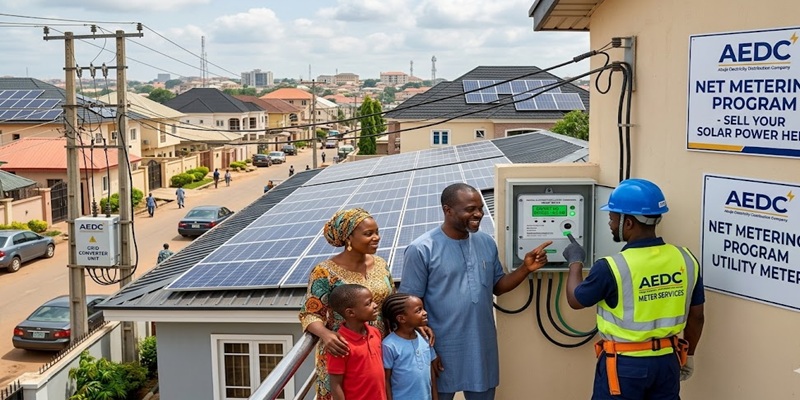
In fact, the consideration of smaller and cheaper panels would have seen the number increase up to 17.4 million units, while medium-sized panels are estimated at 6.6 million units.
In addition, the adoption is widely sponsored by how the technology has been integrated into several device structures. Talk of solar-powered refrigerators, power banks, standing fans and a host of other devices. This new wave has also been extended to tricycles and delivery vehicles.
Beyond household adoption
The rise of solar-powered energy usage is now beyond household or business enterprises.
In August 2025, the Federal Executive Council (FEC) approved N68.7 billion for key electricity projects in universities and teaching hospitals across Nigeria. The project across universities involves engineering, procurement, and construction under the Energising Education Programme, led by the Rural Electrification Agency.
Providing more context on the move, the federal government said the plan represents its commitment to steady electricity supply in vital sectors, such as education and healthcare.
Aso Rock, Nigeria’s political seat, is included in this shift. Under the Aso Rock solar plan, the government wants to fully disconnect the Presidential Villa from the national grid to eliminate an unsustainable ₦47 billion annual electricity bill.
The cutover that relies on a ₦17 billion budget allocation has received an initial ₦10 billion in the 2025 budget and an additional ₦7 billion in the 2026 budget.
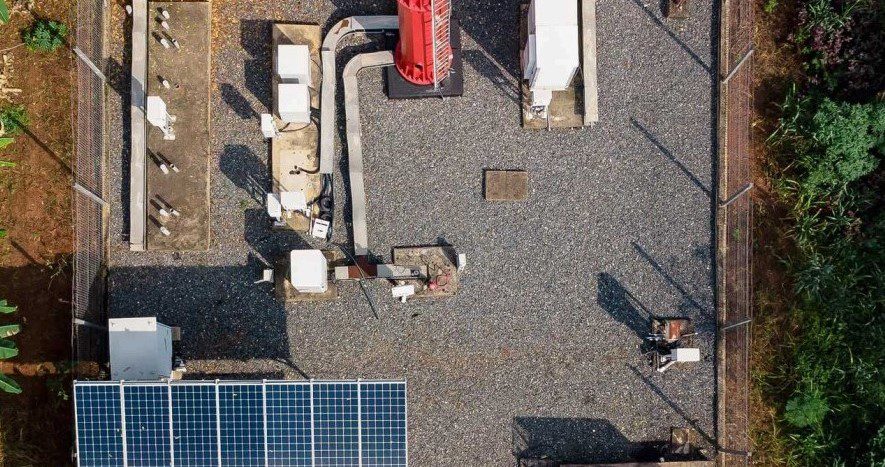
Nigerian telecom operators are not left out. Airtel Nigeria said it deployed 200 solar-powered telecom towers between April 2025 and March 2026 across rural and urban areas to reduce reliance on high-cost diesel. Also, MTN said its use of gas-powered Independent Power Producer (IPP) electricity and inverter solutions yielded a joint cost saving of ₦8.5 billion in 2025.
These developments reveal a remarkable pattern of shift from grid electricity or generators. It’s a move that seeks to rely on what works and could see solar power exceed the projected 50% of Nigeria’s electricity usage by 2029.
