






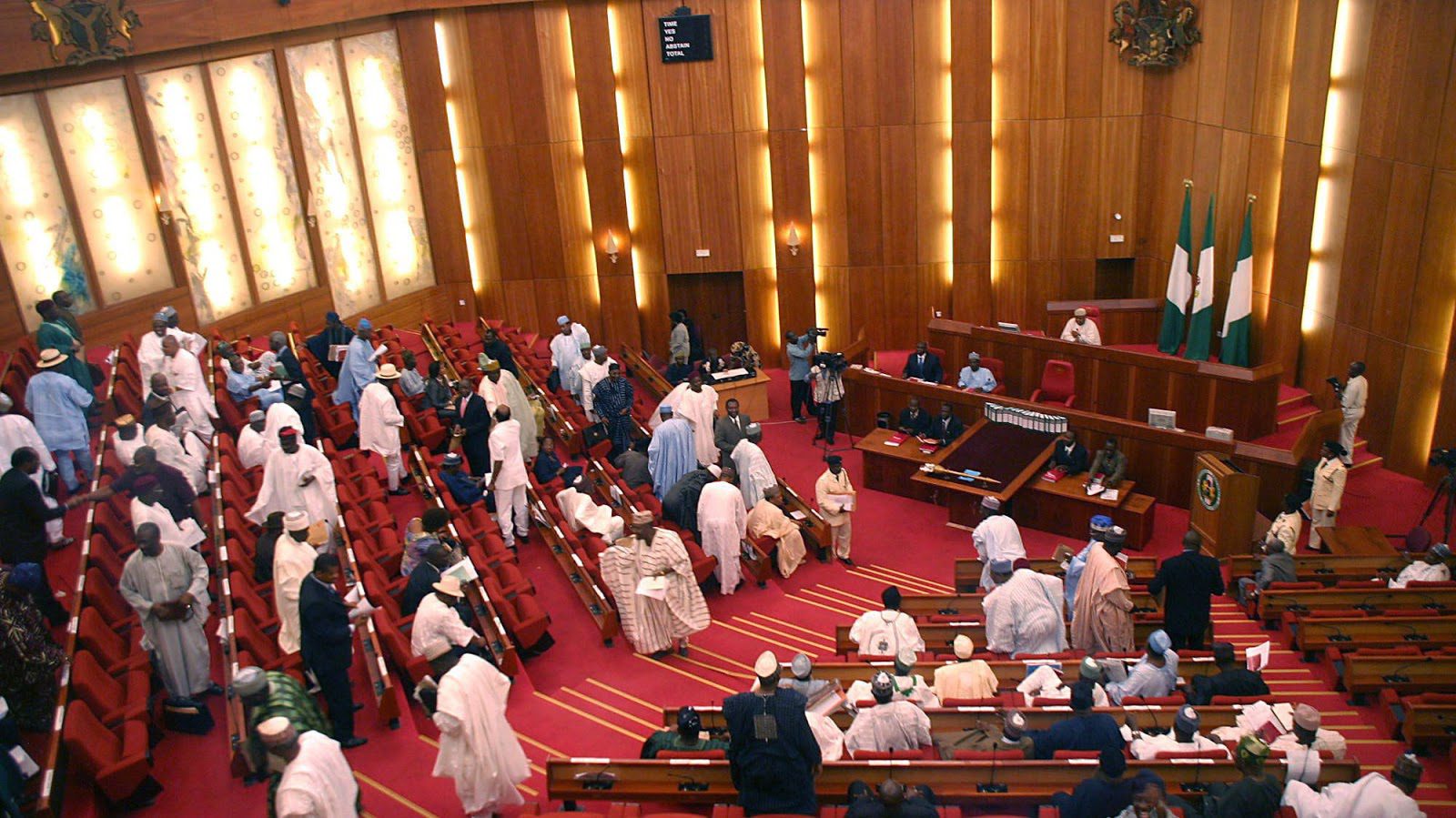
Civil society groups and election observers are opposing the Nigerian Senate, which has passed an amended Electoral Act bill that eliminates mandatory real-time e-transmission of election results. Critics argue that this change undermines transparency ahead of the 2027 elections.
The Senate instead retained provisions allowing manual collation and gave the Independent National Electoral Commission (INEC) discretion over how results are transmitted. Lawmakers also shortened key election timelines, including cutting the period for submitting candidates’ names from 360 days to 180 days.
The decisions, reached after a closed-door session, have reopened debates over trust in Nigeria’s electoral process, especially after controversies surrounding result collation during the 2023 general elections.
The opposition also spoke out. The African Democratic Congress (ADC) criticized the Senate’s rejection of other reforms, including provisions that would have allowed voters to download their cards directly from INEC’s website, shortened election notice periods, and reduced the timeline for publishing candidate lists from 150 days to 60 days.
“This amendment feels like a step backwards,” – Clement Nwankwo says
During an appearance on ARISE News’ Morning Show, Clement Nwankwo, the executive director of the Policy and Legal Advocacy Centre and the convener of the Nigeria Civil Society Situation Room, expressed surprise at the Senate’s version of the bill. He noted that many stakeholders who had worked on earlier drafts were not expecting such a drastic change.
According to him, joint committees from the Senate and House of Representatives had spent months holding public hearings and consultations with INEC and civil society groups, eventually agreeing on provisions that supported electronic transmission. While the House passed that version, the Senate delayed action before approving a different draft.
“When you put that much public input into a process and end up somewhere else, people naturally feel ignored,” Nwankwo said. He added that many senators themselves were unhappy with the outcome, raising questions about how the bill was eventually adopted.

Beyond process concerns, he warned that removing mandatory electronic transmission keeps open the same vulnerabilities that have long plagued Nigeria’s collation centres, where results are often disputed, and trust in outcomes is weakest.
Read also: Senate rejects compulsory e-transmission of election results, passes new law
The revised timelines also drew concern. Nwankwo said compressing INEC’s preparation window could strain logistics, voter education, and technology deployment, particularly with changes expected in the commission’s leadership before the next election cycle.
Nigerians react to the Senate’s decision
The Senate’s rejection of e-transmission of results has triggered strong reactions on social media, with many Nigerians describing it as a rollback of reforms meant to make elections more transparent and credible. Several commentators argued that rejecting real-time uploads sends the wrong signal to voters, especially young people already sceptical about whether their votes truly count.
Others warned that shortening electoral timelines could increase confusion, legal disputes, and operational risks for INEC, potentially undermining confidence in future polls. On X, @Sir_Inyang urged younger Nigerians not to disengage. “You can’t sit on the fence and expect the same people to give you a great country,” he wrote.
Another X user, @NC_Okonkwo, tweeted, “If elections ever become transparent, more than 95% of them will not be reelected.”

Others framed the move as part of a deeper trust problem. “This sends a troubling signal,” wrote @oteessolutions1, adding that it reinforces the perception that political outcomes are shaped more by structures than by voters’ choices.
A joint committee from the Senate and House of Representatives must create a unified version of the revised bill before it can be presented to President Bola Tinubu. Until then, the current Electoral Act will remain in effect. Many Nigerians are concerned that the Senate’s actions mean promised improvements to the electoral system may again be delayed when they are most needed.
