




Ask most people what made Y Combinator influential and they will point to its alumni: the household-name companies that passed through its batches. Fewer mention the machinery. Y Combinator turned startup acceleration into a system: cohorts admitted on a schedule, founders supported through structured stages, and investors connected to companies at the right moment. A system like that, repeated at scale, depends heavily on software.
Africa’s startup ecosystem has spent years asking whether it can build a localized version that supports founders early stage journeys. The question is not only about capital or talent. It is also about infrastructure, including the internal tools that let a programme track thousands of founders, deliver coaching consistently and give investors a clear view of what is being built.
Accelerate Africa is one of the programmes working on that question. It began under Future Africa as a pre-accelerator program with the goal of helping founders build sustainable businesses capable of reaching $1 million in revenue. That figure is a target rather than an outcome every participant achieves, but it signals the ambition: a structured, repeatable pathway for African founders.
The platform underneath that pathway is Coach, a digital product conceived by Accelerate Africa to run its programme. Since 2024, Sayo Adegoroye has been at the centre of its engineering, first as the only engineer working on it, and now alongside two other developers.
An accelerator is a software problem
From the outside, an accelerator looks like a series of events: sourcing, selection, programming, coaching, and demo days. From the inside, it is a data problem. Each founder arrives with a different business at a slightly different stage or support need. Accelerator teams need to know who is progressing and who is struggling. Coaching resources have to reach the right people. Investors need reliable information. Most importantly, and especially in our markets, the efforts need to scale.
When that work runs on spreadsheets and email threads, it can function for a single cohort. It becomes much harder to repeat, measure and scale. Accelerate Africa created Coach to help the accelerator operate more like a system than a series of one-off efforts.
The platform has evolved to support entrepreneurs at different stages of building their businesses. In practice, that means a founder validating an early idea needs something different from one working towards consistent revenue or preparing to expand. The software should serve the lifecycle in order to be effective, but it also needs to serve the administrators running the programme behind them.
Rebuilding for scale: Coach 3.0
Adegoroye began working on Coach in 2024. For much of that year, he was the only engineer on the platform, deciding what needed attention first, keeping existing functionality running, protecting data integrity and weighing new development against the risk of disrupting what already worked. Three years later, he is leading as a senior engineer and continuing to evolve the platform to serve more founders, supporting Accelerate Africa’s ability to scale its support.
Adegoroye has worked across the entire technical stack: schema management and database migrations, cloud deployment and configuration, and the architectural decisions about how the pieces fit together. He also helped introduce the kind of visibility that an accelerator aiming to scale needs, including insight into how founders actually use the platform, and error tracking so that problems can be found before they disrupt users.
Together, these layers have helped Coach move from a tool that supported the programme towards infrastructure it runs on. That shift matters for any accelerator hoping to repeat its model cohort after cohort.
Chinyere Inya, Managing Partner of Accelerate Africa, has seen that shift from the organisation’s side.
“For our accelerator, the platform is where the programme actually happens: it’s how we reach founders, track their progress and keep our team working from the same information. Sayo carried Coach’s engineering through a period when he was effectively working on it alone, and he has stayed focused on what the programme needs rather than just what is technically interesting. That combination of ownership and judgement has been important to how both Sayo and Coach have developed,” she says.
The investor side of the equation
An accelerator’s value to founders depends partly on its connection to capital. During the earliest iterations of the platform Adegoroye also helped build an investor portal, translating requirements into a tool that supports how investors engage with cohort companies.
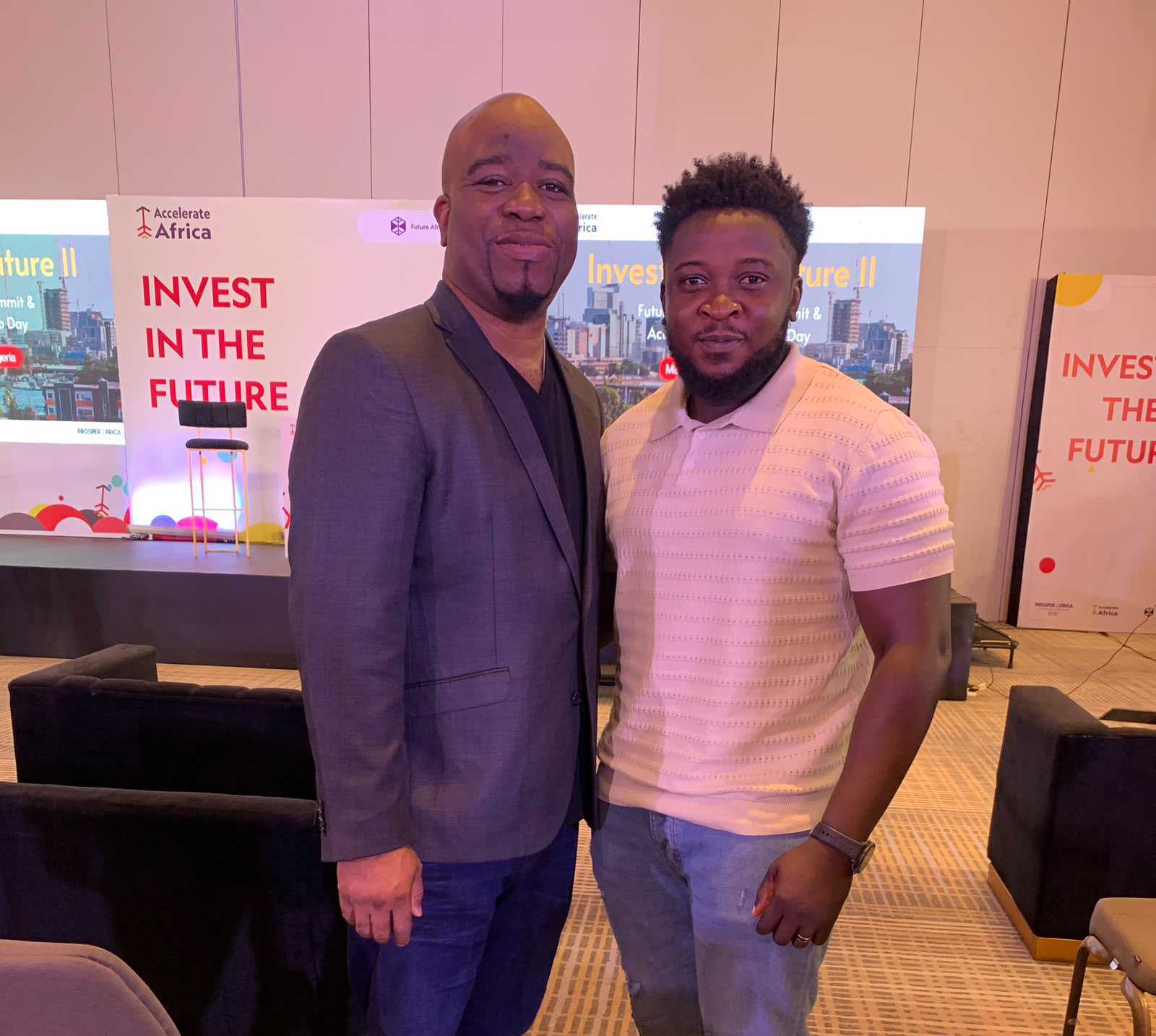
Samuel Ogbonyomi, founder of PipeOps and Aeon, went through the accelerator and saw the portal’s effect from the founder’s side.
“As a founder who went through the accelerator, I saw the value of Sayo’s work on the investor portal. What stood out was his ability to translate the needs for investors and founders into practical technology. His contribution showed how thoughtful engineering can support the people and processes behind an accelerator.”
What it would take
Scaling Accelerate Africa through Coach is only the beginning, the team is excited about how much more potential exists to support founders from idea to $1m+.
What software can do to contribute to that goal, is to make consistency possible. A programme that knows where each founder stands, delivers resources reliably, retains its history and gives investors clear information is better placed to repeat its successes. That is the less visible layer Adegoroye has been helping to engineer since 2024.
Building tools for the builders
Now running the engineering behind an accelerator with a team of three means constantly switching between jobs: fixing a bug a founder has reported, planning a feature the programme team needs before the next cohort, reviewing a migration that touches years of records. Each switch costs time, because the engineer has to rebuild the picture of how the system works and why it was designed that way.
That problem now has a new form. Engineers increasingly lean on AI models for parts of their work, often several different ones, and each new model starts with no knowledge of the project. Legion, an independently owned prototype Adegoroye is developing, is his attempt to tackle that. It tests whether a project’s accumulated knowledge, such as its requirements, past design choices and known constraints, can follow the work from one AI model to the next, so engineers spend less time re-explaining their own systems.
He is careful about what it is and isn’t. Legion is a working experiment, not a finished product, and whether it actually saves teams time is something only real-world testing can show. The engineers using it, not the models, still make the decisions that matter.
“When I was the only engineer on Coach, the hardest part wasn’t writing code. It was holding the whole system in my head: every decision, every dependency, every reason something was built a certain way. Small teams across Africa carry that load every day. If tools can help carry some of that knowledge, engineers can spend more of their time on the problems founders actually need solved,” Adegoroye says.
An unconventional route in
Adegoroye did not train as a software engineer. He studied Geophysics, and an early interest in visual art led him first to interface design. He began his professional technology career in 2022 as a UI design intern at RUN Technology Logistics in Akure, Ondo State, before moving into full-stack development.
His wider experience includes serving as Chief Technology Officer at Rey360 and working on rider and driver onboarding systems, including registration, document submission and compliance review, for the ride-hailing platform Vroom. He has also contributed to open-source projects including Garden, an AI workspace built in TypeScript.
Ismail Olasunkanmi, founder of Deveote, who mentored Adegoroye, has watched that progression.
“What I’ve always appreciated about Sayo is his willingness to learn and his determination to keep improving. Over time, I’ve watched him develop from an engineer focused on solving technical problems into someone who thinks more deeply about systems, scalability and the business impact of technology,” Olasunkanmi says.
His work on Coach places him in an unusual position within Africa’s startup story. He is not the founder on stage at demo day or the investor writing the cheque. He is one of the engineers working on the system that brings them together.
Also read: Ighodalo Labs to bring 10 startup founders before investors at Ibadan pitch event
