





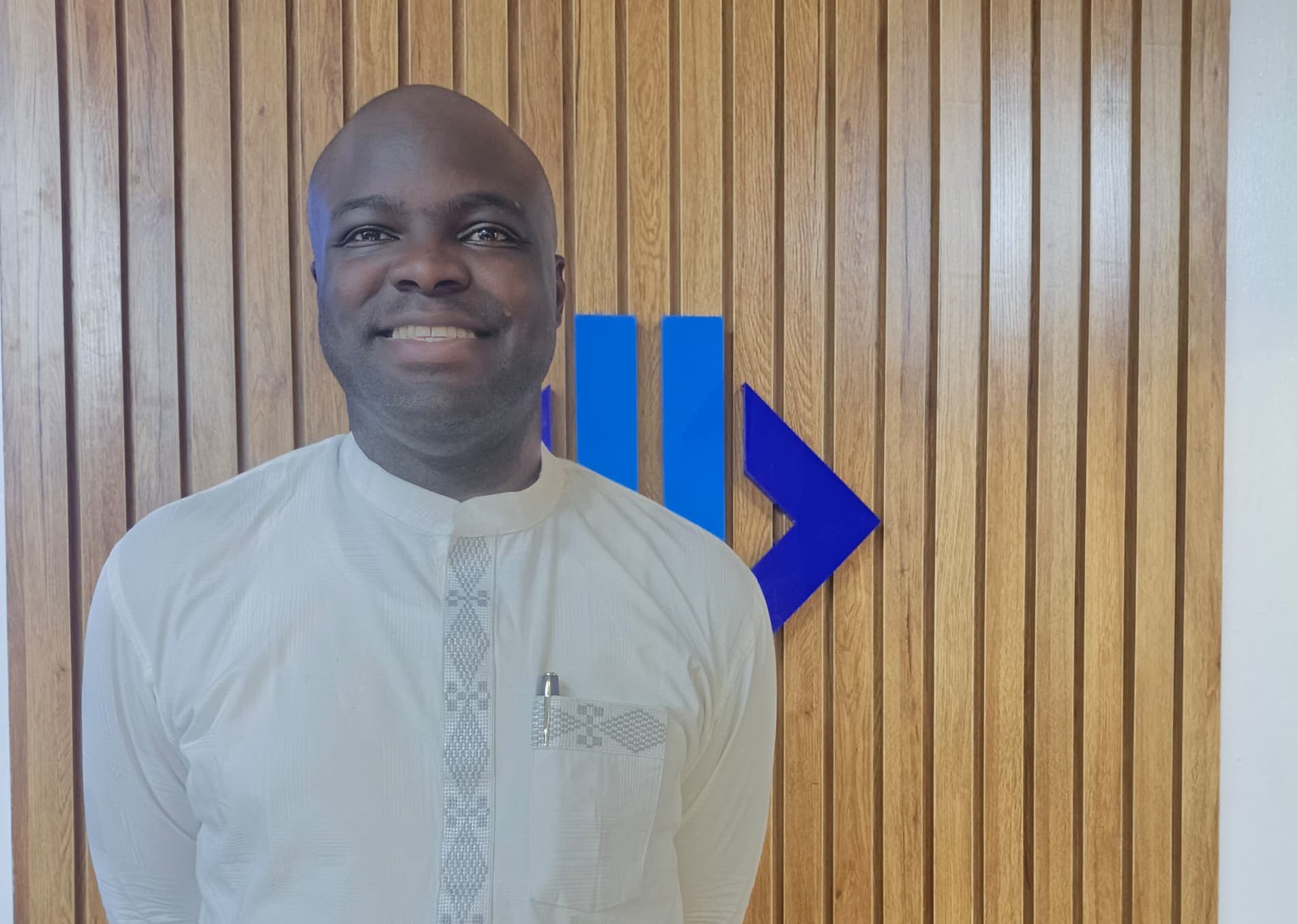
Fayokunmi almost missed it. On a random afternoon, she was scrolling through WhatsApp statuses, the kind you barely register, when she saw a line that stopped her: Play the game and become a software developer. She clicked the link. She played the game. Five months later, she is sitting on a campus in Yaba, Lagos, writing Unix commands, defending group projects, and doing something she had never quite managed before: applying what she had learned.
“I have done numerous courses,” she said. “I’ve done HTML, CSS, Java, Python. But I could never apply them to actual projects. A lot of Nigerians are stuck in the learning cycle. You do one course on project management, one on data analysis, one on game development. What are you doing with them? You’re just learning. You’ve never applied anything. This breaks you out of that.”
Fayokunmi is one of 740 fellows currently enrolled in Learn2Earn, the zero-tuition technology training programme co-founded by Iyin Aboyeji, the serial entrepreneur behind Andela and Flutterwave. She didn’t pay to get in. She won’t pay to stay. In fact, the programme pays her.
The problem they’re solving
When Moniepoint CEO Tosin Eniolorunda said recently that his company has 500 open roles it cannot fill because Nigerian candidates don’t meet global standards, the comment lit up the tech industry’s group chats. It was blunt, polarising, and, depending on who you ask, either overdue honesty or an overstated provocation.
Aboyeji thinks it’s a symptom.
What Tosin is describing is a symptom, he said. When you look at the landscape of talent in this country, there are a lot of people who are willing to work, who are ready to work, but they are not able to work. The reason is they lack three things: skill, infrastructure, and productive assets, like a laptop.
This, he says, is the real problem. Not candidate quality in isolation, but a system that never built the pipeline in the first place. “It’s bigger than 500 people you can’t hire. That is a symptom of a broader problem. Nigeria does not enable young people to get into work.”
The HR professionals who recruit for Nigeria’s tech companies broadly agree with the diagnosis, even where they differ on the details.
Emmanuel Olawumi, an HR professional with extensive experience hiring for technical roles, described a specific and telling pressure point. He recently recruited for a senior engineering role (eight years of experience required) and found his strongest candidate was a 25-year-old from Agege with just five years on his CV.
The man was working remotely for a company in Egypt, earning the equivalent of ₦3.5 million a month. Candidates from Interswitch and GlobalAccel, more experienced on paper, weren’t close to matching him.
We eventually go for the second best, Olawumi said. The best of the best…they are already gone. They are working remotely for companies outside Nigeria, and what they are asking for is beyond what the local market can offer.
Samson Adebayo, another HR professional, put the core frustration plainly: “Some people have the experience and don’t have soft skills. Some have soft skills but not experience on certain stacks. It’s dicey.”
Amarachi, a People and Culture Manager, went straight to the structural nerve. “The single biggest gap? Salary budgets and expectations,” she said. “It starts there.”
Building the pipeline…Learn2Earn
Learn2Earn launched its fellowship in February 2026. The model is unusual by design. Applicants don’t submit CVs. They play a game.
The selection process begins with email and NIN verification, to prevent multiple attempts, then two game-based assessments: a memory test and a problem-solving challenge designed to identify raw cognitive ability, not prior technical exposure.
We are targeting people with zero knowledge in tech, said Prince Adekunle, Learn2Earn’s Head of Training. We can’t deploy coding interviews first.
Those who pass move into a 26-day intensive trial (part bootcamp, part audition) before entering a two-year fellowship. The first year is peer-led learning. The second is an internship. Years three and four involve placement with partner companies. The entire programme is free. Fellows receive stipends.
The curriculum is built on 01Edu’s peer-learning model, which Aboyeji adopted deliberately. His experience at Andela taught him the limits of instructor-led training.
“The problem with instructor-led is that it doesn’t ground understanding,” he said. “And it’s not scalable. What are the chances a talented software engineer is going to move to Yola instead of staying in Lagos, getting very good gigs? It’s unlikely.”
Peer learning solves the scale problem. It also, he argues, solves a cultural one. “People like to help. It’s ingrained in our culture. Peer learning is more sustainable for who we are.”
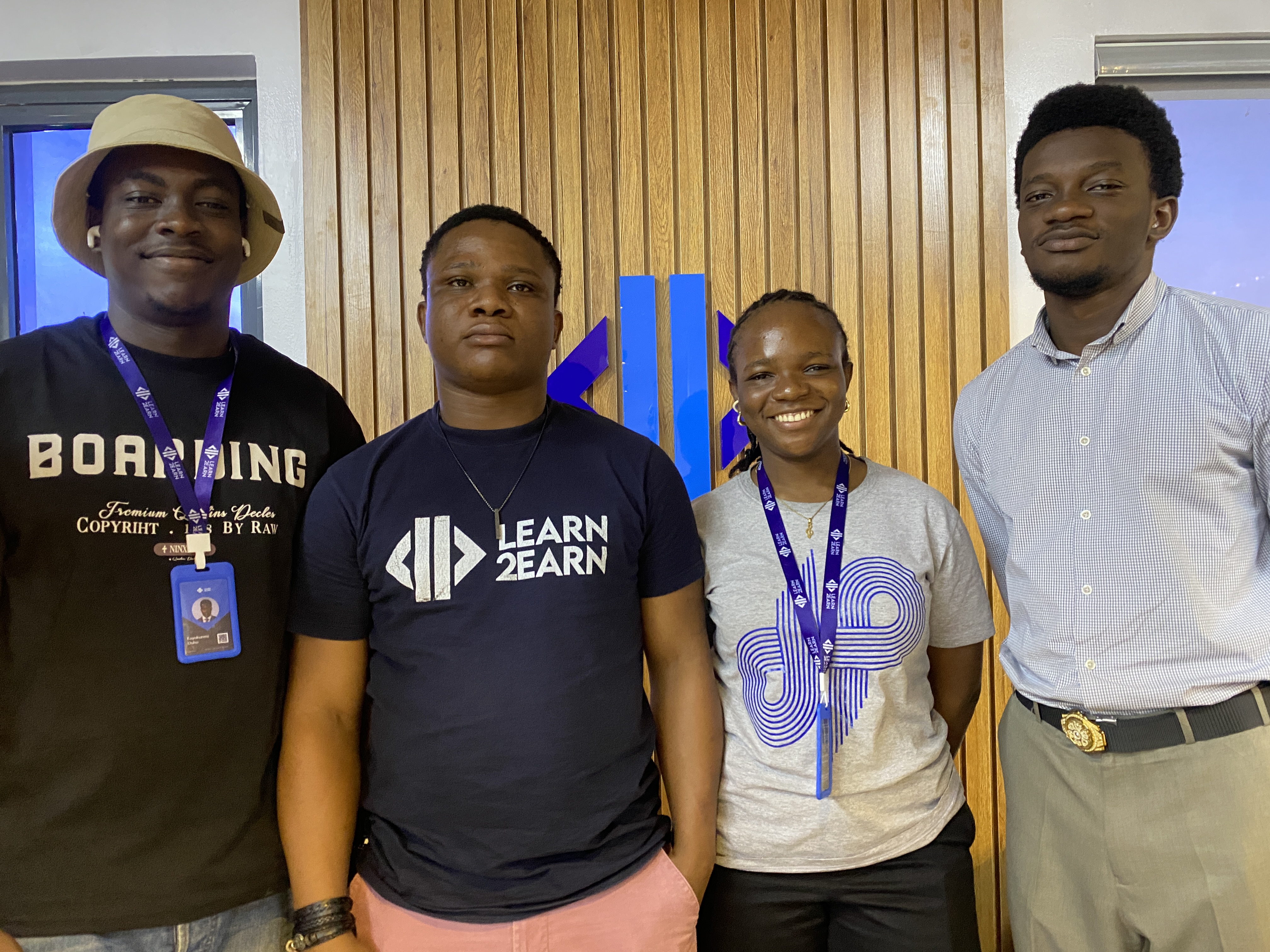
From the inside, the experience is intense. Fayokunmi, a mechanical engineering graduate who quit his job as a website designer to join the programme, is three projects in. “We’re working on something that my friend who has been in the industry for five years is just learning now,” he said. “That’s making me think…if at the third project I’m learning this, what happens ten months down the line?”
He came in with a goal beyond employment. His family does fish farming in his home state, and he has spent years watching the operation run entirely on manual labour, including water filtration, feeding schedules, stocking cycles, all requiring someone physically present at all times. He wants to change that.
“Merging mechanical engineering with what I’m learning here,” he said, “I can build products (hardware and software) that would let us scale fish farming and feed more people.” It is, he acknowledges, not a fully fleshed idea yet. But it is a specific one, which is already more than most.
The physical environment matters as much as the curriculum. Ezekiel Leke, a coding mentor at Learn2Earn, describes his role not as teaching but as accompaniment. Guiding fellows through confusion, building confidence, playing what he calls the big brother and big sister role.
“You have to make them feel like it is possible to learn programming,” he said. “As long as you’re willing and have the mental strength. Some of them come in and have never seen a computer before. It’s just to put them through how the system works.”
For Fayokunmi, that atmosphere, unlikely as it sounds, is where she made her closest friends. “Trials is where I made the most friends because everybody is wanting to see: who is this person? How strong are they? There’s a tiny competitive spirit because we’re all trying to get in. But it was the solid foundation. Everything was timed, there were projects to work on. You hang your introvert at the door and say hi to everybody.”
Learn2Earn currently has 740 fellows across campuses, with 44,000 people having attempted the entry game since launch. The organisation has a corporate arm, Talent Nation, that does AI work for large companies, with IHS as an anchor partner. Conversations with Moniepoint have happened, though Aboyeji is measured about expectations.
“We don’t want to solve any short-term talent problems for companies,” he said. “It’s a supply problem, not a price problem. Even if you get the best talent today, they will leave you tomorrow because there is more demand than supply. We tell companies: if you’re not ready to wait for the talent to be ready, wait one year, take them as interns, you pick the best, and we handle the cost.”
The HR community’s verdict on alternative credential programmes has at least moved past scepticism. Amarachi was direct: “Degree has never been a thing for me while hiring. If you have the skills and you can do the job, you are hired. Full stop.” Omọọba agreed. “For technical roles, a degree can’t be the determining factor. You can hire someone with SSCE as long as they’re competent.“
Olawumi believes the bigger failure is structural: Nigerian tech companies outsource their talent development to third parties rather than building internal systems. “They don’t really invest in their tech talents,” he said. “And what those companies get back is limited – limited business context, limited integration with actual strategy.”
Itunuoluwa, a senior coding mentor at Learn2Earn who has been with the programme for eight months, described watching fellows go from not knowing how to type to writing functional code.
I’m not saying someone goes from zero to phenomenal. But I’ve seen people go from zero to intermediate, and they are still growing. It’s a 24-month process. We’re not promising anybody that in the first three months they’ll be the best. We’re promising that as a person keeps learning, they will grow.
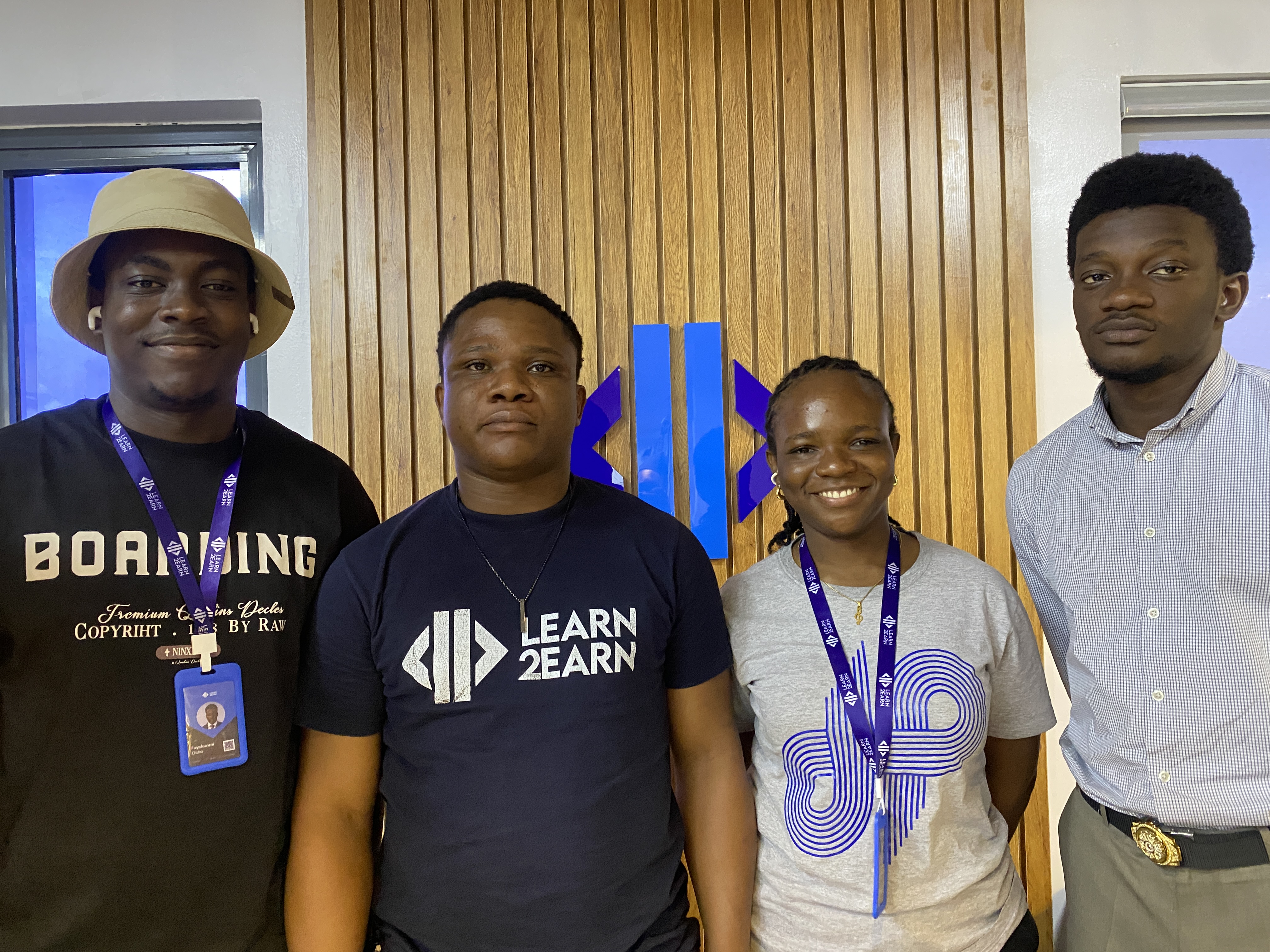
The vision behind all of it is large. “The goal,” Itunuoluwa said, “is to train and deploy a million AI-native software engineers into the global market. India did it. They didn’t start in a day.”
Aboyeji, when pushed on whether Learn2Earn is a pipeline fix or something that can genuinely bend the national curve, gave the clearest answer of the interview: “It is junior talent that becomes senior engineers. They don’t throw them down from heaven. If you don’t groom your talent at scale, you will struggle with seniors.”
The 500 vacancies Moniepoint can’t fill were always going to take more than a better job posting to solve. They will take a pipeline. Learn2Earn is betting it can build one. It has 740 people, and four years to prove it.
