


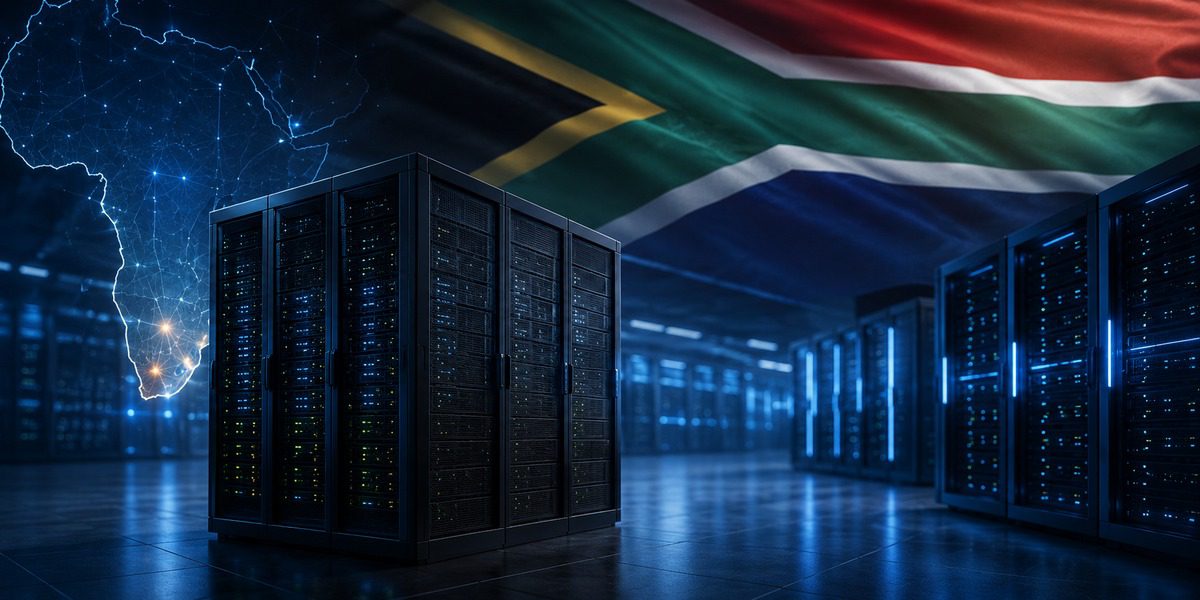
South Africa has allocated $18.2 million for the 2026/2027 financial year to replace its decade-old Lengau supercomputer with a new 4 petaflop system that is roughly three times more powerful.
Minister of Science, Blade Nzimande, confirmed this in a response to a parliamentary question from Umkhonto Wesizwe party MP Thembinkosi Mjadu, adding that the transition will be overseen by the National Integrated Cyberinfrastructure System (NICIS).
The budget will be split across technology, infrastructure, human resources, research and operations. Nzimande described Lengau as a “legacy environment” and said replacing it was necessary to reduce the country’s reliance on ageing infrastructure.

The transition is being approached in phases to ensure continuity of national research computing services, while the new platform is commissioned and tested.
“Phase one is expected to be live by the end of November 2026, and the completed system upgrade is expected by the end of March 2027,” Nzimande said.
Beyond the current financial year, the CSIR has been notified of a R342 million ($21.4 million) budget for 2027/2028 and R349 million ($21.8 million) for 2028/2029. Nzimande noted that these figures remain indicative and will be reconfirmed through annual allocation letters.
Read also: Kano State to install 13,200 computers at ICT, CBT centres across 44 LGAs
Why South Africa is replacing the decade-old Lengau supercomputer
Lengau has been the backbone of South Africa’s scientific computing infrastructure since it debuted on the Top 500 list of the world’s most powerful supercomputers in June 2016, and was, at the time, the most powerful supercomputer on the African continent.
Named after the Setswana word for “Cheetah,” it replaced the Tsessebe system and was 15 times faster than its predecessor at launch, with a theoretical peak of 1.3 petaflops. Over the past decade, Lengau supported researchers across Africa in weather and seismic modelling, drug discovery, fluid dynamics, and artificial intelligence. It has also supported research associated with the Square Kilometre Array Observatory and MeerKAT.
During the COVID-19 pandemic, it processed data from SARS-CoV-2 gene sequencing and supported genomic analysis that informed the country’s scientific response. The decision to replace Lengau was accelerated by events earlier this year. A threat actor gained access to the system and deployed cryptocurrency mining malware, exploiting its computing power for financial gain.
Users first noticed performance problems in May. Despite an initial shutdown and full re-imaging of all nodes, a second attack followed shortly after, forcing the system offline for several weeks before it returned to service in July.
Nzimande acknowledged that the renewal of ageing core infrastructure had lagged and that replacing the system was now necessary to maintain South Africa’s scientific competitiveness.
“The transition risk is being mitigated through a combination of service-continuity measures, phased modernisation, improved utilisation management, and strengthened maintenance of existing systems,” he said.
Cybersecurity hardening, partnerships with research infrastructure providers, and planning for next-generation compute capacity are all part of the transition. For a continent whose scientific ambitions are expanding as fast as its digital infrastructure, the investment signals something larger than a hardware refresh. It is South Africa telling the research community that its most powerful scientific tool will not be left behind.
