



Somewhere between Kontagora and Yauri, a tyre gave out, and a Chemistry Education undergraduate stood by the roadside doing the thing every stranded Nigerian traveller has done at some point: wondering why there wasn’t an app for this. “Why isn’t there an app where you can simply find the nearest person who can help?, Awwal Dayyabu remembers asking himself. It’s the kind of question that usually evaporates by the time the tyre gets fixed, but this didn’t.
He chased that idea for a while, a local services platform matching people to nearby help, before the market told him no. Internet access was too patchy, smartphone ownership too uneven, and the unit economics too thin to justify the build. Most founders would have filed that under lessons learned and moved on.
Dayyabu went looking for the next problem instead and found one hiding in plain sight: Nigerian freelancers weren’t struggling to find work so much as they were struggling to get paid for it and to trust that they would be.
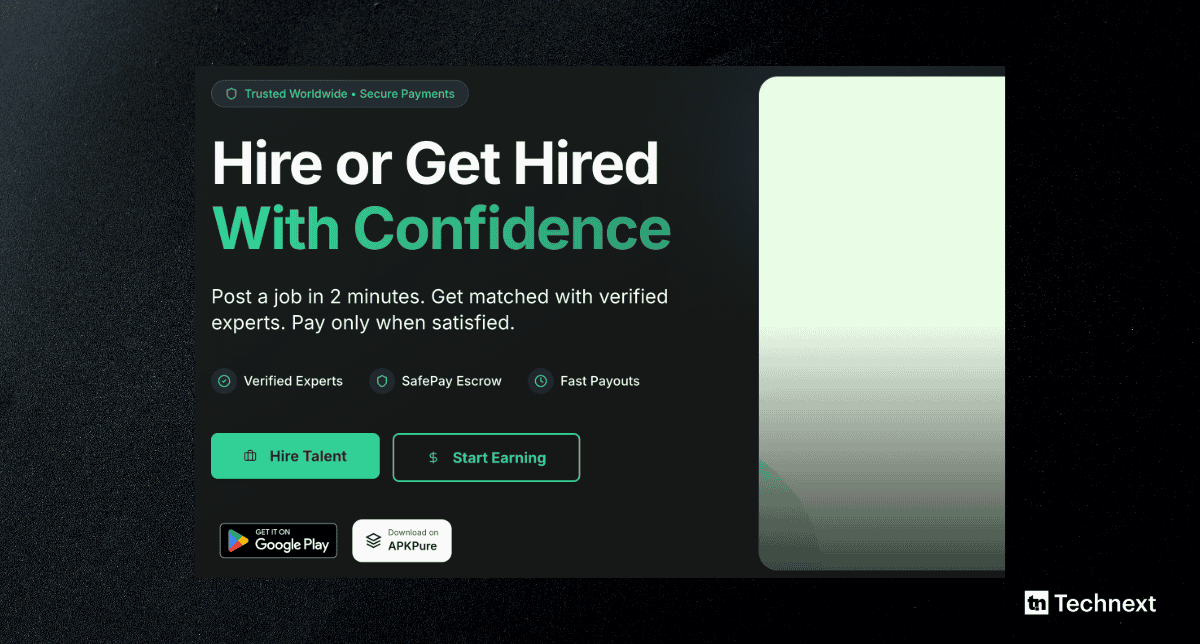
That’s the idea NaijaLancers is actually selling, and it’s worth sitting with because it cuts against the conventional wisdom.
The instinctive read on Nigerian freelancing, the one most outsiders reach for, is that it’s a price war. Cheap labour, undercutting global competitors, racing to the bottom on rate cards. Dayyabu thinks that’s a lazy diagnosis.
“Many people assume Nigerian freelancers compete mainly on price,” he says. “I think the bigger issue is trust.” He’s specific about what he means: “Clients worry about whether work will be delivered, while freelancers worry about whether they’ll actually be paid. When you improve trust, secure payments, and reputation systems, freelancers can compete on quality rather than simply being the cheapest option.”

It’s a genuinely interesting argument, not because it’s original in the abstract, trust has always been the unspoken tax on informal labour markets, but because Dayyabu is building an entire product thesis on the idea that fixing it is more valuable than fixing the price.
If he’s right, NaijaLancers isn’t really competing on cost with Upwork or Fiverr. It’s competing with years of accumulated bad experiences that make a Nigerian freelancer hesitate before accepting a new client or a client hesitate before wiring a deposit to someone they’ve never met.
NaijaLancers in numbers
The scale so far is modest enough that the thesis is still mostly theoretical. Dayyabu’s own numbers put the platform at 1,627 registered users, 169 of them freelancers only, 30 clients only, and 828 people who’ve signed up wearing both hats. 40 are verified experts, 10 jobs have been posted and 65 community posts.
These are the numbers of a platform still finding its footing, not one that’s cracked the trust problem at any meaningful scale.
The interesting question isn’t whether those numbers are big. It’s whether the architecture being built underneath them, the payments rails, the reputation system, and the verification layer can carry a much bigger number later without falling over.
That architecture leans on Celo, and this is where NaijaLancers starts looking less like a marketplace app and more like a fintech experiment wearing a freelance platform’s clothes. Dayyabu turned to blockchain infrastructure after finding traditional payment providers difficult to work with as an early-stage founder, drawn to Celo for its low fees, mobile-first design and accessibility.
He was already a MiniPay user before he built around the ecosystem, which tracks it. MiniPay has spent the past couple of years becoming one of the more visible on-ramps for stablecoin use among everyday Nigerians, largely because it doesn’t require the user to think about the fact that they’re using crypto at all.
NaijaLancers wants to plug into that same invisibility, letting value move between the platform and compatible Celo wallets over public infrastructure.

Dayyabu is careful, refreshingly so, not to oversell the relationship. “We do not have an official partnership with MiniPay or the Celo Foundation, and we only use public Celo protocols as any developer can,” he says, adding that he’d welcome closer ties with either in future.
NaijaLancers has expanded into loans, an emergency fund and fundraising tools, features that sit uncomfortably close to the crypto-linked financial products Nigeria’s SEC and CBN have spent the past two years tightening their grip around.
Yet, Dayyabu is unambiguous about where he thinks the platform sits. “NaijaLancers is not a crypto exchange or an investment platform,” he says.
But the posture on regulation itself is forward-looking rather than settled: “As we expand financial features, we intend to work within the appropriate Nigerian regulatory framework and partner with licensed providers where required. Our focus is on building responsibly rather than moving ahead without considering compliance.” That’s the language of a founder who knows which direction Nigerian financial regulation has been moving in and would rather get ahead of it than be caught explaining himself to the SEC later.
Beyond zero-transaction fees, how NaijaLancers sustains itself
Even the platform’s headline promise, zero transaction fees, turns out to be narrower and more deliberate than the marketing suggests.
It only covers freelancer withdrawals. “We don’t want freelancers to lose part of their earnings simply for getting paid,” Dayyabu says, which is a genuinely freelancer-first instinct in a market where payment platforms routinely nibble away at already-thin margins.

The business survives on everything built around that untouched core: subscriptions, promoted listings, advertising, commissions on courses and digital products, and API access sold to other businesses. It’s not a novel model. It’s the same layered-revenue playbook most consumer platforms eventually reach for. But it’s coherent, and it protects the one transaction Dayyabu clearly considers sacred.
Ask him what winning looks like, and the answer is almost stubbornly unglamorous. “I want a Nigerian freelancer to open one platform and find clients, communicate, manage projects, receive secure payments in Naira or stablecoins, build a trusted reputation, and access useful financial services without juggling multiple apps,” he says.
“Success would mean freelancers spend less time worrying about payments and more time building sustainable careers.” No talk of unicorn valuations or regional dominance. Just fewer apps, fewer worries, more finished work.
Whether that happens will depend on Dayyabu turning a trust problem, the hardest thing to build and the easiest thing to fake, into something a freelancer can actually feel the difference in. Right now, the thesis is sharper than the traction.
The next twelve months will tell us which one catches up to the other, but the attempt is noble in every sense of it.
