


There’s a version of the ThriveAgric saga that’s deceptively simple: a company raises funds from retail investors, finds itself in turmoil when the pandemic strikes, fails to pay those investors, faces backlash on social media, and ultimately survives.
End of story.
But the reality is far more intricate and revealing, especially when told through the eyes of Kola Aina, a General Partner at Ventures Platform and an early-stage investor in African startups. In a candid conversation on the Nidacity Builders podcast with Kemi Adeosun, Aina painted a vivid picture of what it truly means to invest in a startup, particularly when everything seems to unravel.
Ventures Platform was an early believer in ThriveAgric, and by 2020, this agritech startup had gained significant traction, becoming a beacon of hope within Nigeria’s burgeoning tech landscape. Even the Vice President, Yemi Osinbajo, hailed ThriveAgric in his speeches, highlighting the company as a prime example of the sector’s potential. Aina often used ThriveAgric as a reference point during international discussions, calling it a “poster child” for innovative agricultural solutions.
Then the COVID-19 pandemic struck, and everything changed overnight.

The impact was catastrophic. Offtakers, restaurants and food processors that relied on ThriveAgric’s produce shuttered their doors and ceased payments. A staggering 400,000 mature poultry birds suddenly found themselves without buyers. Transportation restrictions led to the loss of over ₦100 million worth of produce, and the farmers within the ThriveAgric network suffered unprecedented financial setbacks. Retail investors, who had entrusted their funds into cyclical farming operations, watched in despair as their anticipated returns evaporated.
Kola recalled the mounting pressure: “People would slide into my DMs, saying, ‘I signed up for ThriveAgric because you endorsed them.’ They would share how they invested their house rent into this venture.”
Similar read: “We can laugh about it now” ThriveAgric’s Uka Eje on how the company survived the COVID-19 troubles
The volume of concern was overwhelming, and it carried Aina’s name along with it. The story of ThriveAgric is one of resilience and vulnerability, revealing the human stakes behind the numbers and the headlines.
It’s a profound lesson in the complexities of backing a company during turbulent times and a testament to the strength required to navigate the chaos that entrepreneurship can present.
The forensic audit that changed everything
When the calls started coming in, the first question Ventures Platform had to answer was not how to protect its reputation or whether to cut its losses. It was simpler and harder than that: was this fraud?
Kola’s team moved quickly. They did what he describes as a “quick, dirty forensic audit” of ThriveAgric’s books and operations. What they found was not fraud. It was a perfect storm: a young founding team that had scaled fast, serving a supply chain that COVID had made completely dysfunctional, with cash flow mismatches that cascaded into a public crisis.
“They did nothing wrong,” Aina said. “It was just COVID. There were transportation restrictions. The offtaker businesses they serve, fast food restaurants, weren’t operating. There were just cash flow mismatches.”
That determination changed the entire frame of what came next. This was not a company to abandon. It was a company to fix.
Aina was also clear about why he had to act beyond protecting his investment. A senior Nigerian figure had called him to say the situation was damaging the broader ecosystem. If ThriveAgric collapsed in a blaze of unpaid retail investors, it would not just hurt one company. It would call into question the entire case for investing in Nigerian agritech startups. It was, as he put it, a systemic risk.
“This calls for rolling up our sleeves,” was how he framed the decision internally.
The ThriveAgric turnaround: an interim CEO, ₦56.4 million in lessons, and 4x revenue
ThriveAgric faced a major crisis, and Ventures Platform had to step in with an emergency meeting. They realised the founding team needed some outside leadership to guide them through tough times. So, they brought in Adia Sowho, who was working at Migo, as the interim CEO. Co-founder Uka Eje took on the COO role, keeping the original team on board while adding new expertise.
Adia used some smart problem-solving strategies to tackle the issues at hand. She figured out where the breakdowns were happening, mainly a lot of unfulfilled agreements that led to a public mess. With the new team, they focused on structure, governance, and clear documentation. They hired a new CFO and risk manager, created a dashboard for retail investors to track their payouts, and made sure everyone knew when they’d get their money back.
To help everything stabilise, Ventures Platform provided some temporary funding to clear the backlog. In just nine months, every retail investor who was owed money got repaid, and by 2021, they had paid off the bridge loan too.
What’s truly impressive is that less than 18 months after the crisis, ThriveAgric nearly quadrupled its revenue. They shifted away from retail crowdfunding to focus on big institutional investors like commercial banks and organisations like the World Food Programme.
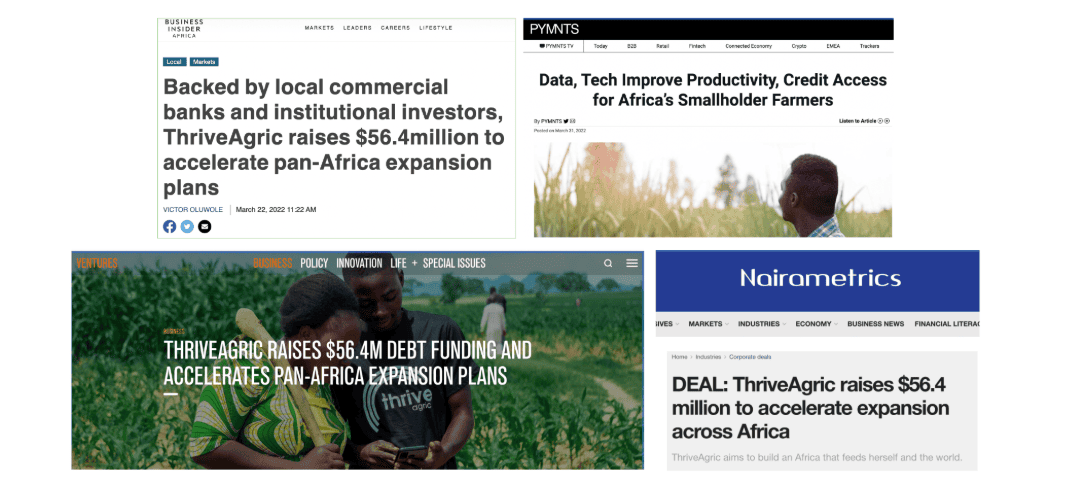
In 2022, they raised an impressive $56.4 million in debt funding, one of the largest in Nigeria’s agritech scene. By that time, they had expanded into Ghana, Zambia, and Kenya, supporting over 200,000 farmers. It’s a remarkable turnaround.
Also read: Talstack partners Ventures Platform, BII to roll out free ESG training for African startups
“The company went from that episode to almost four-xing in less than 18 months,” Kola said. “Today, Thrive is one of the leading agritech platforms.”
What Kola says he learned, and what it means for how he invests
Aina’s experience with ThriveAgric hasn’t made him more cautious about investing in early-stage companies; instead, it strengthened his belief in the essence of early-stage investing. He focuses first on the entrepreneur’s qualities, like their expertise, determination, and commitment, before considering the market and, finally, the product itself.
He emphasises that with the rise of AI, the startup landscape has become easier, shifting the focus from product development to market strategy and distribution.
Aina believes in the founders he backs, and this conviction was crucial during difficult times with ThriveAgric. Rather than walk away amid a crisis, he chose to support the existing management while bringing in necessary external help.
At Ventures Platform, he has backed over 100 companies, with 75 still active, including well-known names like Paystack and PiggyVest. Aina is willing to invest in founders multiple times, no matter what industry they venture into next, trusting that they will find a way to succeed.
ThriveAgric demonstrates the strength of his belief in entrepreneurs during challenging situations.
