





Spend ten minutes on Nigerian tech Twitter (X) during conference week, and you will run into the same complaint: African founders are building far too many payment apps. Yet walk into a trading plaza in Lagos or Onitsha on a Friday night, when a merchant needs to settle a factory invoice in Guangzhou before an 11 p.m. cut-off, and the complaints about oversaturation disappear. Commercial bank branches are shut for the weekend, dollar liquidity at the teller window is scarce, and traditional wire corridors move at a snail’s pace.
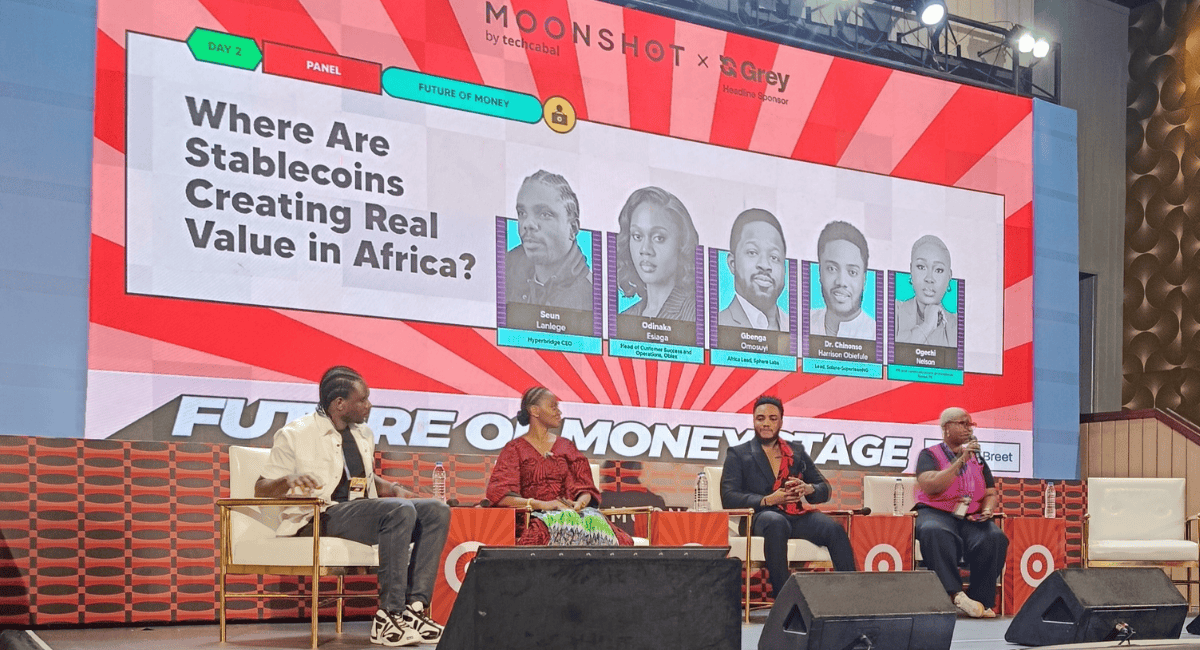
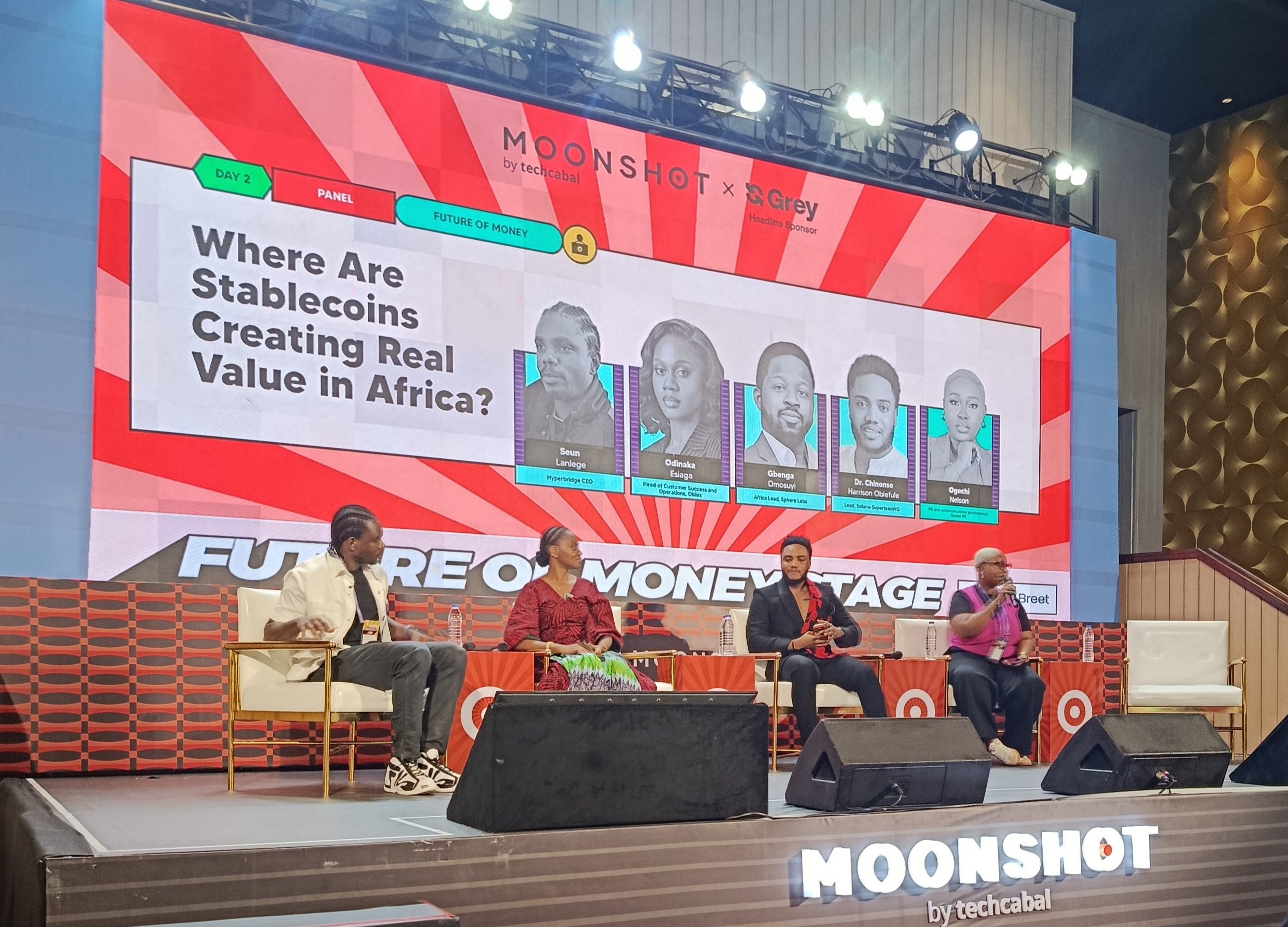
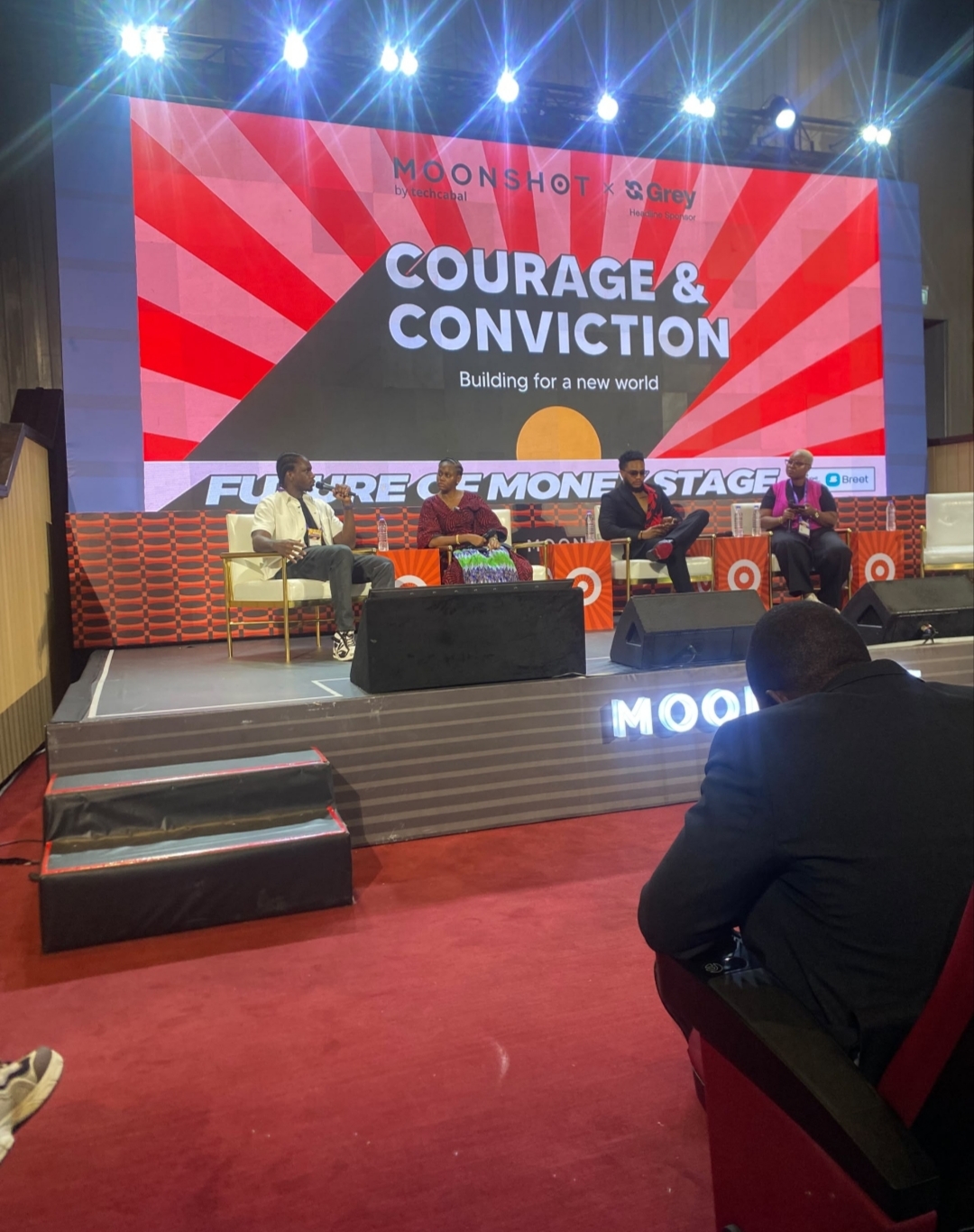
That gap between modern payment options like stablecoins and everyday commercial necessity framed a packed panel session on Day 2 of Moonshot 2026 by TechCabal at the National Theatre in Lagos on Thursday. Featuring Dr Chinonso Harrison Obiefule, Lead at Superteam Nigeria; Seun Lanlege, founder and CEO of blockchain interoperability protocol Hyperbridge; and Odinaka Esiagu, Head of Customer Success and Operations at digital asset platform Obiex, the discussion is on the theme: Where Are Stablecoins Creating Real Value in Africa? Stripped away speculative crypto jargon to examine where digital dollars and local stablecoins are doing heavy lifting across the continent.
For Obiefule, the most durable use case in 2026 has nothing to do with token speculation and everything to do with physical trade. Because accessing US dollars through formal banking channels remains difficult for small and medium-sized importers, merchants have turned to dollar-backed tokens out of sheer pragmatism.
“I am seeing a lot of my Igbo brothers; they’re paying their suppliers in China via stablecoin,” Obiefule told the audience. “That is why, as techies, when we start to have these fancy conversations about stablecoins being the future on Twitter, I tend to laugh because our Igbo brothers have been using stablecoins for five or ten years ago, right? They’ve been using it to pay their suppliers in China.”
Macroeconomic figures back up that street-level observation. The International Monetary Fund (IMF) highlighted in June 2026 that Nigeria recorded roughly $59 billion in crypto-asset inflows between July 2023 and June 2024. Independent data from Chainalysis shows those flows placed Nigeria second globally in grassroots crypto adoption and accounted for 60% of all stablecoin inflows into Sub-Saharan Africa.

At Obiex, which provides liquidity and settlement rails for remittance and payment firms, Esiagu sees two forces driving that volume: B2B supplier settlements and the japa emigration wave. With millions of Nigerians relocating abroad and sending money home to relatives, remittance startups are plugging into Obiex’s backend to bridge foreign corridors faster than legacy money transfer operators allow. For businesses, she argued, the decisive advantage is round-the-clock settlement speed.
“If I cannot get my money immediately when I’m making a payment, I would just probably close the deal because you see customers say, ‘Oh, this deal is going to be closed in so-and-so amount of time, maybe 11 p.m.’” Esiagu explained. “And if it was a bank, definitely 11 p.m. will not be what you’ll be discussing. But with stablecoins, you know that transactions are moving at any time of the day.”
Why African payments are still unsolved
If stablecoins settle in seconds, why does cross-border money movement in Africa still feel broken? Obiefule pushed back directly against critics who claim the continent has enough payment startups.
“Builders get a lot of smoke for building payment products. But the truth is we haven’t solved payments. Who wants to argue?” he challenged. “We haven’t. It costs an average of eight point something per cent to make cross-border, for example, payments in Africa. I think if you’re sending $200, on average, it costs about $17, right? So that is an avenue where builders that are building in the stablecoin space can come in.”
World Bank Remittance Prices Worldwide data confirms his maths: sending $200 to Sub-Saharan Africa cost an average of 8.46% ($16.92) in late 2025, making it the most expensive region in the world for diaspora transfers. Obiefule noted that many existing local swap tools remain either too expensive, inefficient, or reliant on peer-to-peer (P2P) desks plagued by fraud risks. To close those gaps, Superteam Nigeria operates as what he called Solana’s “SEAL Team Six”, funding local founders with grants and training to build on Solana’s low-cost network, where transaction fees sit around a fraction of a cent. According to Hashed Emergent’s developer reports, Nigeria now accounts for 66% of all Solana developers in Africa.
For Esiagu, however, low gas fees alone will not win over small businesses or retail users. Everyday adoption lags because of a persistent trust deficit fuelled by news of platform hacks, alongside the heavy burden of regulatory compliance.
“Stablecoins will still maybe be a mystery until maybe the market women can use them,” Esiagu said. To strip away that complexity, she revealed that Obiex is building a white-label infrastructure product that handles engineering, security, and compliance on behalf of businesses. Using the example of a founder launching a payment service for University of Lagos (UNILAG) students, she noted that the merchant can run entirely on stablecoin rails at the backend without students ever needing to know crypto is involved.
Unifying fragmented chains and local FX
Beneath the user interface lies a deeper structural headache: blockchain fragmentation. Lanlege pointed out that stablecoins succeeded initially because they offered “permissionless movement of money”, echoing Circle CEO Jeremy Allaire’s description of stablecoins as “zero gravity for money”. Yet as tokens proliferate across networks, liquidity gets trapped in silos.
“On HyperFX today, all of our cNGN is on Base, and all of our USDT providers are on BNB Chain,” Lanlege said, referring to the compliant Nigerian naira stablecoin. “So if there were no Hyperbridge, which is the underlying infrastructure for HyperFX, then these two people would not be able to trade with each other.”
Lanlege likened building cross-chain bridges to laying railway tracks. Early crypto bridges relied on centralised middlemen that frequently got compromised, a vulnerability that led his company, Polytope Labs, to build Hyperbridge using decentralised cryptographic proofs.
Even with better on-chain rails, the last mile into Nigeria’s banking system remains hostile. Looking ahead three to five years, Obiefule warned that B2B cross-border payments will not reach full scale until local fiat off-ramps match regulatory rhetoric.
“Nigerian banks still do not process crypto transactions,” Obiefule said. “I know we speak a lot of English around crypto is no longer illegal, and this and that, but if you want to try it now, you can send me 5,000 naira and in a narration put ‘stablecoin’ or ‘crypto’. “You know what’s going to happen.”
While Esiagu hopes the next five years will see stablecoins rescue Nigerian creatives and freelancers who routinely lose international gigs because foreign clients cannot pay them easily, Lanlege is betting on direct, intra-African foreign exchange on-chain. Today, moving value between African countries requires routing through foreign correspondent banks or converting into US dollar stablecoins first.
“Once you start to have these local stablecoins come on-chain, then you can actually just swap them directly,” Lanlege said, envisioning instant swaps between Nigeria’s cNGN and Ghanaian or South African stablecoins. “Because then we kind of stop evaporating value to all these foreign systems, and we get to keep more of that value on the continent and, you know, in the pockets of businesses and individuals that are trading with each other across borders.”
