






The Association of Telecommunications Companies of Nigeria (ATCON) has raised concerns over the weak regulatory implementation of Critical National Information Infrastructure (CNII) in the protection of telcos’ equipment.
While offenders of equipment theft and vandalism are being arrested and prosecuted, ATCON noted that instead of being handled with strict measures, they are being treated with levity.
Recall that the President Bola Ahmed Tinubu Administration signed the Designation and Protection of Critical National Information Infrastructure Order, 2024. The framework aims to safeguard critical information and communication technology infrastructure against vandalism, sabotage and theft.
The order, which is based on the Cybercrimes (Prohibition, Prevention, etc.) Act 2015, recognised telecom assets such as towers, fibre-optic cables and data centres as critical national infrastructure requiring coordinated protection.
During an interview in Lagos, ATCON president, Tony Emoekpere, called for urgent legal reforms to strengthen enforcement. He noted that the current framework to safeguard telecoms equipment is lagging.
“People are being caught, but the offences are still treated as petty crimes. That limits the impact. CNII needs stronger legal backing, such as an act or executive order to give it more teeth,” the ATCON president said.

Fibre cuts and telecom thefts have, for some time, adversely affected the quality of network services and the financial operations of telcos. Stakeholders also identified vandalism as a major threat to the delivery of sustainable telecom services nationwide.
Industry data shows that telecom operators suffered 5,934 cases of fibre cuts during the first quarter of 2026, or an average of 500 incidents per week.
In the same light, about 1,118 cases of telecom equipment theft were recorded in that period. The breakdown shows 469 cases of cable theft, followed by 346 cases of diesel theft in base stations. Also, there were 106 battery thefts and 36 cases of generator theft.
In 2025 alone, 152 generators and 504 batteries were stolen from mobile sites, with 1,344 separate incidents of diesel theft.
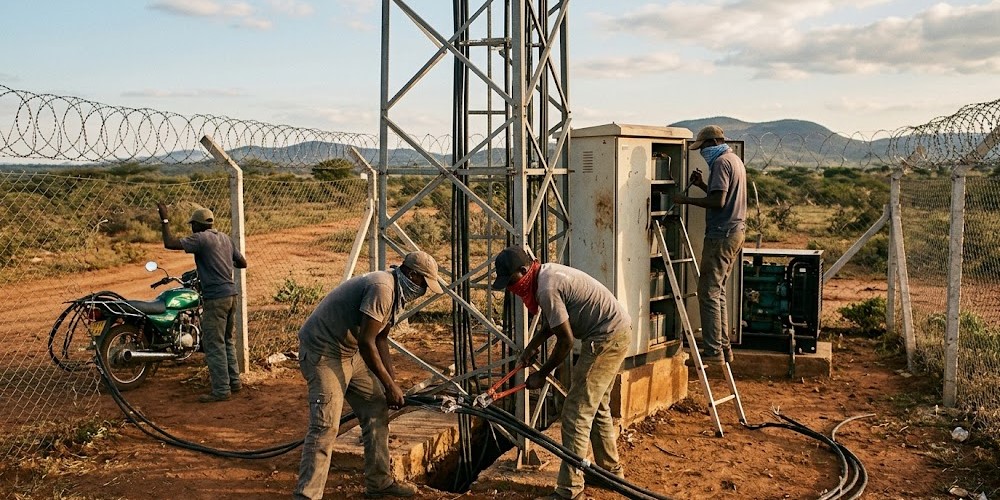
However, Emoekpere noted that the association will continue to support the CNII’s implementation in partnership with relevant security agencies such as the Nigeria Security and Civil Defence Corps (NSCDC).
He added that telecom infrastructure remained critical to national security, economic growth and achievement of the Project Bridge’s 90,000 km nationwide fibre-optic deployment.
Also Read: MTN, Airtel, Glo, others recorded 500 weekly fibre cuts in Q1 2026.
Telecom operators pledge improved service quality
While bottlenecks to guaranteeing consistent uptime of quality network delivery remain, telcos have promised to improve network reliability and service quality.
The ATCON president noted that operators are struggling to keep pace with rising subscriber numbers and increasing data demand, despite recent tariff adjustments and infrastructure vandalism.
“The challenge is not that nothing is being done—investments are ongoing. But demand is growing even faster, and operators are constantly trying to catch up,” he added.

Mr Emoekpere identified the frequent migration of subscribers between networks and shifting usage patterns as an issue. He noted that the practice places additional pressure on certain operators, contributing to network failures.
“We value our subscribers, and everything is being done not just to maintain, but to improve service delivery,” he said.
