



Loan apps and telemarketing companies that use unauthorized phone numbers will face arrest and legal action. This is According to the Nigerian Communications Commission (NCC). The telecommunications regulatory body said utilizing people’s phone numbers without their consent is considered a violation of privacy.
Additionally, the NCC debunked telemarketers’ claims that they obtained the numbers from the NCC or the national database of registered SIM cards, labelling these assertions as false.
“These telemarketers also falsely claim that they obtain telecom consumers’ phone numbers from the Nigerian Communications Commission. Otherwise, they claim that the Commission gave them access to the numbers through the Subscriber Identity Module (SIM) Registration Database. These claims are not true”, an excerpt from the statement released by NCC on Thursday reads.

Speaking on this, the Commission also guarantees the protection of telecom subscriber data through relevant regulations, including Section 35(1) of the Consumer Code of Practice Regulations, 2007; Section 9(1) of the Nigerian Communications (Registration of Communications Subscribers) Regulations, 2022; and Section 4.2(a) & (b) of the NCC’s Internet Code of Practice.
Read More: Nigeria accounts for 82% of Africa’s telecom subscriptions – NCC
What happens when loan apps harvest people’s phone numbers without their consent
Unauthorized harvesting of people’s phone numbers by loan apps or any entity in Nigeria poses a range of significant dangers.
Firstly, it constitutes a privacy invasion, encroaching upon individuals’ privacy rights by accessing their personal contact information without their consent. This can result in unwelcome intrusions and unsolicited communications.
Furthermore, the collected phone numbers might be misused for purposes that extend beyond what individuals initially agreed to when using the loan app. This misuse can encompass activities like sending spam messages, making telemarketing calls, or even selling the acquired data to third parties.
Moreover, such unauthorized access to phone numbers can facilitate various fraudulent activities, including phishing attempts where scammers impersonate legitimate entities to pilfer personal and financial information.
Additionally, harvested phone numbers can be instrumental in identity theft schemes, leading to financial losses and reputational harm for the victims.
In the context of loan apps, this unauthorized access to phone numbers can expose individuals to unsolicited loan offers and predatory lending practices, potentially causing financial distress.
From a regulatory standpoint, these actions often breach telecommunications and data protection regulations, which can result in legal consequences for the companies involved.
Furthermore, the unauthorized harvesting of phone numbers erodes trust between consumers and service providers, ultimately damaging the reputation of these companies and undermining trust in digital services as a whole.
Loan apps have always come under fire in Nigeria
Loan apps in Nigeria have faced criticism and viewed with suspicion due to concerns including exorbitant interest rates, aggressive debt collection, inadequate regulation, data privacy issues, hidden fees, unsolicited messages, impersonation scams, credit score impact, and limited avenues for redress. These factors have led to a general distrust of the industry.
In loan app scams, victims receive unsolicited calls or messages offering easy loans with appealing terms. However, these offers often hide hidden fees and high interest rates, trapping individuals in a cycle of debt.

Impersonation scams are particularly distressing. Scammers impersonate family members, friends, or even law enforcement officers, claiming that a loved one is in trouble and needs urgent financial assistance.
Lastly, job scams prey on those seeking employment. Recruiters promise lucrative job opportunities, but they require upfront payments for placement or training. Sadly, the promised jobs rarely materialize.
To protect oneself from these scams, it is essential to exercise caution when receiving unsolicited calls or messages. Always verify the identity of callers, especially if they claim to be from official organizations. Never share personal or financial information over the phone and be skeptical of offers that seem too good to be true. If you suspect a scam, report it to law enforcement or consumer protection agencies. Phone scams can inflict significant financial and emotional harm, making vigilance and awareness of evolving scam tactics crucial to avoid becoming a victim.
NCC reminds telecom users of how to utilize DND
The Commission advises telecom subscribers to utilize the Do-Not-Disturb (DND) Short Code provided by the NCC. This code allows subscribers to control their subscription to Value Added Services, giving them the choice to prevent unwanted text messages and telemarketing offers.
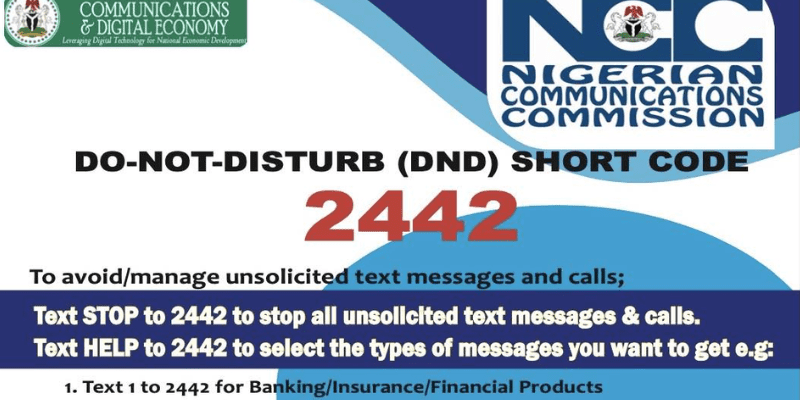
To activate this service, subscribers can send ‘STOP’ to the Short Code 2442 for FULL DND.
The Commission also encourages telecom users to report any unlawful activities by telemarketers. They can do so by contacting the toll-free number 622. This will enable the Commission to take the necessary enforcement actions against such activities.
Read More: NCC wants telecom companies exempted from excise duty amidst multiple taxation concerns
