


The cost of internet access in Africa reveals a continent of contrasts, shaped by market dynamics, government policies, and economic realities. As digital transformation sweeps across the continent, the disparity in data rates and connectivity challenges underscores the complexity of achieving digital inclusion.
This report examines data rates in eight African countries—Nigeria, Egypt, South Africa, Kenya, Morocco, Ghana, Ethiopia, and Tanzania—using available figures as of February 2025. By comparing Nigeria’s rates with those of its peers, Technext uncovers a complex narrative of progress, challenges, and opportunities in the continent’s digital landscape.
Earlier this year, the Nigerian Communications Commission (NCC) approved a 50% increase in data tariffs, marking the first major adjustment since 2013. This decision, driven by rising operational costs and an inflation rate of 34.8%, sparked public outrage.
While the increase is imminent, MTN Nigeria’s 1 GB plan remains at ₦350, with Airtel Nigeria’s 1 GB plan also at ₦350. Globacom’s 1 GB plan costs ₦300, and 9Mobile’s is similarly priced at ₦300. However, MTN’s 15 GB weekly bundle surged 200% to ₦6,000, drawing sharp criticism before the company reversed the hike following a public backlash.
Nigeria’s data rates are relatively affordable compared to South Africa. A comparative analysis of the minimum average cost of a 2 GB data plan reveals significant disparities across the eight African countries.
Nigeria stands out as the most affordable, with prices as low as $0.66, followed by Ghana at $0.85 and Ethiopia at $0.93. Kenya offers relatively cheap rates at $2.92, maintaining its reputation as a leader in digital accessibility. In contrast, Morocco’s 2 GB plan costs $4.50, while South Africa is notably more expensive at $8.41. Surprisingly, Tanzania, often known for its affordability, shows a higher rate of $7.20 for the same package.
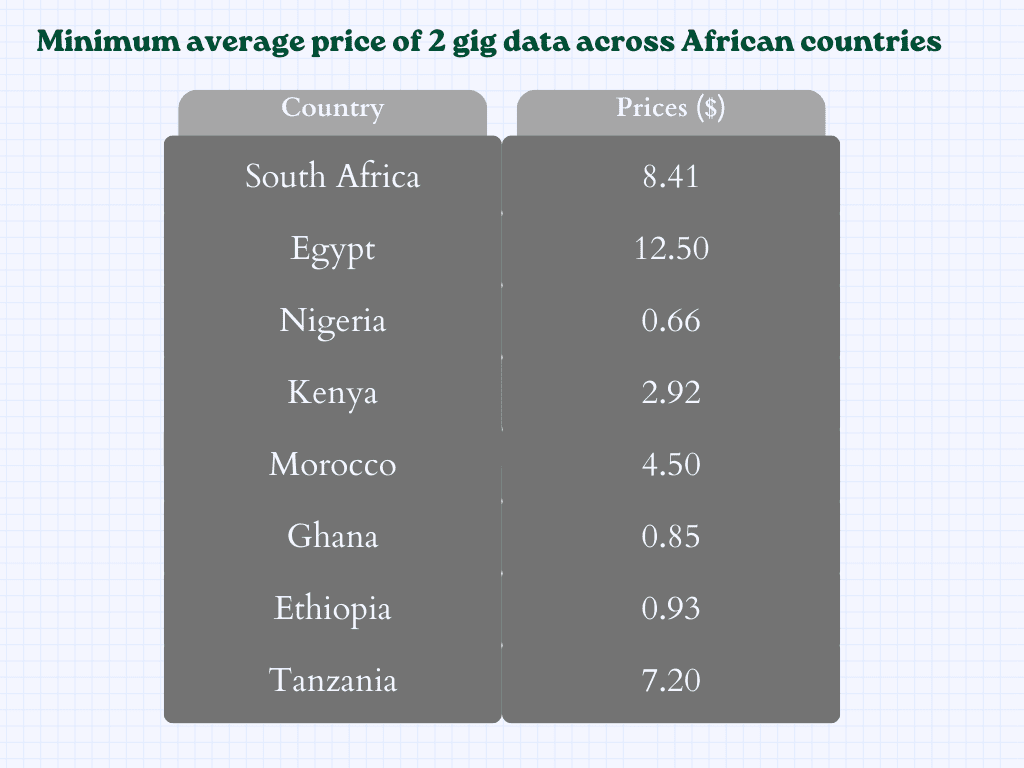
At the other end of the spectrum, Egypt tops the list with a 2 GB plan costing $12.50, reflecting the impact of inflation and economic challenges. This price variance highlights the complex landscape of internet affordability in Africa, where market dynamics, regulatory frameworks, and economic conditions significantly influence consumer access to digital services.
Egypt: Inflation and price hikes
Egypt’s National Telecommunications Regulatory Authority (NTRA) approved significant price increases for mobile and internet services in January 2025, citing rising operational costs and an annual inflation rate of 23.2%.
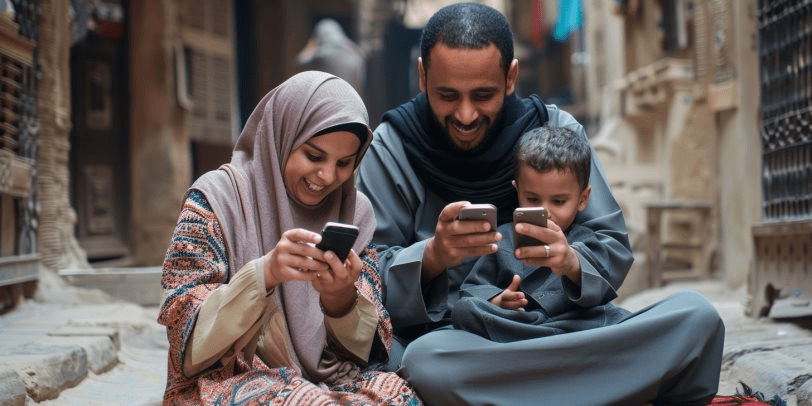
Telecom Egypt raised home internet package prices: the 140 GB plan increased by 33.3% to EGP 160 ($3.16) from EGP 120, the 200 GB plan rose 32.4% to EGP 225 ($4.45) from EGP 170, and the 1 TB package climbed 31.3% to EGP 1,050 ($20.75) from EGP 800. Mobile recharge cards and prepaid plans also saw price hikes of 10–15%, with recharge cards now priced between EGP 13 ($0.26) and EGP 38 ($0.76), excluding VAT.
For tourists, Egypt remains competitive, offering various prepaid SIM options. Vodafone Egypt provides 10 GB for $9 (30 days) and 30 GB for $18 (30 days). Orange’s plans include 10 GB for $8 and 40 GB for $18. Etisalat offers 7 GB for $8 and 40 GB for $21, while WE Telecom provides 1.3 GB for $1 and 50 GB for $25 (90 days). Despite inflationary pressures, these tourist packages make Egypt a relatively affordable destination for short-term visitors.
Compared to Nigeria, Egypt’s data rates for residents are slightly higher, but its tourist packages are more competitively priced. The impact of inflation and operational costs is more pronounced in Egypt, affecting affordability for locals.
South Africa: High costs and reform efforts
South Africa’s data rates rank among Africa’s highest. A 2 GB package costs a minimum of $8.41, compared to $0.33 in Nigeria and $2.92 in Kenya. Vodacom, a dominant provider, offers postpaid plans starting at R101 ($5.5) for 1 GB, R320 ($17.42) for 10 GB, and R642 ($34.94) for 50 GB. Uncapped home internet costs R399/month ($21.72) with speeds up to 30 Mbps and a 600 GB fair usage policy.
Compared to Nigeria and Kenya, South Africa’s data rates are significantly more expensive. This disparity is partly due to the country’s premium pricing strategy and high operational costs. However, South Africa’s internet infrastructure is more advanced, offering faster speeds and wider coverage.
Kenya is the most affordable – for some packages
Kenya leads in affordability, with 1 GB of mobile data averaging $0.59. Airtel’s Smarta Bundles include 1 GB/day for 30 days (total of 30 GB) at 1,000 KES ($7.50) and 2 GB/day (60 GB) at 1,500 KES ($11.25). Safaricom, the largest provider, offers competitive home internet: 15 Mbps for 2,999 KES ($22.50) and 1 Gbps for 20,000 KES ($150).
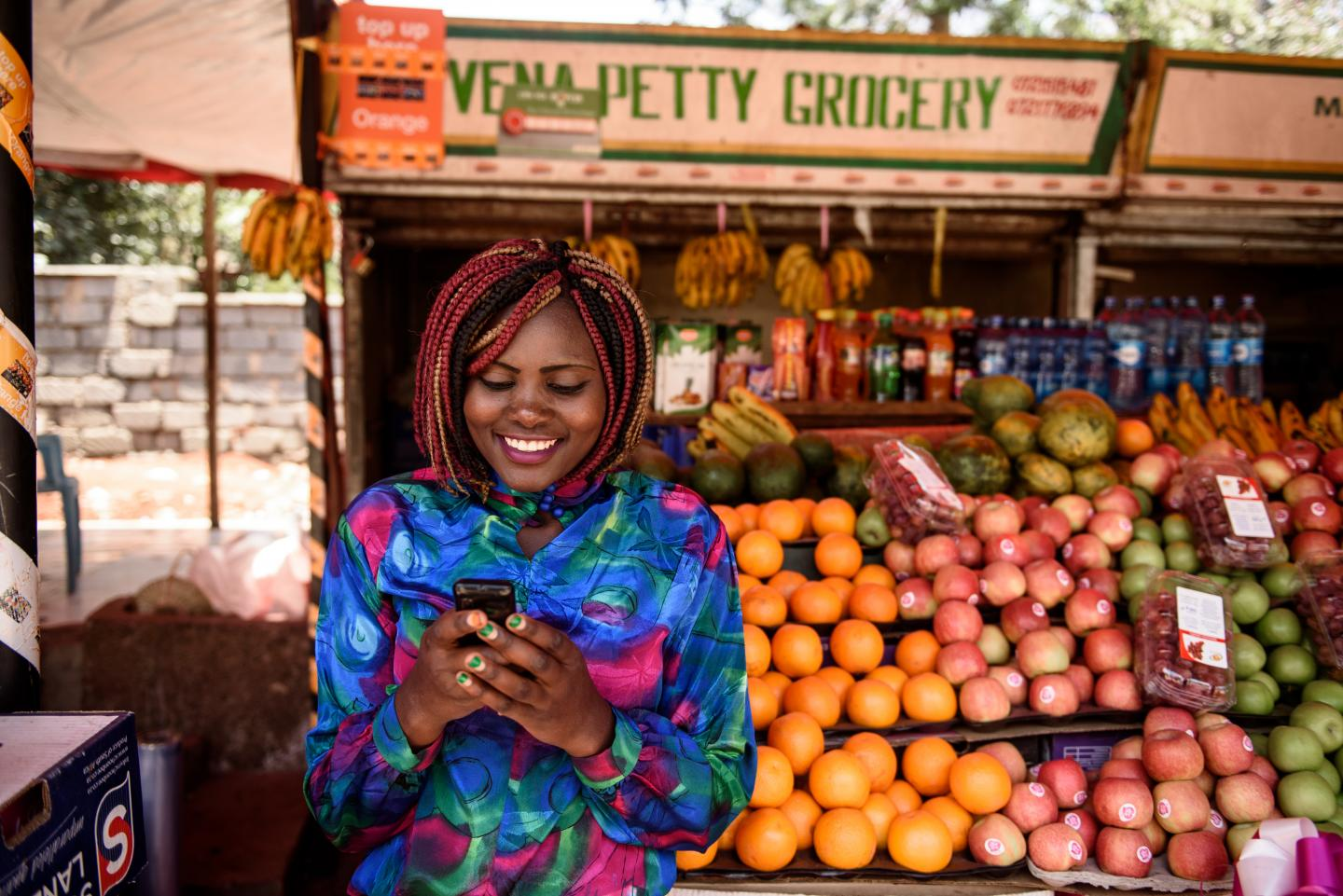
Kenya’s competitive pricing is attributed to its robust market competition, with multiple providers driving down costs. Compared to Nigeria, Kenya offers lower rates and better value for money. Its strategic investments in 5G and fibre networks further enhance digital access.
Tanzania: Africa’s lowest rates?
Tanzania is a standout in Africa’s digital economy due to its highly competitive mobile data rates. Airtel and Halotel lead the market with ultra-low prices, offering 1 GB for as little as $0.25.

This affordability stems from aggressive competition among several telecom operators and strategic government investments in digital infrastructure, particularly in 4G and 5G networks. The Tanzanian Communication Regulatory Authority has played a key role in maintaining a level playing field, encouraging competition that drives prices down.
Compared to Nigeria’s $0.33 and Kenya’s $0.59 per GB, Tanzania’s data rates are unmatched. But, rates become higher on bigger packages.
This affordability has spurred high mobile internet penetration, facilitating digital inclusion and economic participation across urban and rural regions. Despite the low costs, users report decent internet speeds, making Tanzania an example of how competitive markets can enhance digital accessibility.
In certain data packages, Tanzania outperforms Nigeria, Kenya, and South Africa in affordability. Its competitive landscape and lower operational costs contribute to its position as Africa’s leader in cheap data.
Ghana: Affordable data and government reforms
Ghana maintains a balanced approach to mobile data pricing, with 2 GB averaging $0.85. MTN Ghana dominates the market, but competition from Vodafone keeps prices low.
Notably, Vodafone offers bundled night data options, appealing to users who need more data at off-peak hours. Ghana’s relatively low telecom taxes and regulatory environment focused on consumer protection contribute to these affordable rates.
The National Communications Authority actively monitors pricing to prevent exploitation, ensuring the market remains competitive. This strategy places Ghana ahead of Morocco ($4.50) and South Africa ($8.41) in terms of affordability.
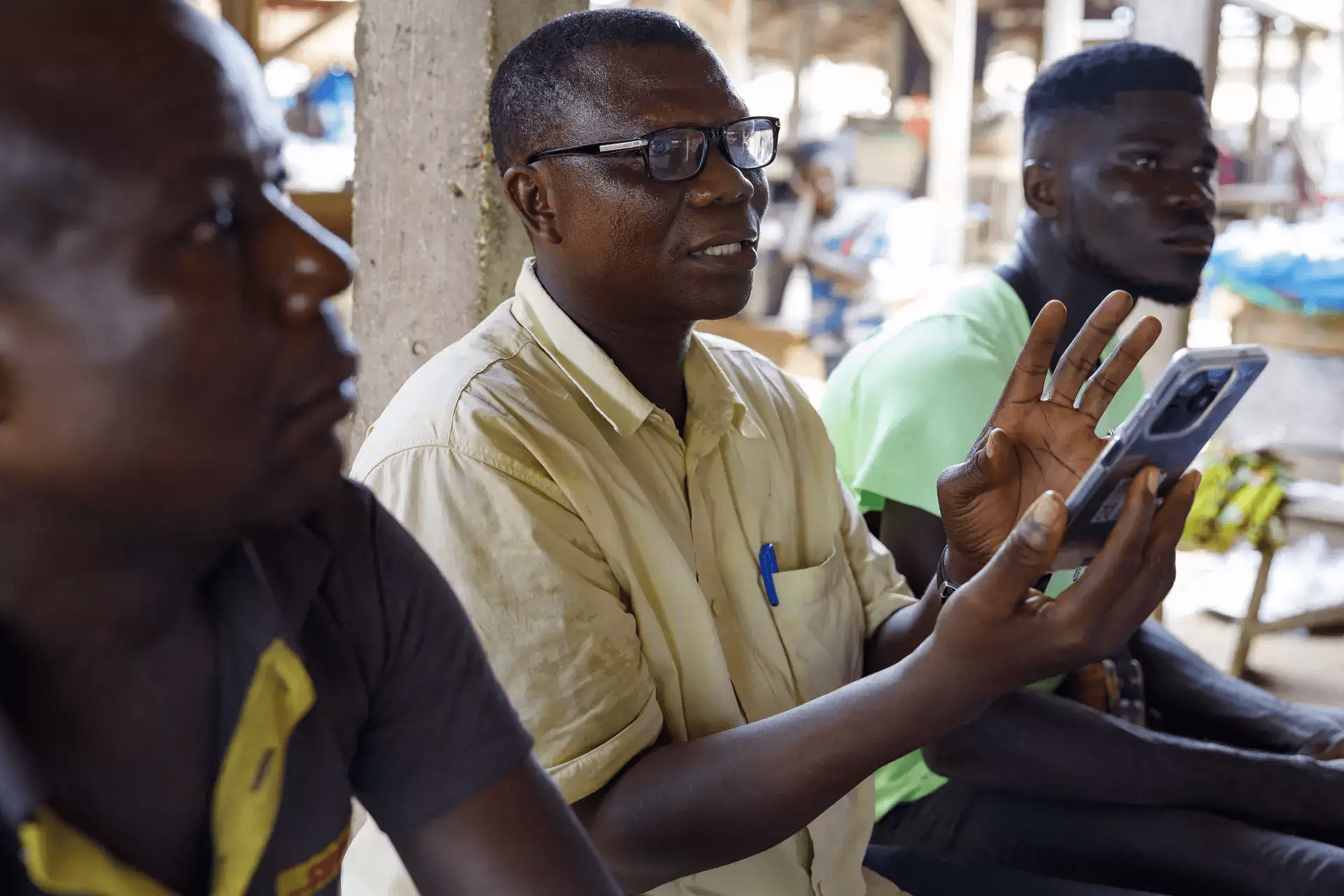
The Ghanaian government is also pushing for digital transformation initiatives to boost connectivity, especially in underserved communities. These efforts are gradually reducing the digital divide, making internet access more inclusive and economically beneficial.
Morocco: Balancing affordability and convenience
Morocco provides a unique digital landscape by balancing affordability with high service quality. The country’s mobile data rates are moderately priced, with 2 GB costing around $4.50.
Maroc Telecom, Orange Morocco, and Inwi dominate the market, each offering competitive packages to meet diverse consumer needs.
Morocco’s data pricing strategy caters not only to residents but also to tourists, who benefit from short-term SIM plans and eSIM options. The government’s investment in 4G and expanding 5G infrastructure has enhanced connectivity, particularly in urban areas.

Morocco’s government is heavily investing in telecommunications, allocating over 8.4 billion dirhams (approximately $830 million) in 2023 to enhance its 4G infrastructure and expand towards 5G networks.
However, compared to Ghana ($0.85) and Nigeria ($0.33), Morocco’s rates are on the higher side, reflecting its more developed telecom infrastructure and premium service offerings. Despite this, Morocco’s data rates remain cheaper than South Africa’s $8.41, providing better value for money, especially with the availability of unlimited WhatsApp usage on specific plans.
Ethiopia: Liberalisation spurs competition
Ethiopia has rapidly evolved in digital connectivity due to the liberalisation of its telecom sector.
The cost of 2 GB averages $0.93, making it one of the most affordable in East Africa. Ethio Telecom, the state-owned provider, continues to dominate but faces growing competition from Safaricom Ethiopia, which entered the market with aggressive pricing. This competition is driving down costs and improving service quality.
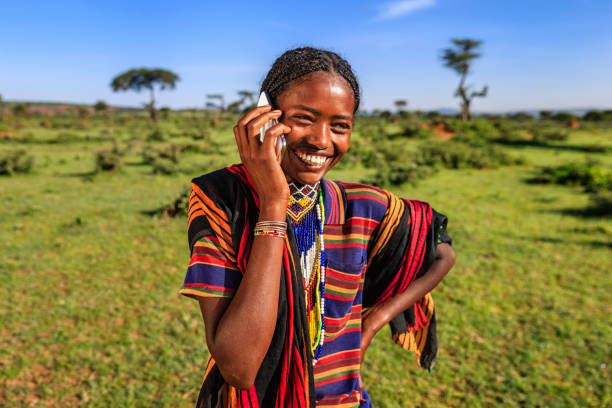
Ethiopia’s government actively supports digital transformation through initiatives like the National Digital Transformation Strategy, aiming to expand internet access across the country. The strategy has resulted in extensive investments in 4G and upcoming 5G networks, enhancing connectivity even in rural areas.
Compared to neighbouring Kenya ($2.92) and other African nations, Ethiopia’s data rates are remarkably low, positioning the country as an emerging digital hub. However, challenges remain in maintaining affordable prices while scaling infrastructure to meet growing demand.
Conclusion
Nigeria must address infrastructure challenges and enhance competition. By investing in digital transformation, Nigeria can strengthen its position as a leader in Africa’s digital economy.
