




In May 2025, the National Identity Management Commission (NIMC) announced a steep increase in fees for National Identification Number (NIN) modifications, igniting a firestorm of criticism across Nigeria.
The cost to correct a date of birth skyrocketed 75%, from ₦16,340 to ₦28,750, while name rectifications rose 31%, from ₦1,522 to ₦2,000.
Nigerians, already grappling with economic hardship, took to social media to voice their outrage, accusing NIMC of exploiting citizens for errors often caused by its agents.
Legal expert Oladipupo Ige, Policy & Advocacy Director at the Data Privacy Lawyers Association of Nigeria, argues to Technext that these fees may violate Nigeria’s data protection laws.
“The law is clear. Data rectification is permitted by law. Article 36(4) of the NDP-GAID 2025 expressly states that where data rectification is for the purpose of correcting an error made by a data controller or a data processor in inputting the personal data of a data subject, the data subject shall not be required to pay in order to correct an error which is not his or her fault,” Ige declares.
Technext examines the legal, social, and systemic implications of NIMC’s fee hikes, exploring whether Nigerians are unfairly charged for NIMC’s mistakes, threatening equity and trust in the nation’s digital identity system.

The legal framework: NDPA-GAID 2025 and NIMC’s Obligations
The Nigeria Data Protection Act (NDPA), enacted on June 12, 2023, establishes a robust framework for safeguarding personal data, replacing the Nigeria Data Protection Regulation (NDPR) 2019.
Its General Application and Implementation Directive (GAID), issued on March 20, 2025, by the Nigeria Data Protection Commission (NDPC), provides detailed guidelines, including the right to data rectification [4].
Article 36(4) of the NDPA-GAID 2025 is unequivocal:
Where data rectification is for the purpose of correcting an error made by a data controller or a data processor in inputting the personal data of a data subject, the data subject shall not be required to pay in order to correct an error which is not his or her fault.
NDPC/NDP ACT-GAID/01/2025
Ige emphasises the procedural safeguards as in Article 36(5): “Also, the law states that whenever there is a dispute whether a data subject was provided with ample opportunity to verify his data or not, the controller or processor is required to provide evidence to that effect.”
NIMC, as the data controller for NIN records, is legally bound to offer free corrections for errors caused by its agents, such as misspellings or incorrect data entries. Also, it must prove that citizens had “manifestly ample opportunity to verify his or her data before such data is submitted in a permanent format,” as Ige notes.
Yet, NIMC’s May 2, 2025, fee structure applies fees uniformly (₦2,000 for name corrections and ₦28,750 for date of birth changes) without a clear process to distinguish between citizen-caused and agent-caused errors.
Ige criticises this lack of transparency: “Therefore, informing the public that they should pay that amount for name rectification without informing them that the NIMC must account for why such rectification is necessary or has occurred is important.
“Nigerians who want to rectify names must be allowed to know why the name is wrongly stated. If it is the fault of the citizen, then he must pay the sum, but if not, such rectification is free of charge per law.”
The NDPC, established under Section 4 of the NDPA, oversees compliance.
Article 39 of the GAID allows citizens to issue a Standard Notice to Address Grievance (SNAG) to NIMC and escalate unresolved issues to the NDPC’s online complaint platform.
Violations could trigger fines of up to ₦10 million or 2% of NIMC’s annual gross revenue. However, the NDPC’s enforcement capacity remains under scrutiny, with no public data on NIMC-related complaints as of May 2025.
Public outrage on X
Nigerians have flooded X with complaints, highlighting the financial and social toll of NIMC’s fees.
On May 10, 2025, user @TundeOla tweeted: “NIMC charged me to fix my name because their agent typed ‘Ola’ as ‘Olu.’ How is this my fault? #NINScam”
The next day, @Chioma_NG wrote: “₦28,750 to correct my DOB? Half my salary! NIMC is punishing us for their incompetence.”
These sentiments reflect a broader frustration, amplified by Nigeria’s economic realities. With a minimum wage of ₦70,000 and 33% of the population below the poverty line (₦137,430 annually, per the National Bureau of Statistics), the ₦28,750 date of birth correction fee is nearly half a month’s income for many. Incorrect NIN data can block access to banking, voting, or social services, exacerbating exclusion.
X posts also reveal systemic issues. A 2023 thread by @NaijaRights noted “NIMC agents charging ₦5,000 for ‘fast-track’ corrections without receipts,” a practice persisting into 2025.
These complaints align with Ige’s call for accountability, as NIMC’s failure to justify errors risks violating Article 36(4).

The NDPA-GAID 2025 aimed to streamline rectification by removing requirements for affidavits or newspaper publications (Article 36(3)), but the fee hikes undermine these reforms.
Systemic failures and a pattern of mistrust
NIMC justifies the fee increases by citing a 32.7% inflation rate in 2024, arguing that operational costs necessitate adjustments.
Ige’s commentary, however, challenges this rationale, asserting that economic pressures do not supersede legal obligations:
If it is the fault of the citizen, then he must pay the sum, but if not, such rectification is free of charge per law. – Oladipupo Ige
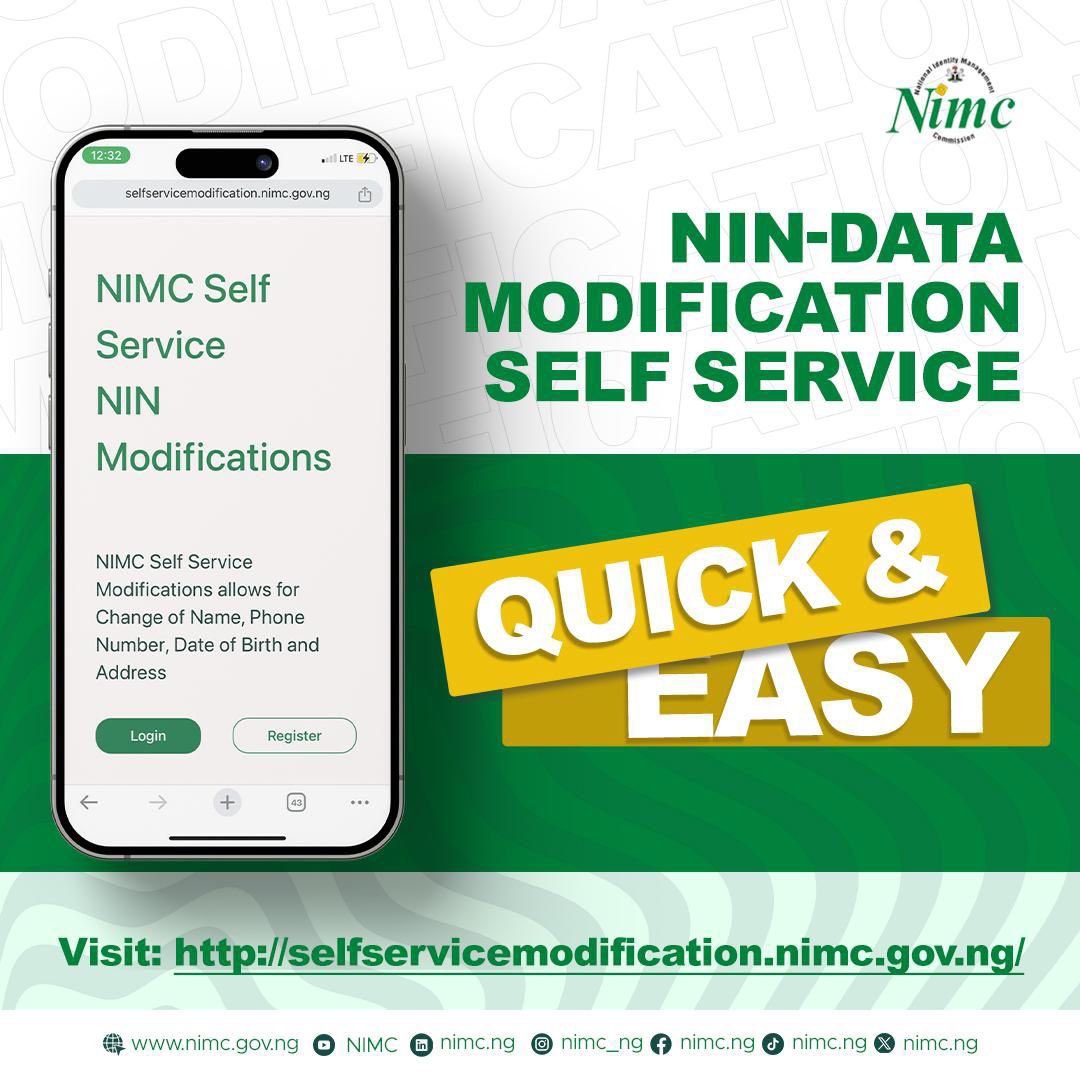
The absence of verification protocols, such as mandatory data review screens or printed slips during enrollment, exacerbates errors.
A 2021 Berkman Klein Centre study by Babatunde Okunoye highlighted public mistrust in Nigeria’s digital ID program, driven by poor data handling and perceptions of exploitation. This mistrust persists, as evidenced by X posts like @TundeOla’s, which question why citizens bear the cost of agent incompetence.
The NDPA-GAID 2025 mandates that NIMC, as a Data Controller of Major Importance, conduct annual compliance audits and file Compliance Audit Returns with the NDPC. And there are indications that no public audits will surface after the fee hikes, raising questions about oversight.
Ige’s insistence that “Nigerians who want to rectify names must be allowed to know why the name is wrongly stated” underscores the need for transparent error attribution.
Lessons from abroad
Nigeria’s data rectification challenges invite comparison with other countries.
The European Union’s General Data Protection Regulation (GDPR) Article 16 guarantees free rectification for inaccurate data, with controllers required to act “without undue delay.”
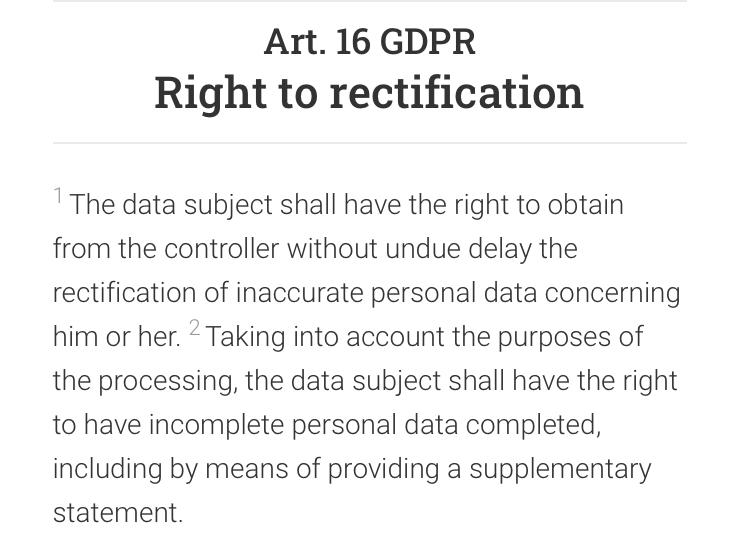
In Germany, correcting a misspelt name on a Personalausweis (national ID) is free if the issuing authority is at fault, and agencies must document verification processes, such as applicant-signed forms.
Fines for non-compliance can reach €20 million or 4% of annual turnover, enforced by independent data protection authorities. Germany’s transparent system contrasts with NIMC’s opaque fee application.
South Africa’s Protection of Personal Information Act (POPIA) Section 24 similarly mandates free rectification for controller errors.
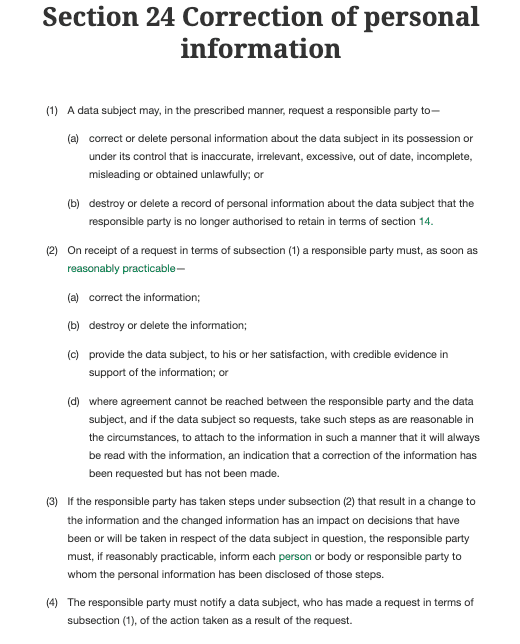
In 2023, the Information Regulator mediated a case where a Johannesburg resident had her ID name corrected for free after proving an agent’s error, showcasing proactive enforcement. South Africa’s Regulator conducts regular audits of the Department of Home Affairs, unlike the NDPC’s less visible role.
Conversely, Kenya’s Huduma Namba program mirrors Nigeria’s challenges.
In 2022, a Mombasa resident paid KSh 1,000 (₦3,500) to fix a biometric error, with no option to challenge the agent’s fault due to weak data protection enforcement. Nigeria, with the NDPC and NDPA-GAID 2025, has a stronger legal framework but lags in implementation, as Ige’s critique suggests.
Toward equity and accountability
The NDPC must enforce Article 36(4), auditing NIMC’s fee practices and ensuring free rectification for agent errors.

Ige’s call for public awareness: “informing the public that they should pay that amount for name rectification without informing them that the NIMC must account for why such rectification is necessary or has occurred is important” demands action.
The NDPC’s National Privacy Week 2025, themed “Fostering Trust and Inclusion,” could launch campaigns on radio and X to educate Nigerians about their rights. NIMC should adopt verification protocols, like Germany’s signed forms, to prevent errors.
Citizens can leverage the NDPC’s SNAG mechanism and online complaint platform to challenge wrongful fees.
Nigeria’s digital ID system, backed by the World Bank to reach 85% coverage by 2027, is critical for development. Yet, as Ige warns, trust hinges on fairness. Without aligning fees with Article 36(4), NIMC risks deepening inequality and eroding public confidence.
Nigerians should verify their NIN on the self-service portal (selfservicemodification.nimc.gov.ng) and demand free rectification for agent errors, citing Article 36(4). File SNAGs with NIMC and escalate to the NDPC at www.ndpc.gov.ng.
