




In a startling revelation, BudgIT Nigeria, a leading civic technology organisation, has uncovered what appears to be a significant case of budget padding and potential fraud within the 2025 Federal Budget of Nigeria. The report highlights egregious manipulations in the budgetary allocations, particularly within the Federal Ministry of Humanitarian Affairs and the Federal Ministry of Agriculture, raising serious concerns about fiscal responsibility and transparency.
According to BudgIT‘s findings, the Federal Ministry of Humanitarian Affairs (FMHA) initially proposed a budget of N24 billion. However, the National Assembly dramatically increased this allocation to ₦291 billion, a budget padding of ₦267 billion. This staggering increase has sparked outrage and questions about the rationale behind such a substantial hike, especially given the ministry’s core mandate of addressing humanitarian crises and poverty alleviation amidst the nation’s dwindling revenue.
Even more alarming is the case of the Federal Ministry of Agriculture. The ministry’s original budget proposal stood at N242 billion. Overnight, this figure ballooned to N1.9 trillion, with the National Assembly injecting an additional N1.7 trillion. This is an increase to the tune of 685%, a budget padding incident that BudgIT describes as not just alarming but an “assault on fiscal responsibility”.
The organisation’s Country Director, Gabriel Okeowo, emphasised that such actions distort development priorities and redirect scarce resources into the hands of political elites rather than serving the broader interests of Nigerians.

The report also flags an unusual allocation to the Advertising Regulatory Council of Nigeria, (ARCON), an agency primarily responsible for regulating advertising. ARCON has been allocated N1.05 billion for the construction of a link bridge in Ebonyi State, a project that seems incongruent with its statutory functions. This allocation has raised eyebrows, with critics questioning how an advertising regulatory body has ventured into infrastructure development, further fuelling suspicions of misaligned priorities and potential misuse of public funds.
National Assembly budget padding uncovered by BudgIt
BudgIT’s investigation reveals that the National Assembly inserted 11,122 projects valued at N6.93 trillion into the 2025 budget. About 3,573 projects worth N653.19 billion were directly assigned to federal constituencies, while 1,972 projects valued at N444.04 billion were allocated to senatorial districts.
Significant anomalies include 1,477 streetlight projects worth N393.29 billion, 538 boreholes totalling N114.53 billion, 2,122 ICT projects valued at N505.79 billion, and N6.74 billion earmarked for “empowerment of traditional rulers”.
BudgIT also noted that 39 per cent of all inserted projects, 4,371 projects worth N1.72 trillion, were forced into the Ministry of Agriculture, a practice that the organisation characterises as a deeply rooted system of exploitation. This trend, increasingly normalised, undermines the purpose of national budgeting and suggests a mechanism for advancing political interests over national development.
The silence from the presidency and other key institutions, despite formal letters from BudgIT under the “The Budget is a Mess” campaign, has only compounded concerns about accountability.
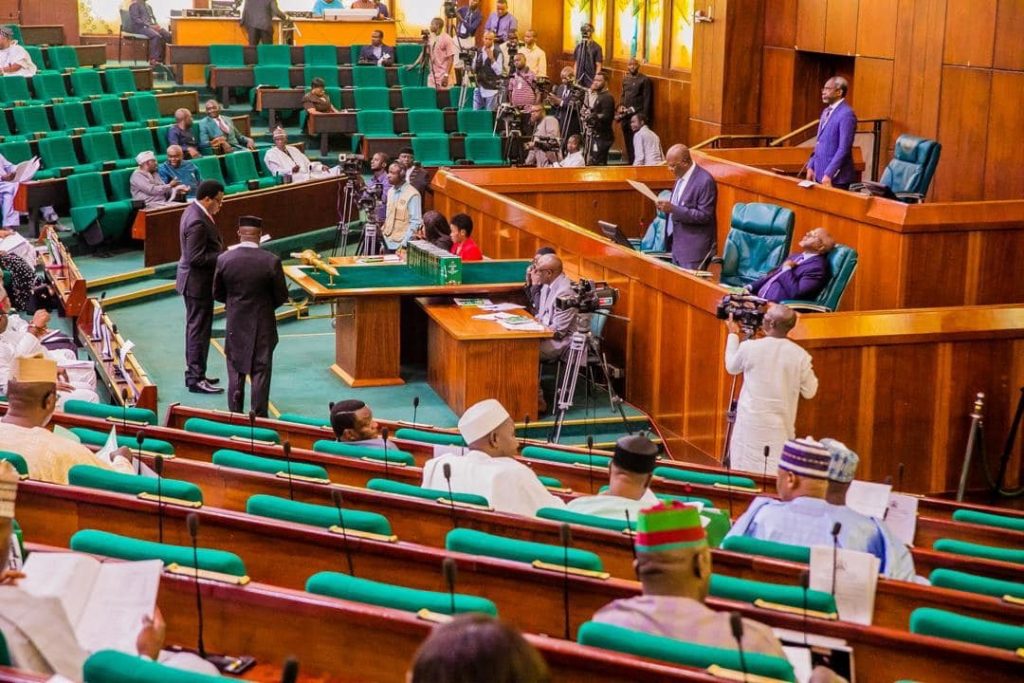
The implications of these budget padding and manipulations are profound. With Nigeria’s economy already grappling with challenges, such as high inflation and currency devaluation, the misallocation of funds could exacerbate financial strain on the populace. The additional trillions inserted into the budget, particularly in sectors like agriculture, which are critical for food security and economic stability, could have been better utilised to address pressing national needs rather than being syphoned off through questionable projects.
In response to these findings, BudgIT has called on the Attorney General and Minister of Justice to seek a constitutional interpretation of the National Assembly’s powers to insert capital projects without executive approval. The organisation has also urged anti-corruption agencies, such as the Economic and Financial Crimes Commission (EFCC) and the Independent Corrupt Practices and Other Related Offences Commission (ICPC), to investigate this budget padding.
Furthermore, BudgIT has appealed to citizens, the media, civil society, and development partners to demand accountability and reform, stressing that the 2025 budget must serve the interests of Nigerians rather than a privileged few.

President Bola Tinubu has been urged to exercise stronger executive leadership in reforming the budgeting process to align with the Medium-Term National Development Plan (2021–2025). The lack of response from the presidency and other institutions to BudgIT’s findings is particularly concerning, as it suggests a lack of willingness to address these systemic issues.
As Nigeria navigates its economic recovery, the revelations from BudgIT serve as a stark reminder of the urgent need for transparency and accountability in public finance management. The 2025 budget, intended to be a tool for national development, risks becoming a vehicle for entrenched corruption unless decisive action is taken to curb these practices.
The Nigerian populace, already burdened by economic hardships, deserves a government that prioritises their welfare over political gain. The coming months will be critical in determining whether the calls for reform will lead to tangible change or if the cycle of budget padding and fiscal irresponsibility will continue unabated.
