


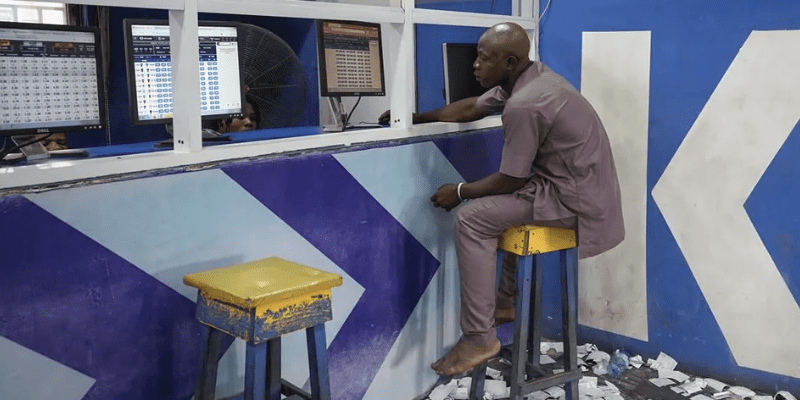
Nigeria’s online gambling scene has ballooned into a multi‑million‑dollar industry in just a few years. Remote gaming, dominated by sports betting, pulled in an estimated $400 million in 2023 and shows no sign of slowing, growing at roughly 16% annually and eyeing half a billion dollars by 2025.
Nearly eight out of ten naira staked on iGaming goes to sports wagers, and Bet9ja alone, as of the end of 2024, controls about 6% of that market. Young Nigerians fuel this surge, more than half of all online bettors fall between 18 and 35, tapping the game through smartphones, where 90% of activity happens.
Rapid digital access has pushed participation even higher. There are 141.5 million internet subscriptions reported as of July 2025. That number is about 60% of the country’s 238 million population.
Estimates suggest more than 60 million adults (42% of everyone online) do online gambling regularly, spending an average of ₦3,000 to ₦5,000 each day on platforms such as Bet9ja, SportyBet and 1xBet. Over 75% of Nigerian bettors now make their bets using mobile devices, Statista report.

Nigeria’s online gambling boom fuelled by fintech payments
For emphasis, Nigeria’s sports betting market has exploded in recent years, and a 2024 report forecasts gross gaming revenues of about $717 million by 2025.
The Chief Executive Officer of the Lagos State Lotteries and Gaming Authority, Bashir Abiola Are, notes that the market is “on an upwards trajectory thanks to… technologies such as fintech.” Indeed, home-grown payment platforms, from card gateways to mobile wallets, now underpin most major bookmakers.
Key fintech–betting partnerships
- Flutterwave & Betway: Flutterwave publicly announced a tie-up with Betway (a global bookmaker) in 2020. In Flutterwave’s own press blog, the firm described the partnership as offering “seamless gaming services” to Nigerians, with multiple funding channels (cards, bank transfers, USSD, QR codes, etc.) and “no hidden charges” for users. This lets Betway customers deposit Naira instantly using Flutterwave’s API and wallets.
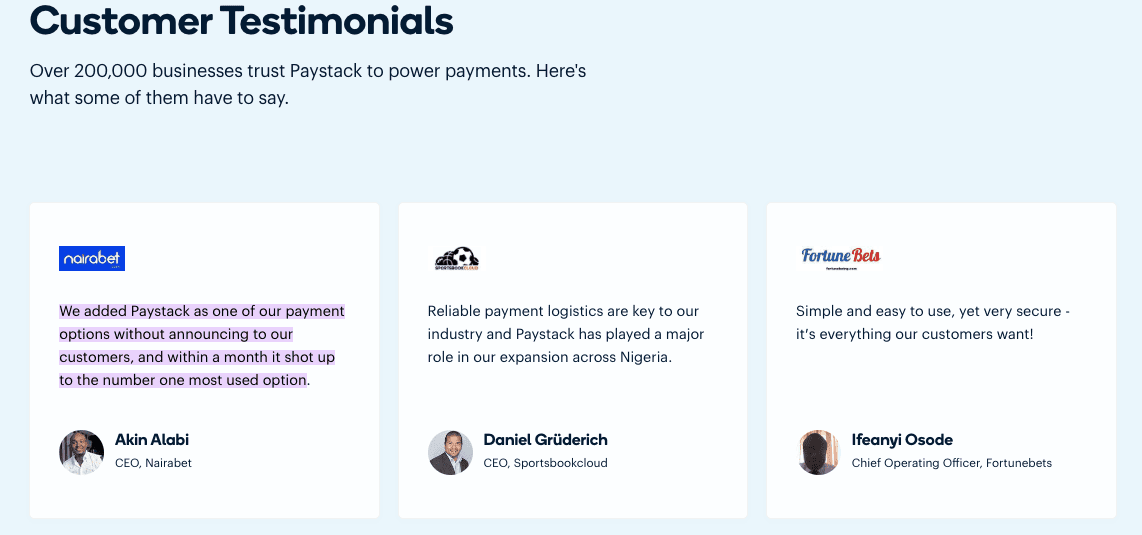
- Paystack & NairaBET: Paystack highlights several sportsbooks among its clients. NairaBET’s founder, Akin Alabi, told Reuters that when NairaBET quietly added Paystack as a payment option, it “shot up to the number one most used option” on the site. Paystack’s site features testimonials from Nigerian bookmakers (including NairaBET, Fortunebets, Sportsbookcloud) praising its reliable payouts.
- Local Bookmakers (Bet9ja, 22Bet, 1xBet, etc.): Major Nigerian betting sites explicitly list local fintech on their deposit pages. For example, Bet9ja’s help site shows users can fund their Bet9ja wallet via Flutterwave (card), Paystack (card), OPay (mobile app) or Monnify (virtual account), among other methods. A June 2025 bookmaker survey confirms many sites accept the same mix: Flutterwave, Paystack, OPay, PalmPay and even Monnify appear as options on Bet9ja, 1xBet, Betano, 22Bet, and BetKing. In short, nearly all popular betting platforms integrate these Nigerian fintech rails so customers can deposit Naira.
- Other integrations: In some cases, major operators highlight fintech ties in announcements. For instance, BetKing (top local operator) recently touted new partnerships with fintech payment apps PalmPay and Paga to streamline transactions. (Though outside our focus list, this underscores how betting firms plug into various domestic wallets and gateways for deposits.)
Facilitating deposits & payouts
Fintech platforms handle the nitty-gritty of moving money quickly and securely:
- Deposits (instant funding): Bet9ja’s deposit guide emphasises that using Flutterwave charges and funds the wallet “immediately”. In practice, customers can use a Flutterwave-linked card or USSD (e.g. dialing 7371#) to top up in real time. Paystack similarly offers instant card or mobile-money deposits. Flutterwave’s Betway blog boasts “It is instant: Flutterwave is reputed for the fastest tech in the continent”. In other words, fintech APIs ensure punters’ accounts are credited immediately upon payment.
- Payouts: Betting sites must also pay out winnings. Paystack specifically advertises fast, API-driven transfers: its “Transfers” feature lets a bookmaker push payout funds into any Nigerian bank account quickly. (Flutterwave likewise offers business payout APIs.) Some bettors also receive winnings into mobile wallets like OPay or PalmPay, from which they can withdraw cash via agents. Overall, fintech rails give operators a variety of instant and same-day payout channels.
- Wallets and USSD: Beyond cards and banks, fintech platforms offer other integration modes. Flutterwave supports PayAttitude/Barter e-wallets and QR codes (called “Mvisa-QR” in Nigeria) as listed in its Betway partnership post. OPay provides a popular smartphone wallet and extensive agent network, so bookmakers can let punters deposit via the OPay app or USSD. Monnify lets businesses generate virtual bank accounts (USSD bank transfers) for users to pay into – Bet9ja’s Monnify tutorial shows customers selecting Monnify Collections and then paying by bank transfer or USSD. These fintech services tie into Nigeria’s NIBSS Instant Payment System (NIP) behind the scenes, making all transfers effectively real-time.
Market scale and trends
Nigeria’s betting sector has seen staggering volumes, and fintech transactions have surged alongside it.
A 2018 Reuters report noted that Nigeria’s web payments more than doubled in one year: from 14.2 million transactions (₦132 billion) in 2016 to 29 million (₦185 billion) in 2017. (These figures include all e-commerce, but betting was a major driver.) By first quarter 2018, another 10 million transactions (₦61 billion) were recorded.
Lagos State’s gaming commission says taxes on sports betting jumped 30–40% from 2016 to 2017, reflecting surging stakes and likely boosted by easier digital payments.
More recent industry analyses forecast Nigeria’s online gambling market will exceed $3½ billion by 2025 and generate well over $600 million annually by 2024.
While exact fintech transaction breakdowns aren’t public, TeamApt (Monnify’s parent) has reported on the scale of fintech usage: in 2021, it processed roughly 68 million transactions per month across Monnify/Moniepoint, a volume that would naturally include payments by bettors and other users.

Regulations and controversies
Fintech-enabled gambling sits in a complex regulatory mix. The National Lottery Regulatory Commission (NLRC) licences online sports betting nationwide, but states like Lagos also regulate gaming. Officials emphasise compliance (including KYC/age checks) but have generally embraced fintech rails as part of a legitimate system.
While Lagos’ regulator praised the role of fintechs in the growth, however, Nigeria has seen fiscal and legal tussles that indirectly touch fintech.
In Lagos, taxation and licensing requirements for gambling operators have become increasingly stringent, prompting many of them to shift entirely online. Regulators have acknowledged that the current system, split between federal and state controls, needs urgent harmonisation.
For now, fintech-powered payments have not been banned from servicing betting platforms, but the environment is tightening. Fintech companies have taken steps to distance themselves from abuse.
When a Ponzi-style betting scheme, 86FB, attempted to use Flutterwave, the company swiftly notified its merchants and law enforcement. Years earlier, both Flutterwave and Paystack blocked another fraudulent platform, Racksterly, from accessing their rails. These actions point to a growing effort within the ecosystem to enforce compliance before regulators step in. Meanwhile, the Central Bank of Nigeria has turned its attention more broadly to fintech regulation.
In 2024 and 2025, it fined Paystack for launching an unlicensed wallet and temporarily froze onboarding on platforms like OPay and Moniepoint to address anti-money laundering concerns. While these actions were not directed specifically at gambling, they show that payment processors are now under closer scrutiny.
So far, there are no clear sanctions barring Flutterwave or Paystack from powering sportsbooks, but every transaction, whether for gaming or not, is expected to comply with KYC and licensing rules.
Fintech companies’ own views
Payment companies generally portray betting firms as just another client segment.
Flutterwave’s announcements frame the Betway deal in terms of “enabling seamless payments for gamers”.
Paystack’s marketing explicitly touts casino and sports clients – its “Betting” page promises “quick, secure payouts” and highlights Nigerian bookmaker logos (Betway, NairaBET) to build trust.
None of these fintech entities have publicly advocated for or against gambling; they emphasise reliability and compliance. In practice, most fintech statements simply focus on transaction efficiency, leaving it to regulators and operators to handle gaming legality.
Nigeria’s online gambling explosion has a human toll that rarely makes headlines
Thirteen‑year‑old Hassan from Abuja began placing bets using a friend’s account and small handouts. “I just wanted to help my mum pay for food,” he admitted, recalling how easy it was to download an app and slip past weak age checks.
Teachers report students staying up all night scrolling odds instead of studying, and some communities describe thefts carried out by youths desperate to stake another round.
Regulators have laws on paper to protect consumers and children, yet enforcement remains patchy.
The National Lottery Act prohibits anyone under 18 from betting and prescribes fines or jail terms for offenders.
In practice, underage gambling thrives because digital platforms seldom verify age, and the NLRC rarely follows up on breaches.
Francis Ifie, managing director of BETBABA, urged the regulator to demand safer gaming features on every platform, warning that “NLRC has been grossly lacking” in enforcing responsible gambling measures.
“On our part, if we see any betting pattern that indicates someone is addicted, we send them notices to tell them that they are overbetting and put some limitations,” he said, as reported by Guardian

Complicating matters is a tangle of overlapping rules. Federal laws fall under the NLRC, while state bodies such as the Lagos State Lotteries and Gaming Authority impose their own licensing and tax regimes.
Operators complain that conflicting requirements slow legitimate businesses but do nothing to curb unlicensed sites. This regulatory blind spot allows shady operators to flourish online, offering instant online gambling pathways to anyone with a smartphone and a VPN.
What needs to change
Fintech companies must stop treating gambling sites like any other merchant and start acting as gatekeepers. Before allowing payments to sportsbooks, they should verify that each platform holds a valid license and meets basic consumer‑protection standards.
Regulators and payment providers can work together to set sensible transaction caps, daily or weekly limits on betting deposits, to stop punters from chasing losses into ruin.
Every wallet and API integration needs built‑in identity checks that confirm age and identity before a single naira changes hands.
Mobile operators, fintech entities and the National Lottery Regulatory Commission should meet regularly to align federal and state rules, share data on unlicensed sites and tighten enforcement.
Only a joined‑up approach, where payment rails, gaming authorities and financial regulators talk to one another, can close the gaps that let underage players slip through and keep debt spirals from spinning out of control.
