




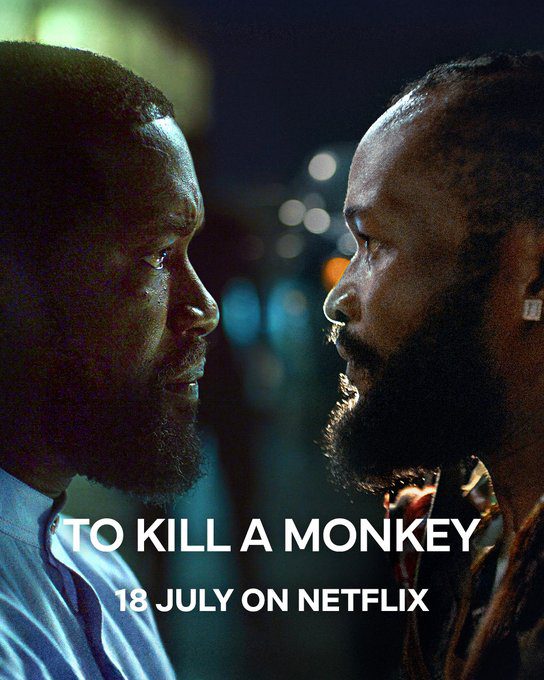
Kemi Adetiba’s “To Kill a Monkey” lands on Netflix with the subtlety of a Lagos traffic jam: loud, chaotic, and impossible to ignore. This Nigerian crime thriller, released July 18, 2025, showcases Adetiba’s wizardry with characters who leap off the screen like they’ve got personal grudges against anonymity.
William Benson’s Efemini, a desperate dad diving into cybercrime, carries the weight of a thousand bad decisions. Bucci Franklin’s Oboz slinks through scenes with the charm of a snake oil salesman, while Bimbo Akintola’s Inspector Motunrayo storms in like a hurricane. Stella Damasus slices through the tension with razor-sharp precision, and Teacher (Chidi Mokeme) looms over the story like a shadow you can’t shake.
Let’s not forget Lilian Afegbai! The jaiye jaiye Lagos chick who just wants in to enjoy life but is not hidden in the background – Her elevation to chief of Oboz‘ empire is a big deal too. Toss in the slimy politicians and CEOs, puppeteers of Nigeria’s power games, and you’ve got a cast that could outshine a Nollywood all-star reunion.
Lagos is the star of the show
Lagos steals the spotlight, a city so alive it practically demands its own credit in the cast list. Adetiba paints it with bold strokes: the sweaty hustle of markets, the gleam of corporate towers, the endless hum of a place that thrives on chaos. The series revels in its vibrancy, making Lagos feel like the pulse of the story. Nowhere else could host this tale of ambition and betrayal with such raw energy.
Yet, reality takes a holiday in some scenes. Picture this: gunfire erupts between cars on a Lagos street, and pedestrians stroll by like it’s just another horn-happy okada. The cars, just driving by playing lullabies from their speakers.
Read also: The majesty and messiness of myth: A review of Femi Adebayo’s “Seven Doors”
Nigerians don’t ignore chaos; they scatter like ants when the sugar bowl tips over. Adetiba could have picked a quieter spot or thrown in extras who bolt at the first pop. Instead, the moment feels like a scriptwriter’s daydream, jarring against the show’s gritty promise.
Nollywood’s old habits sneak in too. Continuity slips pop up like uninvited guests; here one minute, gone the next. The ending, while solid, races to the finish line faster than a danfo dodging LASTMA. Teacher’s death, in particular, deserves a slow burn, not a quick cut. He’s no sidekick; he’s a titan in this tale, and his exit feels like a cheated audience member sneaking out before the credits.

The series shines brightest when it digs into Nigeria’s messy soul. Politicians twist laws like pretzels, CEOs play god with briefcases of cash, and corruption flows thicker than oil in the Delta. Power isn’t earned here; it’s snatched, bartered, or stolen outright.
To Kill a Monkey is a ‘true’ story
“To Kill a Monkey” holds a cracked mirror to society, and the reflection isn’t pretty but gripping. Even though Adetiba made sure to tell us it is just fiction and does not represent any character(s), the truths are, nonetheless, glaring.
Fashion dazzles, with outfits so sharp they could cut through Lagos humidity. Special effects impress too, stretching Nigeria’s budget to respectable heights, though they won’t fool Hollywood’s CGI snobs. Still, the polish adds flair to a story that’s rough around the edges.

Justice, though? That’s where the fairy tale kicks in. Efemini’s courtroom reckoning wraps up tidier than a gift basket, a hopeful nod that feels alien in Nigeria. Real life offers a different script: cases drag for decades, or the guilty flash a wad of naira and vanish. Logistics and budget likely axed a full trial episode, but the quick resolution leaves you squinting at the screen, wondering if Adetiba’s ever met a Nigerian lawyer. She must have thought narration would do justice. We don’t agree.
Wealth gets a hard stare here. The series whispers a question Lagosians know well: where’d that money come from? Forbes-listers turn fraudsters overnight, and “To Kill a Monkey” nods knowingly at the hustle behind the headlines.
Read also: Hijack ’93 is a brilliant throwback—for anyone craving hollow emotions and bland dialogue
Efemini’s cash lures loyalty from his wife, mistress, and daughter, until it doesn’t. Betrayal hits him from all sides, a reminder that in Nigeria, trust is a gamble with lousy odds. Oboz plotting against Teacher makes sense, but Efemini flipping the script would’ve twisted the knife deeper.

The moral lands like a sermon: steer clear of dirty deeds. Noble, sure, but Nigeria laughs at the notion. Survival often means bending rules, if not breaking them outright. Adetiba’s lesson feels earnest, yet it’s tough to swallow in a land where “illicit” is just another day at the office.
Flaws and all, “To Kill a Monkey” swings big and lands most of its punches. It’s a leap for Nollywood, blending sharp characters with a story that bites.
Lagos pulses through every frame, and the societal jabs hit home. Teacher’s rushed exit stings, and justice feels like a pipe dream, but Adetiba’s vision keeps you hooked. Watch it, laugh at the absurdities, and nod at the truths, because in Lagos, the monkey business never stops.
