



At least 20,000 drivers in California have expressed interest in suing the ride-hailing company, Uber, for allegedly violating the Protect App-Based Drivers and Services Act, also known as Prop 22. This was disclosed to Technext by the Rideshare Drivers United, the group under whose umbrella the drivers are executing their action.
The Prop 22 law indicates that app drivers may not be referred to as employees, but independent contractors, provided the app companies fulfil certain conditions.
Although the app company supported the passage of the legislation with $52 million, it is nonetheless failing to provide some of the benefits provided by the law. More specifically, the case focuses on the requirement that app companies provide an appeals process for terminated drivers.
“Prop 22 provides that ‘app-based drivers’ are independent contractors if certain conditions are met. One of its protections is that drivers would have an appeals process to challenge their terminations. Given that Uber has not satisfied the requirements of Proposition 22, including its failure to provide a bona fide appeals process for terminated drivers, Uber cannot maintain its contention that its drivers are independent contractors under California law,” the drivers said.
The Rideshare Drivers United further pointed out that it has more than 20,000 members who work as “app-based drivers” in California, with many of them working on the Uber platform. Under Prop 22, these drivers are afforded certain benefits, including the right to an appeals process if they are terminated. However, Uber has not provided any bona fide appeals process for drivers to challenge their terminations (or “deactivations”, as Uber calls them), and no appeals process that comports with any standards of due process.
“As a result of the company’s failure to comply with the provisions of the law, many Uber drivers have been terminated for unjustifiable reasons. Drivers have had no real recourse to challenge their terminations. These terminations have caused severe financial and emotional harm to drivers,” the group said.
Prop 22 and Uber’s alleged breach
Proposition 22 (Prop 22) was enacted in 2020 following a public vote in which 58 per cent voted in its favour. Ratified by the California Supreme Court in 2024, the law classifies app-based drivers as independent contractors rather than employees. This essentially excludes them from full employee benefits as guaranteed in California’s 2019 employment law, known as Assembly Bill 5.
The Proposition was prepared and sponsored by the five leading e-hailing and delivery apps in the state: Uber, Lyft, DoorDash, Instacart and Postmates, which together spent approximately $200 million to get the proposition over the line.
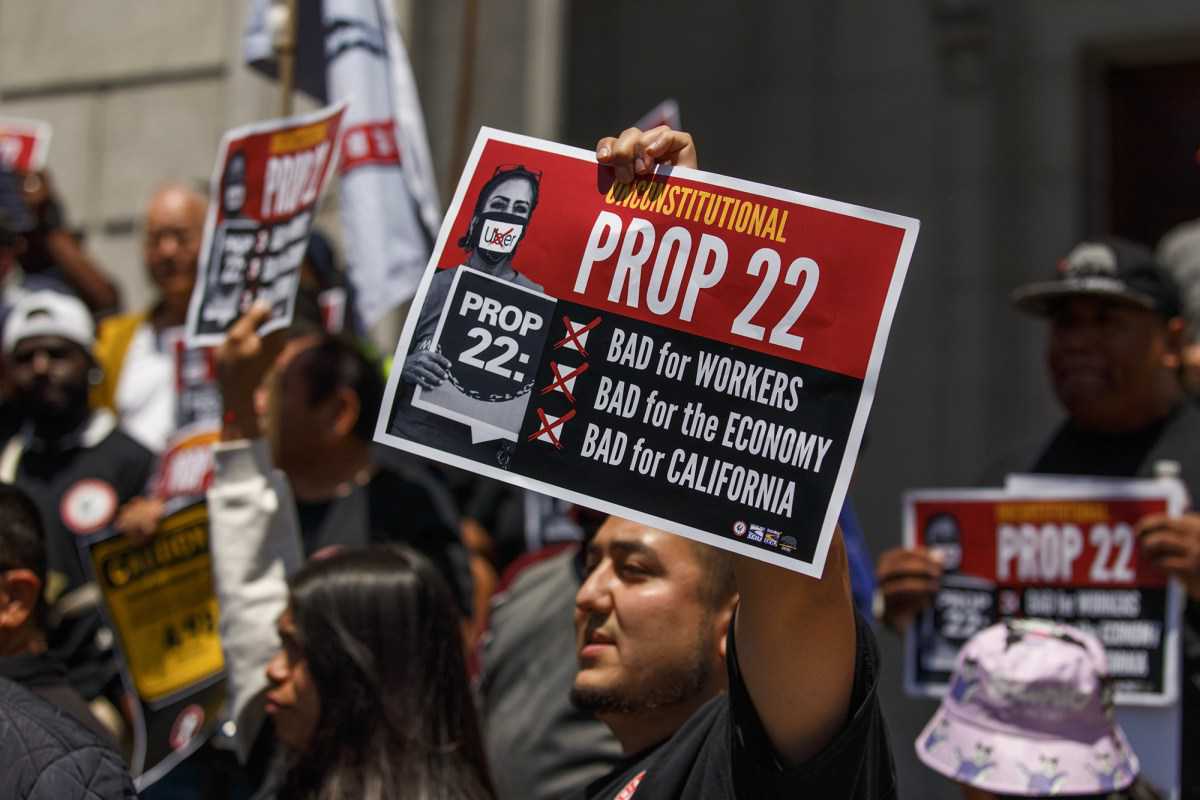
However, rather than neglecting the drivers due to a reclassification, the legislation also establishes a new set of benefits and labour protections for them. The benefits include a wage floor, which provides that drivers would earn at least 120 per cent of the state or local minimum wage.
The law also has a non-discrimination protection section which provides that companies would be required to develop sexual harassment policies, conduct recurring criminal background checks and mandate additional safety training.
It also provides for payment for injury on the job, which means drivers would have their medical costs covered if they are injured while driving or waiting to drive and would have a portion of their lost income replaced.
There is a provision for a stipend for health insurance, which states that drivers who work more than 15 hours per week would receive a contribution to purchase a Covered California health plan. This contribution would increase based on the hours that they work.
The legislation also has a rest provision which mandates drivers not to work more than 12 hours in a 24-hour period for a single company. In summary, Prop 22 is a piece of legislation enacted which provides drivers with access to benefits and protections, while maintaining their flexibility and independence.
It is, however, not clear which of the provisions Uber has breached. The company’s website clearly has provisions covering the Prop 22 requirements, including earnings guarantee, healthcare stipend, injury protection insurance, and clarifying time and distance rates on California trip receipts.
Hopefully, the Rideshare Drivers United and its attorney, Shannon Liss-Riordan, will shed more light at a press conference on Monday. More than 1.4 million Californians work as app-based gig workers.
See also: Nigeria’s gig economy now has 3 million workers as industry tops $5.2bn
