


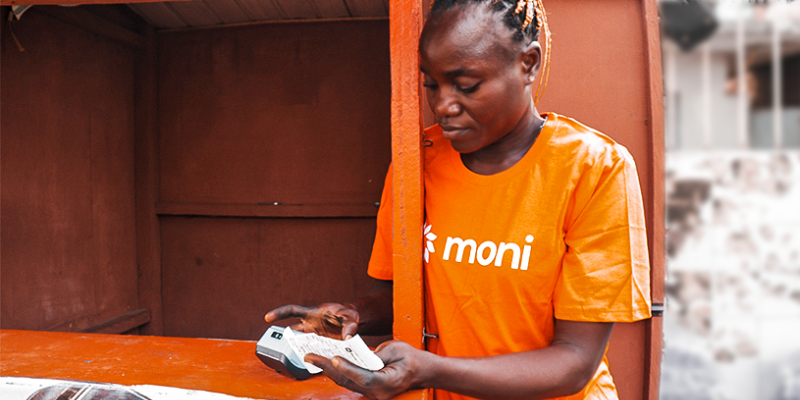


When the naira fell below ₦1,000 to the dollar in late 2023, Nigerians who had spent years opening domiciliary accounts and saving in foreign currency might have expected to feel protected. Instead, many of them discovered something that the regulatory paperwork had never made explicit: holding dollars inside a Nigerian bank is not the same as having access to them.
That distinction, obscured for years by relatively stable exchange rates and the convenience of bank advertising, has become the central frustration of Nigeria’s “dom” account ecosystem.
Today, the foreign currency sits on the books, counted in aggregate figures that the Central Bank of Nigeria (CBN) publishes with apparent pride. But for ordinary account holders, the practical experience has frequently been one of queues, cash scarcity, and a regulatory regime that has changed the rules so many times that the accounts themselves have become difficult to trust.

Nosa Michael opened his domiciliary account with a specific purpose in mind. He needed a Euro account to receive payments directly from Europe, and he wanted a dollar card to fund his Meta Ads wallet. It took two days, a long form, and half a day at the branch.
“There was a whole form of too many questions,” he said.
When the account was eventually active, transfers out of it never worked. He no longer uses it.
1/3 of all bank deposits sit idle
The scale of what is at stake is not trivial. According to the latest CBN Money and Credit Statistics for February 2026, the “Quasi Money” component, which houses the nation’s domiciliary wealth, has ballooned to a staggering ₦79.57 trillion. For context, this figure stood at ₦17.65 trillion in June 2023. This 350% increase in naira terms is, however, a profound “paper wealth” illusion.
The growth is a direct consequence of the naira’s continued devaluation, which raised the naira equivalent of every dollar already sitting in those accounts. In dollar terms, the Net Foreign Assets (NFA) within the system currently hover around $20.8 billion (₦28.1 trillion in NFA terms). The growth in naira terms obscures a more important truth: this capital is trapped.
Professor Adeola Adenikinju, an economist and former president of the Nigerian Economic Society, noted in a seminal analysis that domiciliary accounts constitute more than a third of deposits in the banking sector, yet a large portion of those funds is sitting idle.
By May 2026, that “idle” pool remains a paradox. While the country’s external reserves have recovered significantly to approximately $50.45 billion, the private foreign-currency savings of Nigerian bank customers constitute a pool that still rivals nearly half of the nation’s entire reserve buffer. Yet, the government has found no reliable mechanism to mobilise it, and citizens have found no reliable way to spend it.
7 years of shifting rules
The history of Nigeria’s domiciliary account regulation over the past decade reads as a sequence of restrictions introduced, reversed, and reintroduced. Each cycle creates fresh uncertainty for account holders trying to plan around their savings.
The May 2021 directive was among the most disruptive, capping transfers at $10,000 per month where the source was a cash deposit. This sat alongside a “method of funding” rule: if you received a wire transfer, you couldn’t withdraw cash; if you deposited cash, you couldn’t transfer electronically. The CBN attempted a pivot in June 2023 under Governor Olayemi Cardoso, instructing banks to allow “unfettered access” with a daily cash withdrawal ceiling of $10,000.

On paper, this was liberalisation. In practice, it was a mirage. Dollar cash scarcity at bank branches did not resolve because a circular arrived from Abuja. Customers walking into branches in 2024 and 2025 were frequently told the branch had no notes available or that withdrawals were subject to “prioritisation.”
By April 2024, the screws tightened further. The CBN prohibited using foreign currency deposits as collateral for naira loans, forcing corporate domiciliary account holders into rapid, often expensive, financing adjustments. Later that year, new guidelines capped physical cash deposits of high-denomination notes ($50 and $100 bills) at $10 million per bank. While framed as an anti-money laundering measure, its practical effect was to add another friction point for legitimate businesses trying to move earned foreign currency into the formal system.
Running alongside these circulars is a structural problem that policy cannot easily fix: Nigerian banks invest foreign currency deposits in overseas securities, as required by guidelines. The dollars in a domiciliary account are not sitting in a vault in Lagos; they are earning returns in international markets. The physical cash a branch can hand over depends on liquid reserves. When demand spikes, supply tightens, regardless of what the regulatory ceiling says.
Also, as of May 2026, the CBN’s “Cash-less 2.0” stance has introduced a shadow limit. While the $10,000 withdrawal limit technically exists, cumulative weekly limits and heavy processing fees (up to 5% for corporates) on large cash movements have made the process even more prohibitive.
The remittance channel closes
For Nigerians who found that funding a traditional bank domiciliary account with physical cash was too difficult, international remittances offered an alternative. A family member in London could send dollars via Western Union, and those dollars would land in a recipient’s dom account.
That pathway has now been effectively terminated. On May 1, 2026, a new CBN directive came into full effect, requiring all International Money Transfer Operators (IMTOs) to route transactions through designated naira settlement accounts. Recipients now receive naira, not dollars, regardless of whether they hold a domiciliary account.
The scale of this shift is massive. Nigeria received approximately $20.93 billion in personal remittance inflows in 2024. By mid-2025, inflows had already begun to dip as operators grappled with the impending “naira-only” requirement.
For ordinary recipients, the choice to hold dollars is no longer theirs to make at the point of entry. To get dollars now, they must source them separately and deposit them as cash, returning them to the very friction-filled process the remittance pathway once bypassed.
The CBN’s rationale – transparency and price discovery – is legitimate. But for families and freelancers, the reality is a loss of agency and an increase in conversion fees.

The final verdict
The combination of a decade of shifting restrictions, physical dollar scarcity, and the new 2026 IMTO naira-only rule has fundamentally changed the value proposition of the domiciliary account. Opening one is still possible. Funding one with physical cash is increasingly constrained. Receiving remittances directly into one is now blocked.
The $20.8 billion inside those accounts has not gone anywhere. It sits in the system, a digital monument to a “hard currency” dream. For the people whose savings those numbers represent, the question remains: when they need the dollars, will they be able to get them?
Nosa Michael’s answer, as he looks at his inactive account today, is a warning to millions.
“No need,” he says.
For Nosa, and for an increasing number of Nigerians, the domiciliary account has become a trophy you can look at but never quite hold.
