





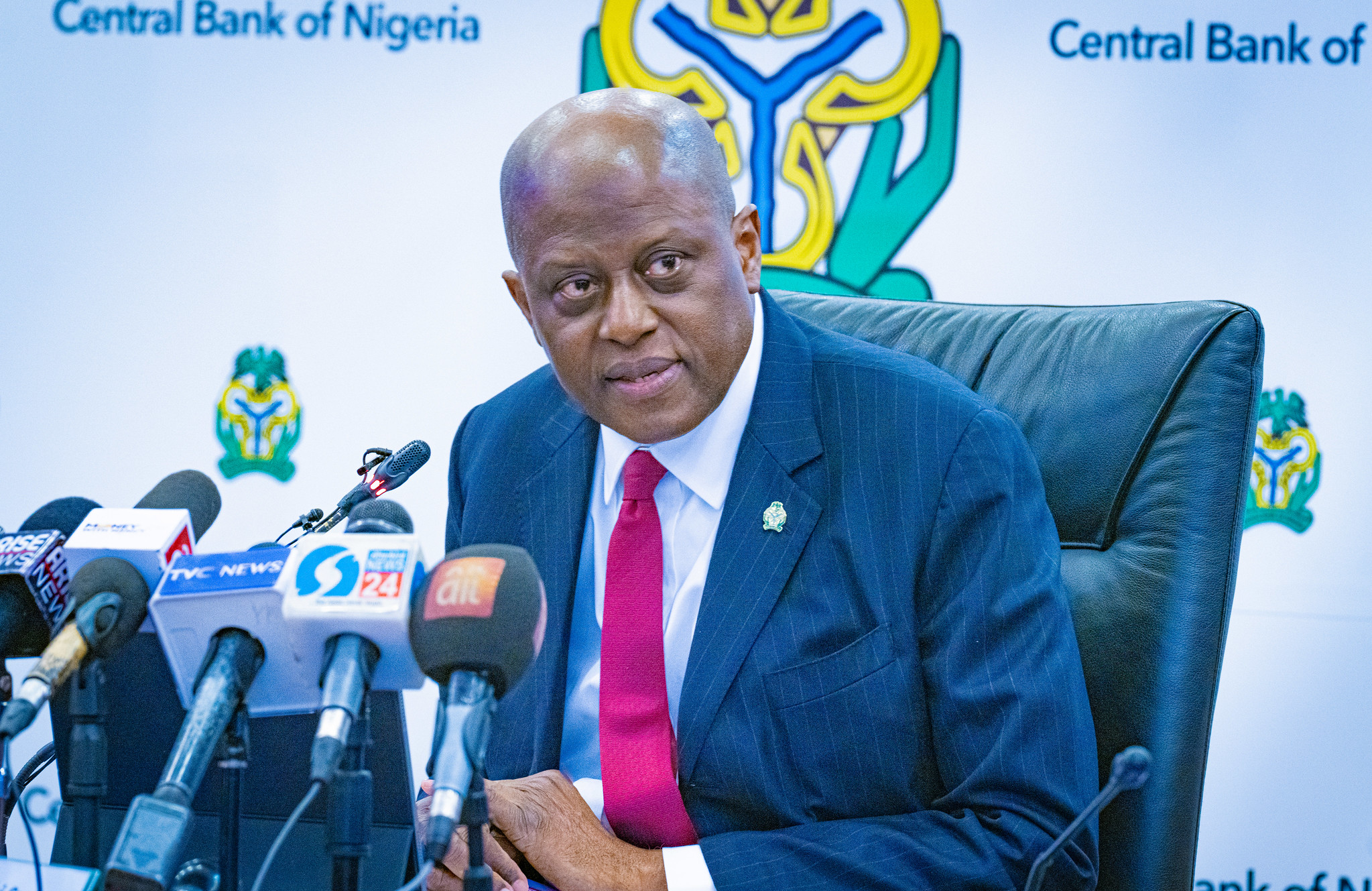
The Central Bank of Nigeria (CBN) has made strengthening its supervision of terrorism financing a priority. This means banks, fintech companies, payment providers, and other financial institutions will face closer scrutiny over how they identify and report transactions that may be linked to terrorism financing.
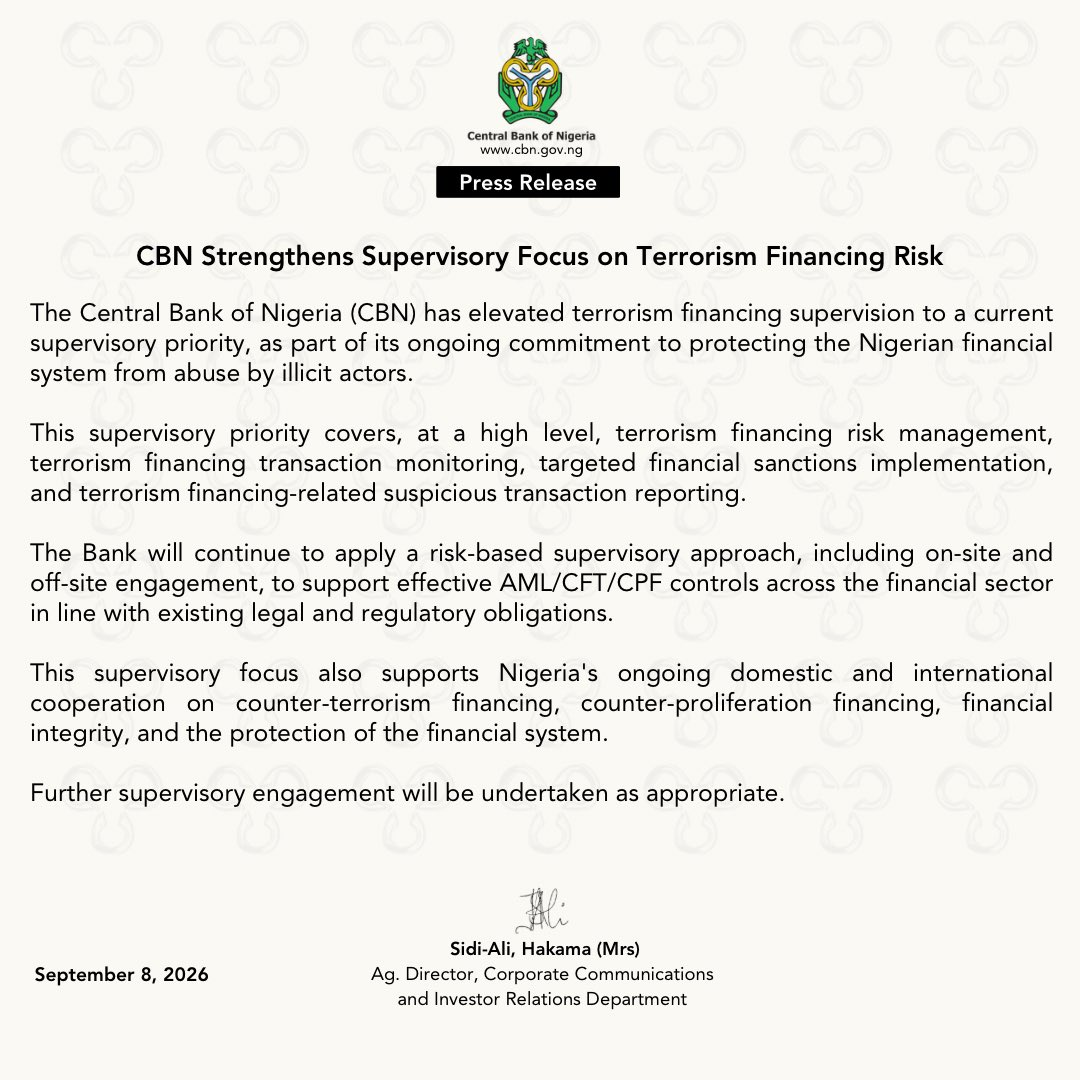
In a press release, the CBN outlined its focus on strengthening terrorism-financing risk management, transaction monitoring, implementation of targeted financial sanctions, and the reporting of suspicious activities. The Bank emphasised that it will maintain a risk-based approach, using both on-site and off-site inspections to evaluate controls against money laundering and terrorism financing across the financial sector.
It’s important to note that this announcement doesn’t create a new law specifically for terrorism financing; rather, it emphasises the need for financial institutions to strengthen their compliance with existing legal and regulatory requirements.
For fintechs, especially those handling high volumes of instant payments, merchant transactions, digital wallets, and cross-border transfers, this will likely mean more attention to the systems they use to detect suspicious activities.
The CBN addresses three key areas in financial crime prevention: AML, CFT, and CPF.
AML — Anti-Money Laundering
This focuses on preventing criminals from using the financial system to disguise illegal gains. For instance, if someone receives money from fraud and moves it through multiple bank accounts or businesses to make it look legitimate, financial institutions need to have systems in place to detect unusual patterns and issue alerts when necessary.
CFT — Combating the Financing of Terrorism
This aims to stop money from reaching terrorist organisations or being used to support terrorism. Unlike money laundering, the funds may not originate from a crime. A person could, for instance, use legally earned money to finance terrorism. Therefore, financial institutions must monitor who is sending or receiving money, where it’s going, and whether the activities align with known terrorism financing risks.
CPF — Countering Proliferation Financing
This focuses on preventing financial resources from being used to support the spread of weapons of mass destruction. For financial institutions, this means identifying transactions that involve individuals or organisations connected to banned weapons programmes and sanctions.
Similar read: Tinubu orders CBN to crack down on crypto fraud – here’s what it means
To effectively tackle these issues, institutions implement controls such as customer identification, due diligence, transaction monitoring, and sanctions screening.
What changes for fintechs?
For fintech companies, the biggest challenge is how well their compliance systems actually work. The Central Bank of Nigeria (CBN) has highlighted the importance of transaction monitoring and reporting suspicious transactions. This means that fintechs handling thousands or even millions of transactions can’t just have a compliance policy written down; they need practical systems that can spot transactions or behaviour that may need closer examination.
For instance, a digital wallet might flag an account that suddenly starts receiving a large number of transfers from different people and then quickly moves that money elsewhere. Similarly, a payment company could detect a pattern where several accounts are sending money to the same recipient, especially if these transactions seem designed to avoid typical monitoring limits.
It’s important to note that receiving these alerts doesn’t automatically mean a customer has done something wrong; they are simply indicators that may require further checks or reporting as part of the company’s compliance procedures.

The same goes for sanctions screening. Financial institutions must check their customers and transactions against relevant sanctions lists to make sure they aren’t processing any prohibited transactions. The CBN has already instructed banks and payment service providers to implement updated terrorism-financing sanctions based on new designations from the Nigeria Sanctions Committee and the U.S. Treasury’s Office of Foreign Assets Control.
See also: Security crisis: Can Nigerian defence startups help combat terrorism?
This is especially critical for fintechs involved in cross-border payments, remittances, foreign exchange, and other services where money is transferred between different countries.
The CBN has been tightening automated financial-crime controls
The recent announcement by the Central Bank of Nigeria (CBN) highlights its ongoing efforts to strengthen controls against financial crime in an increasingly digital financial landscape.
In March 2026, the CBN introduced baseline standards for automated solutions to combat money laundering (AML), counter-terrorism financing (CTF), and counter-proliferation financing (CPF). These standards apply to banks, mobile money operators, international money transfer services, and payment providers, outlining minimum requirements for systems that detect and report suspicious activities.
The CBN has also conducted targeted examinations to ensure institutions comply with these requirements. For example, in 2025, it instructed licensed currency exchange operators to follow AML, CFT, CPF, and know-your-customer (KYC) rules, even conducting mystery-shopping exercises to test their compliance.

This latest announcement reinforces the CBN’s existing regulatory strategy rather than marking a sudden change. For fintech companies, this means that keeping up with transaction volumes is no longer enough; they must also have systems that can monitor transactions, identify unusual activities, screen for sanctions, and flag suspicious cases.
The CBN emphasised that this increased oversight is part of Nigeria’s broader commitment to fighting terrorism financing and promoting financial integrity, underscoring that moving money quickly is insufficient. The systems involved must also be able to explain and monitor transactions effectively.
