




The Central Bank of Nigeria (CBN) has sanctioned nine commercial banks with a total of N1.35bn for cash unavailability at their Automated Teller Machines (ATM) during the Yuletide. The apex bank slammed N150m on each of the deposit banks after various spot checks revealed the fault actions.
CBN earlier released cash distribution guidelines for commercial banks in a bid to ensure cash availability during the festive period, as opposed to previous cases.
The affected banks who flaunt the apex bank guideline include Fidelity Bank Plc, First Bank Plc, Keystone Bank Plc, Union Bank Plc, Globus Bank Plc, Providus Bank Plc, Zenith Bank Plc, United Bank for Africa Plc, and Sterling Bank Plc.

According to a press statement released on Tuesday, the acting Director of Corporate Communications at the CBN, Mrs Hakama Sidi-Ali, expressed the apex bank’s continued commitment to ensuring the utmost availability of cash.
“In a clear message of zero tolerance for cash flow disruptions, the Central Bank of Nigeria has sanctioned Deposit Money Banks for failing to make Naira notes available through automated teller machines, during the yuletide season,” the statement reads.
She pointed out that the nine banks were fined following a series of warnings to all financial institutions on cash availability during the festive season.
“Each bank was fined N150m for non-compliance, in line with the CBN’s cash distribution guidelines, following spot checks on their branches. The enforcement action follows repeated warnings from the CBN to financial institutions to guarantee seamless cash availability, particularly during periods of high demand. The affected banks include Fidelity Bank Plc, First Bank Plc, Keystone Bank Plc, Union Bank Plc, Globus Bank Plc, Providus Bank Plc, Zenith Bank Plc, United Bank for Africa Plc, and Sterling Bank Plc,” Sidi-Ali noted.
While adding that the fines will be directly debited from the banks’ accounts with the CBN, she emphasized that the regulator will remain hell-bent on imposing further sanctions on any other financial institution that violates its cash circulation guidelines.
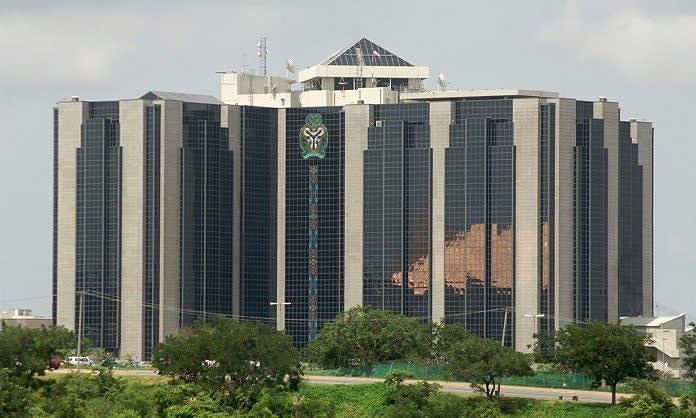
The apex bank also reinstated its efforts to monitor cash hoarding and rationing activities at bank branches and Point-of-Sale terminals. CBN added that it is collaborating with diverse security agencies to combat illegal cash sales and ensure POS operators’ compliance with the daily withdrawal limit of N1.2m.
Recall that some weeks ago, the Central Bank announced daily cash limit transactions of N100,000 per customer for Point-of-Sale (POS) agents and also restricted them to also restricted to a cumulative cash-out limit of N1.2m per day, while customers face a maximum cash withdrawal limit of N500,000 per week. The announcement was part of the apex bank’s new initiative for Nigeria’s cashless policy advancement.
Various enforcement actions in recent times by the CBN further stressed its zero-tolerance approach towards cash flow disruptions, especially during high-demand periods.
As part of efforts to ensure adequate cash circulation, the apex bank had earlier warned banks to comply with cash distribution policies. In September 2024, it announced plans to sanction commercial banks that fail to dispense cash via ATMs.
Also in November, the regulator urged customers to report ATM and branch cash withdrawal issues starting December 1, 2024, through various designated state-specific phone numbers and email addresses.
CBN’s efforts for efficient cash circulation.
Still on the apex bank’s effort to prioritize customer needs and ensure uninterrupted access to cash.
The bank has been extending its force to create a safe financial environment for Nigerians. This also tapped from its effort to build and gain the trust of Nigerians following a year where commercial bank customers have faced several disruptions in several digital transactions.
Also, it mandated POS agents to ensure that each customer’s withdrawals do not exceed the N100,000 daily limit. They are also restricted to a cumulative cash-out limit of N1.2m per day, while customers face a maximum cash withdrawal limit of N500,000 per week.

The apex bank mandated that all agency banking operations must be solely carried out through float accounts maintained with the principal institutions. It stressed that the goal of the new measures is to address identified challenges in agent banking, enable the adoption of electronic payment channels, and prevent fraudulent activities.
It pointed out that to ensure strict adherence to the regulation, banking terminals must be connected to the Payments Terminal Service Aggregator. In the same light, daily transaction reports including withdrawal limits and float account balances must be electronically submitted to the Nigerian Inter-Bank Settlement System using a reporting template provided by the CBN.
In line with compliance, CBN announced plans to embark on timely monitoring and impromptu backend configuration checks. Furthermore, it warned that agencies would be held fully responsible for the actions and omissions of their agents in relation to banking services. Any breaches of the directive, according to the apex bank, would attract penalties such as monetary fines and administrative sanctions.
Also in its plan to improve the medium of disseminating information about the bank’s operations, financial statistics, regulatory frameworks, and updates on monetary policy, CBN launched a new website on December 2, 2024.

During its announcement of the new channel, the bank said that the redesigned website introduces a variety of new content, which encompasses a broader spectrum of information regarding its mandate. The apex bank added that the website is responsive to mobile devices, facilitating navigation across various web browsers and devices.
The CBN Governor, Olayemi Cardoso pointed out during the launch that the newly designed website will provide a more user-friendly experience to ensure its commitment to transparency, accountability, and building trust with its stakeholders.
Also Read: CBN places N100,000 daily PoS cash transaction limit for individuals, N500k per week.
