




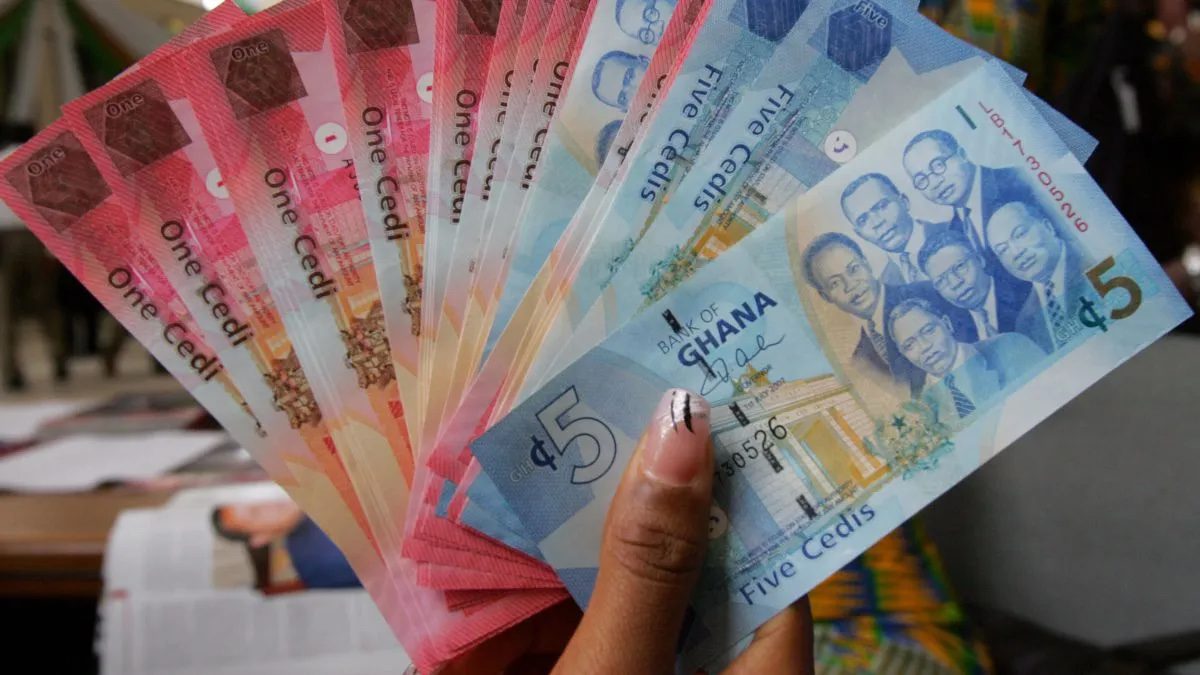
Ghana is nowhere near the Big Four tech startups in Africa. The West African country is considered one of the most balanced markets outside the Big Four (Nigeria, Egypt, Kenya and South Africa). That explains why venture capital inflow into tech startups in the country since mid-2022 is $221 million (about 2.6 billion cedis) .
Yet, two funding rounds- Fido and Complete Farmer– accounted for about 31% of the total. This is in contrast with countries like Morocco, where the two largest fundraisers in that time, CashPlus and Nuitee, accounted for 36%, and Senegal, where the two largest rounds, Wave and Africa, REN, represent 77% of the funding.
Ghana also has one of the healthiest early-stage markets outside the Big Four, with 72 startups from the country raising $100,000 or more since mid-2022. More recently, 32 Ghanaian startups have raised early-stage funding of between $100,000 and $1 million since 2025.
The numbers also indicates a vibrant growth-stage environment with 21 of those 72 startups raising at least $1 million. The ecosystem is also not lacking in large deals: 5 of those 21 startups raised at least $10 million or above in a single round.
On the exits side of things, 6 tech startup exits have been recorded since mid-2022, including 3 since 2025. One of the largest is the acquisition of Ghana-founded insurtech pioneer Bima by Mobile-health Network Solutions in a $119m deal in May.
Read also: Meet Adeyinka Aderoju, the 63-year-old techie who won ₦1m with her menopause support platform
Poor local investor participation hinders Ghana’s funding trajectory
Ghana’s venture capital haul over the last four years reflects several realities. The most telling is participation by local investors and the paucity of local capital, as Ghana-based investors have taken part in only 6% of deals since mid-2022.
This is due to the scarcity of venture capital companies, disinterest from institutional investors who do not have faith in the country’s tech ecosystem, and angel investor networks that understand the local tech scene.
And Ghana’s tech environment has not been an encouraging one. According to some reports, many early-stage founders operate their startups more like extended side hustles than formal, compliant businesses. As such, they often lack clean financial records, formal governance, or proven product-market fit. This often leads to a situation where founders make grave governance mistakes, such as inflating their metrics.
Some of these mistakes often lead to regulatory backlash like the Bank of Ghana cracking down on non-compliant fintechs, etc.
Talent is another notable problem.
While talented software engineers and other tech talents emigrate to other countries, many who stay behind still work for foreign companies to earn in stronger currencies. Consequently, getting committed local tech talent and retaining them becomes challenging and quite expensive.
These factors make investors cautious about ploughing their money into the ecosystem.

Another factor limiting startups in the country and putting investors away is the small market size, which makes scaling quite difficult.
With a population of about 36 million, of which only about 21.8 million are working class, the addressable market is quite small, and growth is always very limited. Moreover, purchasing power in Ghana is not strong enough to make its small population a qualitative one, so scaling prices becomes tricky.
Expanding outside the country is also quite difficult because the country is surrounded by countries that present complex barriers such as language, payment systems, regulations and logistics.
Venture funding into Ghana also appears to be dwindling, as funding has slowed in recent years. Of the $221 million raised over the last four years, only $79 million, representing 35.7%, was raised between 2025 and 2026. To that extent, one could say venture funding into the country is shrinking.
