




The Nigerian Communications Commission (NCC) has noted that network quality offered by Nigerian telcos is improving across several parts of the country. The statement comes amid the increasing rate of social outcry concerning the drop in networks nationwide.
In a statement released on Wednesday, NCC affirmed that network capacity, coverage and average download speed across major parts of the country show gradual improvement. It added that the quality of experience assessment was carried out using crowdsourced and field-based analytics.
For many Nigerians, the commission’s assessment sharply contrasts with their everyday experience of telecom services.
Complaints about dropped calls and poor internet service have become increasingly common in recent months. The yearnings come at a time when telecoms service has become a critical part of how people work, learn, do business and stay connected with friends and loved ones.
In addition, the development has frequently been translated that Nigerians are not getting the value for the service they pay for, especially at a time when there’s a surge in telecoms tariffs.

While the NCC credited improvements such as the download speed rising from 16.5Mbps to 20Mbps and 4G penetration from 45% to 54%, which are not largely felt by Nigerians, it acknowledged that the improvements are not all around.
“These improvements are most evident in areas where recent upgrades and new site deployments have been completed,” part of the statement reads, adding that the pace and consistency of improvement must increase, especially in locations where consumers continue to experience poor call quality, slow data speeds, congestion, and service instability.
The NCC has noted that both telcos and tower companies are expected to strengthen data-driven oversight and deepen engagement with relevant public institutions to address structural barriers that affect service delivery. Also, it stated that significant penalties, such as compensation to consumers for poor service, will be enforced where applicable.
Recall that recently, the NCC directed mobile network operators (MNOs) to compensate subscribers who experienced epileptic network. The compensation covered subscribers affected by poor network service between November 2024 and January 2025, has seen MTN and Airtel roll out airtime credit to affected users.

Also Read: Where the money goes: NCC budgets N476bn for 2026, allocates N26bn to capital expenditure.
N2.5 trillion invested in 2025
As part of the move to expand coverage and increase the quality of telecom infrastructure, the commission revealed that operators and tower companies spent a joint N2.5 trillion on equipment upgrades in 2025. While telcos invested N2.13 trillion, tower companies injected an additional N373.8 billion.
“These investments supported the addition and upgrade of over 2,800 telecommunications sites nationwide, addressing coverage and capacity gaps in several locations,” it said.
The commission stressed that the industry is currently experiencing one of its most extensive network expansion and modernisation cycles in recent years, after recent years of prolonged under-investment fueled by tough macroeconomic conditions.
Such a positive investment drive, experienced in 2025, is expected to continue in 2026.
NCC says over 12,000 sites will be upgraded during the year, where 3,000 have already been completed. Also, over 730 additional 5G sites have been deployed across 27 states this year alone.
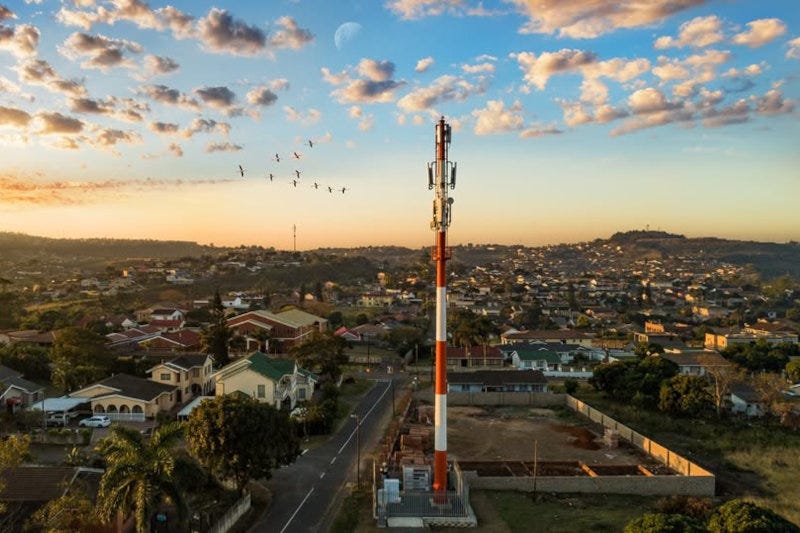
Part of the ongoing work is the reallocation of a majority of idle and underutilised valuable radio spectrum assets among telcos to enhance quality network delivery.
Fibre cuts remain major challenge
Fibre cuts continue to stand as a leading external risk suffered by telcos, causing several cases of network outages and disruptions in voice and data services.
For instance, NCC says over 27,000 avoidable fibre-cut incidents, primarily linked to road construction and vandalism, were recorded nationwide in 2025.
Telecom infrastructure continues to face vandalism, theft, and illegal resale despite its designation as Critical National Information Infrastructure under a presidential order. The NCC said it is working with the Office of the National Security Adviser and other stakeholders to address the challenge.
