



When Olanrewaju Olaniyan, Chief Executive Officer of Siatech Africa, talks about innovation, his voice carries the quiet conviction of someone who has seen what is possible when vision meets execution. For him, technology has never been about gadgets or buzzwords — it has always been about people and about using ideas and systems to solve Africa’s most pressing challenges.
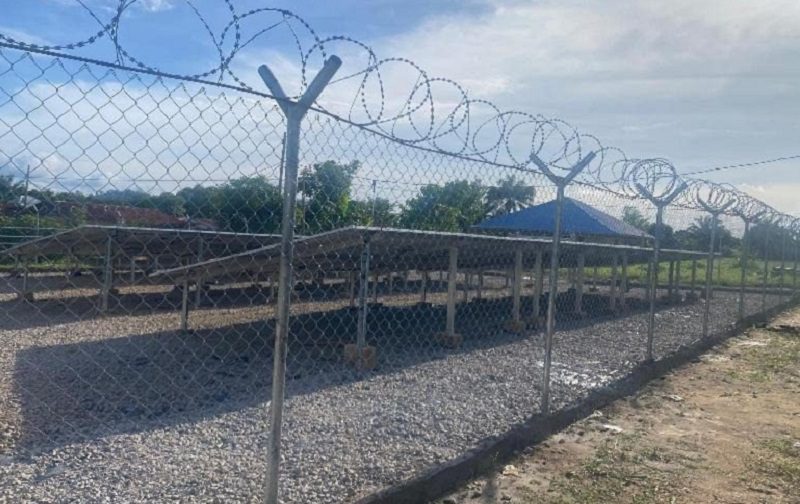
That belief was at the heart of one of his company’s most ambitious projects: the building of a solar-powered city in Liberia. The initiative now completed and already in use in Ndama community, Foya City, Lofa County, is earning Siatech Africa widespread recognition across the continent’s tech and energy sectors.
“The idea behind this project was rooted in purpose — the purpose of using technology to solve real problems in Africa. When our client first discussed the vision of a digital village powered entirely by clean energy, it resonated deeply with what we stand for at Siatech Africa,” Olaniyan recalled.
Across West Africa, energy access remains one of the biggest barriers to digital inclusion. For Siatech, the challenge was clear: if solar technology could power schools, clinics, small businesses, and innovation hubs, then the company wouldn’t just be lighting up homes — it would be unlocking human potential.
To the team, the project was more than an engineering assignment. It was a statement that Africa’s next phase of development must be driven by innovation, sustainability, and collaboration.
The solar city was built around a smart microgrid architecture — a decentralized network that allowed each neighborhood to generate and manage its own power while remaining connected to a larger grid for backup.
“Each cluster operated independently but still connected to the larger grid when needed, ensuring stability and zero downtime,” Olaniyan explained.

Beyond energy generation, Siatech integrated intelligent systems that learned consumption patterns, balanced loads, and minimized waste.
“We didn’t just deploy solar panels. We deployed intelligent systems that optimized power usage, monitored grid performance in real time, and supported digital services like Wi-Fi and e-learning,” Olaniyan said.
Connectivity was another pillar of the project. The city’s digital backbone, powered by microwave-linked radio networks, connected schools, health centers, and small businesses to e-learning and e-health platforms. In partnership with Huawei, Siatech also integrated a 4G network into the community, bridging the digital divide between rural and urban areas.
Delivering the project required extensive collaboration. “Projects like this are never done in isolation,” Olaniyan said. “We partnered with renewable energy firms, smart grid providers, and technology OEMs who share our commitment to sustainability.”
Huawei played a central role in designing the digital infrastructure, but Siatech also worked closely with local Liberian agencies, universities, and vocational schools to ensure technology transfer and local ownership.
“We made sure the project wasn’t just implemented, but owned by the community,” he emphasized.
Within the solar city, a tech and vocational training hub was established to train young Liberians in solar engineering, network management, and digital skills , many of whom were employed during construction and remain part of the workforce today. The city also stimulated the growth of micro-enterprises, from local maintenance cooperatives to digital startups leveraging the community’s connectivity.
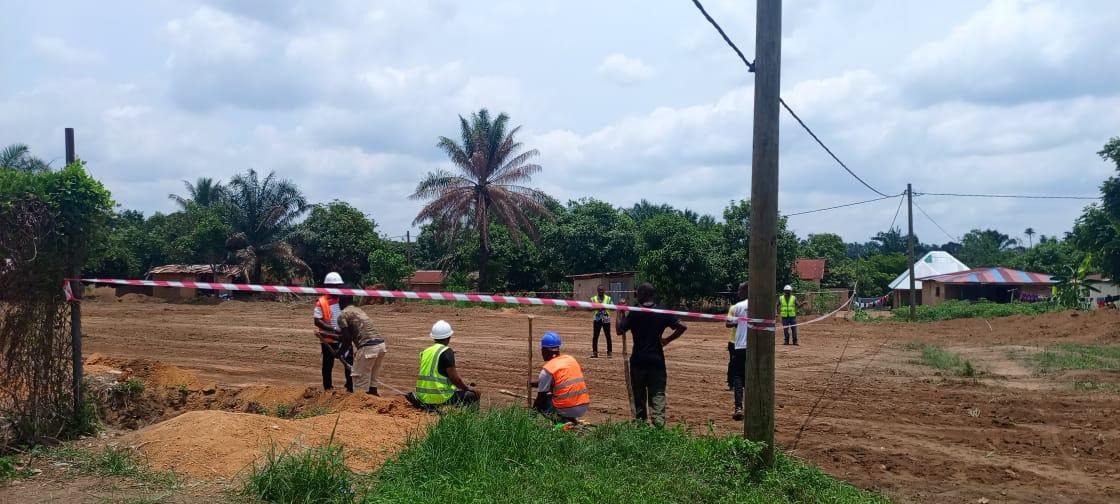
Olaniyan admitted that building such a pioneering city came with challenges, from sourcing specialized equipment to navigating logistical bottlenecks.
“Every groundbreaking project comes with challenges. For us, it was infrastructure readiness and logistics. But we saw them as opportunities to adapt and innovate — that’s the Siatech culture.” he said.
Looking back, Olaniyan sees the Liberian Solar City as more than a milestone — it’s a proof of concept for what’s possible across Africa.
“What we built in Liberia is a scalable model for Africa’s renewable future. It shows that we can design, build, and sustain our own smart, green communities,” the Siatech boss stated.
As the solar panels now glisten under the Liberian sun, Siatech’s vision of a self-sustaining, solar-powered community stands as a living testament to what’s achievable through conviction, collaboration, and courage.
“The sun has truly risen on Africa’s next chapter,” Olaniyan said with a quiet smile, reflecting on a project that began as an idea — and became a model for the continent’s sustainable future.
See also: Yabatech secures N200m grant to develop solar-powered aquaponics system
