


The Association of Telephone, Cable TV, and Internet Subscribers of Nigeria (ATCIS) has rejected the proposed telecom tariff hike of not more than 60 per cent, which is being deliberated by the federal government. This follows an earlier statement by the Minister of Communications, Innovation, and Digital Economy, Bosun Tijani on the tariff hike development.
Recall we reported on Friday that the minister, during a recent interview on Politics Today with Channels Television on Wednesday, said that the tariff hike would be between 30 and 60 per cent, noting that emphasis is on the need to balance the sector’s sustainability with affordability for Nigerians.
While reacting to the minister’s statement, the Group pointed out that the plan contradicts an earlier agreement reached with the Nigerian Communications Commission (NCC) and key stakeholders in a meeting held on January 9, 2025.
Speaking for the association that represents over 220 million subscribers nationwide, the ATCIS-Nigeria’s National President, ‘Sina Bilesanmi, via a Sunday press release explained that the agreement reached was that all stakeholders including subscribers would be adequately consulted before any tariff hike would occur.
“Telecom operators need to respect the telecom subscriber advocacy body and the NCC Act. The NCC should direct telecom operators to engage with ATCIS first for consultation, involvement, enlightenment, and engagement,” he expressed.
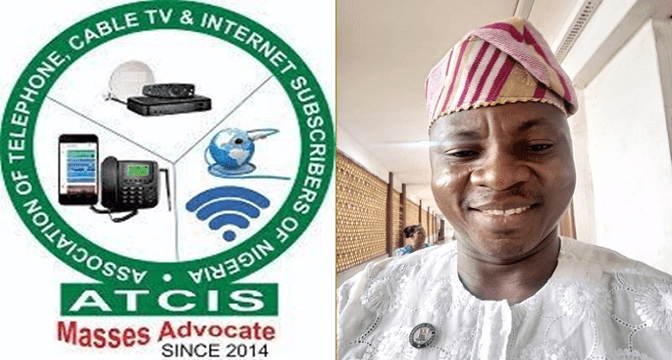
Bilesanmi noted that to respect due process, there should be a public opinion where members of the public let in their voice for approval following stakeholders’ agreement on a percentage.
“Once we reach an agreement, we can call for public input on the percentage rate and communicate this to the NCC for approval. Any deviation from this process is unacceptable, as subscribers are the ones paying for the services,” he added.
Bilesanmi further explained that the January meeting with different telecom stakeholders where the minister was at present agreed that there would be no tariff hike until further deliberations were concluded with mobile network operators and subscriber representatives.
“The MNOs, through their representatives at ATCON and ALTON, were tasked with organizing enlightenment programs to address these issues. They were also expected to discuss potential percentage increases with subscriber representatives before taking it to the NCC for final approval,” he added.
For several weeks, the Nigerian government has been deliberating on the telecoms tariff hike that would see charges per minute for voice calls, SMS, and a megabyte of data increase. This follows demands by telecom operators on the need for tariff increases to maintain sustainability and cover rising operating costs.

In his interview, Bosun Tijani noted that decisions on tariff adjustments must be evidence-based and guided by independent reports, citing the one recently concluded by KPMG. He added that the government’s goal is to ensure the sector’s sustainability without neglecting the betterment of Nigerians.
“I think it shouldn’t be more than 30 to 60 per cent,” Tijani said on the tariff increase percentage threshold.
While telecom operators were pushing for a 100 per cent tariff increase to stabilize the telecom sector, the federal government has argued that such a huge increase would not be approved as any adjustment must not inconvenience subscribers.
Subscribers bearing the telecom tariff hike costs
In defence of Nigerians, the ATCIS-Nigeria Chief, insisted that the minister should not unilaterally make pricing decisions but should follow proper regulatory channels. He argued that subscriber advocacy bodies like ATCIS must be involved in tariff hike decisions alongside data-driven analysis.
“We strongly disagree with the minister’s proposal. It is not the minister’s role to set telecom prices in a liberalized market,” Bilesanmi said.
In addition, he emphasized how the tariff adjustment would affect Nigerians where small business owners who depend highly on affordable telecom services to run their operations stand to bear more costs. He also raised concerns that the increase will place more financial burdens on subscribers who are already economically affected by other financial reforms in the country.
“The government’s push for a digital economy cannot succeed if we burden Nigerians with higher telecom costs. This will have a devastating impact on businesses that depend on affordable communication services to thrive and will ultimately slow down progress in digital transformation across the country,” Bilesanmi expressed.
While concluding, he urged the Nigerian government to make consultations with every stakeholder a priority to align with the affordability of subscribers telecom operators seek to serve.

As the consideration of subscribers’ affordability lingers with more debate, questions have been frequently asked on whether the government prioritizes the profit of the telecom sector over the affordability of Nigerians. Minister Bosun Tijani explained that the government highly considers the burden on the people which is why the tariff hike will not be 100 per cent as requested by telecom companies.
“We’ve already made it clear we are not going to approve a 100 per cent. These companies are asking for 100 per cent stating clearly that this is what they believe they need to get. But what we are looking at in terms of the sustainability of the sector is that if this is a sector that is responsible for driving growth in our country it would be harmful to our people to allow them to increase by 100 per cent,” the minister noted.
Notably, the Nigerian Federal Competition and Consumer Protection Commission (FCCPC) has also joined forces with the NCC in a bid to protect Nigerian telecommunication consumers from the exploitative tendencies of telecom operators.
In the agreement signed last week, the regulators explained that the synergy between both bodies is critical to ensuring comprehensive oversight and consumer protection without regulatory conflicts or duplications.
Read More: Amid tariff hike demands, FCCPC, and NCC join forces to protect Nigerians from telco exploitation.
