


In 2022, a seismic shift rattled the cryptocurrency world. Collapses of major platforms like FTX and Luna, coupled with a devastating cyberattack on Nigeria’s Patricia exchange, eroded trust in centralised crypto systems.
Amid that turmoil, a vision emerged to create a platform that prioritised user control and security. This vision birthed Zap Africa, a non-custodial crypto platform designed to empower Africans with complete ownership of their assets.
“The vision for Zap started with a simple but essential idea of giving users complete control over their assets,” the Zap team, founded by Tobi Asu-Johnson and Moore Dagogo-Hart, recalls, reflecting on the catastrophic events that underscored the need for a safer, user-first alternative.
The problem Zap sought to address was clear: people lost not only money but also faith in crypto platforms. The collapses exposed the vulnerabilities of centralised systems, where users often had little recourse when platforms failed.
Zap’s founders aimed to build a solution where users would never fear losing their funds due to a company’s downfall. “We wanted to build something secure, self-custodial, and user-first from the very beginning,” they explain.

This commitment to non-custodial infrastructure, where users hold their private keys, became the cornerstone of Zap Africa’s mission to restore trust and autonomy in crypto.
The early days of Zap Africa
Zap Africa’s early days were marked by scepticism. The concept of a non-custodial crypto platform was unfamiliar to many, and the platform’s initial version was far from polished.
“In the early days, there was a great deal of doubt. Many people didn’t fully understand what we were trying to build,” the team notes. The first six months saw modest sign-ups, but active usage lagged as users grappled with the unfamiliar model. The platform, initially a minimum viable product, prioritised function over form, which sometimes obscured its potential.
To bridge this gap, the Zap team leaned heavily on education and engagement. They reached out through calls, newsletters, direct messages, and community conversations to demystify the platform’s mechanics.
“We knew the challenge was not only about the product but also about education,” they emphasise. Simultaneously, they iterated on the product itself, addressing limitations and incorporating user feedback.
As the platform grew more stable and intuitive, users began to engage more actively, recommending Zap Africa to others and trading with confidence. This gradual shift from scepticism to adoption marked a critical early milestone.
The team’s division of focus provided stability during these formative months. Moore Dagogo-Hart, the co-founder and CTO, concentrated on product development and engineering, ensuring a robust technical foundation. Meanwhile, Tobi Asu-Johnson, the CEO, drove growth, partnerships, and brand-building efforts.
That synergy allowed Zap Africa to navigate Nigeria’s complex regulatory landscape while staying true to its non-custodial ethos, even when that choice demanded difficult trade-offs.
“Zap has always kept the same name, but the look and perception have evolved,” the team reflects, underscoring their commitment to refining the platform without compromising its core principles.
From wallet to financial command centre
When Zap launched in 2022, its primary function was to enable users to hold their assets securely without third-party custody. However, the platform’s scope quickly expanded.
“Since then, the product has grown well beyond its first version,” the team states. Zap evolved from a basic wallet to a comprehensive platform enabling users to convert crypto to Naira, trade without centralised exchanges, and integrate crypto into everyday transactions.
This evolution reflected a broader shift in user behaviour. As people grew more comfortable with the non-custodial model, they gained confidence in managing their funds independently.
“People are becoming more comfortable with the non-custodial model, gaining confidence in managing their funds, and sharing that experience with others,” the team observes. This organic adoption, driven by user trust and word-of-mouth, became a key indicator of Zap’s progress. The platform’s ability to simplify crypto for everyday use, whether for payments or trading, marked a significant leap forward.
A pivotal moment came when user feedback highlighted the complexity of using crypto for daily spending. “One of the most significant issues we discovered was how stressful it was for people to use their crypto for everyday spending,” the team recounts.

Simple transactions often require multiple steps, from moving funds to an exchange to navigating peer-to-peer systems and finally reaching a bank account. This insight prompted Zap Africa to streamline its functionality, making it easier for users to spend and trade crypto seamlessly.
The team’s responsiveness to user needs improved the product and reinforced their commitment to a user-first approach.
The rebranding of Zap
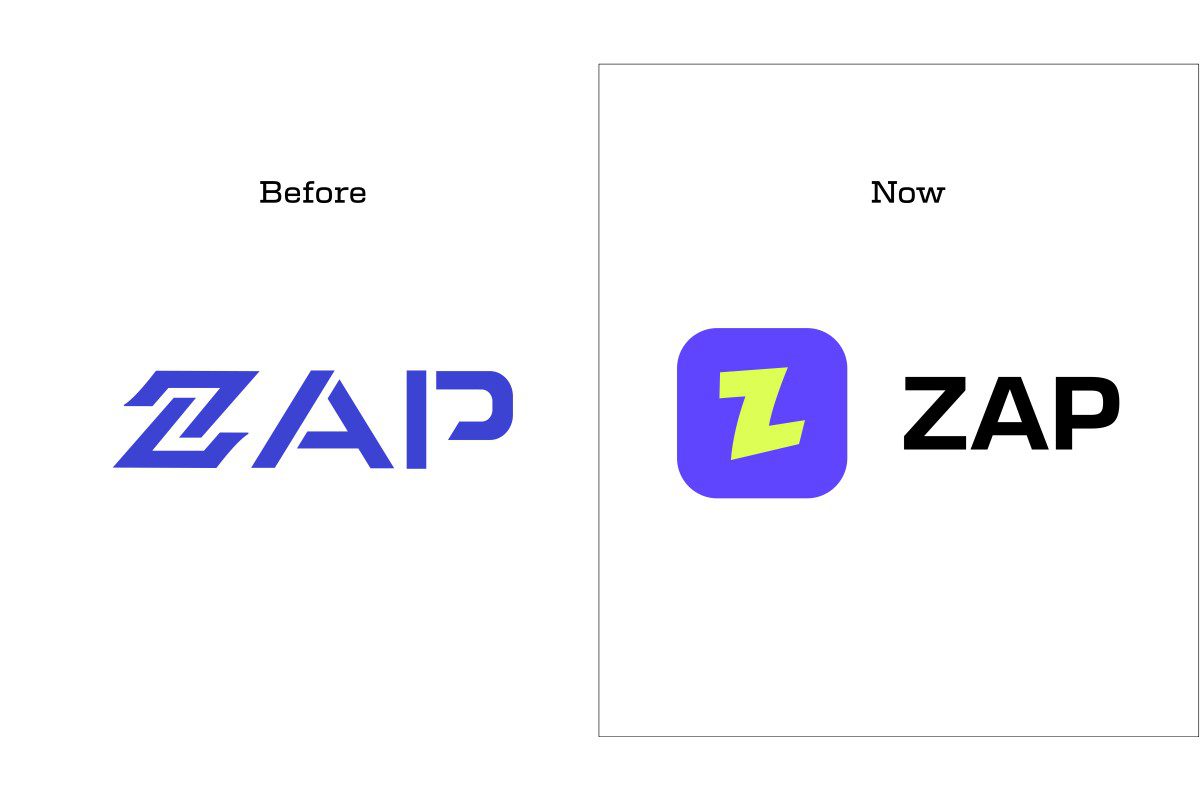
By 2024, Zap had outgrown its initial identity. The platform had matured, onboarding hundreds of traders and generating significant revenue, yet its visual identity lagged behind its ambition.
“Over time, it became clear that our visual identity no longer matched the energy, ambition, or precision of the product we were building,” the team explains. The decision to rebrand, initiated months after the 2024 mobile app launch, aimed to align Zap’s image with its reality as a movement for financial freedom in Africa.
Contrary to speculation, the rebrand was not a reaction to a trademark dispute with Paystack. “We know some people may assume the Paystack trademark dispute prompted the rebrand, but that is not the case,” the team clarifies.
The new identity had been in development for months, with the Zap Wallet beta released on March 15, 2025, as a public test of the refreshed brand. “This rebrand was never about sidestepping a disagreement. It was about stepping confidently into a larger vision,” they assert, emphasising their focus on building a lasting, scalable platform.
The rebrand went beyond aesthetics. Zap simplified its user experience, making the app less technical and more intuitive.
“We listened to feedback, observed how people were actually using the product, and redesigned the app to feel less technical and more intuitive,” the team notes.
In-app guidance, community updates, and a warmer brand tone enhanced accessibility, ensuring users could navigate the platform with ease. The core purpose, empowering users with control, remained unchanged, but the experience became lighter and more human.
Zap’s team takes pride in their decision to build a non-custodial infrastructure, despite its complexity. “One decision we’re most proud of is building a non-custodial infrastructure, even though it came with greater complexity for us,” they state.
This choice prioritised user autonomy, setting Zap Africa apart in an industry often cluttered with cumbersome platforms. By keeping the interface clean, fast, and intuitive, Zap ensured that crypto was accessible, not a chore.
“We have always stayed close to our community, listening, learning, and letting honest user feedback shape our roadmap,” they add, highlighting their user-driven approach.
Not every decision was flawless. Early iterations of the platform faced challenges, from clunky interfaces to user confusion about non-custodial mechanics. However, Zap’s willingness to pivot and refine based on feedback strengthened its foundation. The team’s focus on education and iterative improvement transformed initial scepticism into growing trust, paving the way for broader adoption.
The future is: clarity, speed, and control
As Zap Africa enters its next chapter, users can expect a streamlined experience designed for clarity and control. “Zap has evolved from being just a place to trade into a true command centre for managing your crypto,” the team explains.
Features like faster logins, straightforward navigation, price alerts, saved wallet addresses, and clearer trade histories eliminate friction, making crypto management effortless for both new and returning users.
Zap’s long-term vision is to give Africans complete control over their crypto without reliance on centralised exchanges. “We want people to understand they have real alternatives,” the team declares.
This vision manifests through two core products: the Zap Exchange, which enables seamless crypto-to-fiat swaps from existing DeFi wallets, and the Zap Wallet, a self-custody solution for storing, swapping, spending, and sending assets. These tools position Zap as a leader in Africa’s financial future, empowering users to manage their money independently and securely.
Internally, Zap’s mindset has shifted toward scale and sustainability. “In the early days, the goal was simply to prove that we could build something functional. Now the focus is on creating something built to last,” the team reflects.
That involves designing systems that are trustworthy, user-friendly, and aligned with the mission of financial empowerment. CEO Tobi Asu-Johnson encapsulates this commitment:
“The new Zap is a commitment to give people genuine control over their money while proving that African-built products can be simple, secure, and designed to scale.”
CTO Moore Dagogo-Hart echoes this sentiment, describing the rebrand as “a more refined expression of our original vision—a model built entirely to give users greater control, with faster transactions, easier access to their data, and a seamless, visually appealing interface.”
