


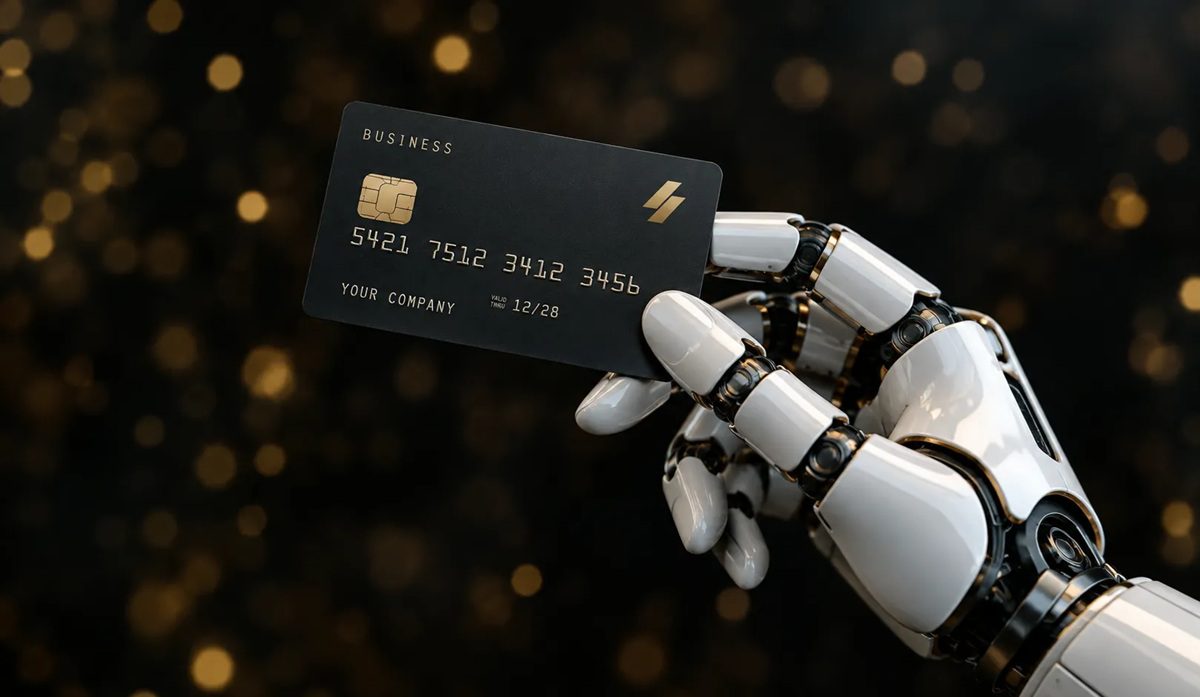
Imagine you could ask an AI assistant to book a flight, find a hotel for you and handle the payment using your bank account. Instead of manually searching websites, comparing prices, and entering your card information, this assistant handles everything.
This scenario illustrates the capabilities of advanced digital agents. Unlike chatbots that merely answer questions, these agents can perform tasks, make decisions on the fly, and connect with various online services with little human involvement.
For banks and financial services, this new dynamic brings risks. A payment might seem legitimate, coming from a real customer’s account with valid credentials that pass security checks, but the account owner might never have intended to make that payment.
This is a significant issue for the global payments sector, and banks and fintech companies in Nigeria cannot ignore it. At Nigeria Fintech Week 2026, discussions around this topic were prominent. During a panel discussion titled “Artificial Intelligence at Work,” leaders from VFD Technologies, CBI Technologies, and Advansio explored how fintech companies are leveraging technology for fraud detection, making credit decisions, and improving customer service.

They also expressed concerns about the pitfalls of relying on inaccurate data and trusting computer-generated responses without verification. An important trend to watch is how technology is shifting from simply supporting financial institutions in making decisions to beginning to carry out transactions on its own.
When AI can move money, who permits it?
The difference between traditional methods and AI agents is important. For example, a fraud detection system might flag a suspicious transaction for a bank employee to check. In contrast, an AI agent can be set up to pay a supplier every month, buy groceries within a specified budget, or find the cheapest way to send money abroad. The customer gives it a task, and the agent takes care of the details to finish it.
A note from the International Monetary Fund (IMF) in April 2026 explained that this could change how payments are made. Instead of a person having to approve every transaction, software could follow instructions and interact with payment services independently.
Federal Reserve Governor Christopher Waller discussed this in September 2026, highlighting two models: one where a person shops and pays themselves, and another where an agent shops and pays on behalf of the person. The second model poses greater risks.
For instance, if a customer lets an agent use a virtual card to buy groceries for under ₦50,000, what if the agent misunderstands and buys something more expensive or follows a bad instruction? The bank might see a valid transaction but not realise the customer never approved it.

Waller pointed out that authentication, fraud, and liability are key challenges. Banks need to determine not just who owns an account, but whether the software has permission to make a certain payment. The issue now is whether the agent is acting according to the customer’s wishes.
Read as well: Jumia Nigeria CEO Temidayo Ojo explains the costly mistakes behind $2.2bn in accumulated losses
This is especially relevant in Nigeria, where digital payments are widespread. According to the CBN’s 2025 fintech report, Nigeria processed nearly 11 billion transactions through real-time payment channels in 2024, up from five billion in 2022. Over a quarter of electronic transactions were done through these channels.
The same report showed that 87.5% of fintech companies use technology for fraud detection, while 62.5% use it for customer service, and 37.5% for credit scoring and risk assessment. These numbers indicate that technology is already embedded in Nigerian finance, but allowing an agent to handle payments requires new levels of control.
The hacks are a warning about what can go wrong
The CBN’s Nigeria Payments System Vision 2028 puts fraud losses across banking and payment channels at ₦25.85 billion in 2025, down from ₦52.26 billion in 2024. While that is a significant improvement, billions of naira are still being lost.
Recently, Lendsqr CEO Adedeji Olowe warned that many banks and fintech companies in Nigeria are being targeted by cyberattacks. In an advisory on November 6, he described various attempts to steal information and break into systems. For instance, some criminals managed to use accounts that only contained zeros to receive stolen money, passing them off as legitimate accounts.
These attacks show vulnerabilities that could worsen if technology is allowed to directly handle money transfers. The global cryptocurrency sector has faced several costly security breaches this year, including a major incident at Binance on October 29, where attackers compromised about $6.34 billion in digital assets. Binance managed to recover around $2.85 billion. Other incidents, like the KelpDAO exploit and the Bitget breach, also resulted in significant losses.
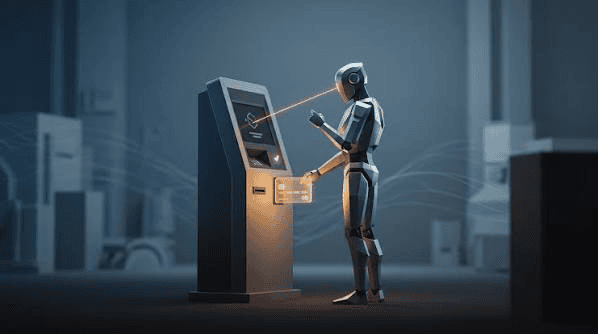
The risks are not just about hackers taking control. An automated payment system can also be tricked into making incorrect payments due to hidden instructions in emails or on websites. There’s also the issue of who takes responsibility when an unauthorised payment is made: should it be the customer or the institution that created the system?
According to Visa’s 2026 Stay Secure study, while 88% of Nigerian consumers have used AI for shopping, only 34% trust AI to handle payment checkout. This suggests that while people might be comfortable with AI for simple tasks, they’re wary of letting it manage their money.
For Nigerian financial institutions, adjusting to these changes will involve more than just implementing fraud detection systems. They need to ensure they verify the identity of automated systems, limit their spending capabilities, control the types of transactions they can perform, and allow customers to revoke permissions easily.

The CBN emphasizes that technology does not replace a financial institution’s responsibility to maintain strong controls and oversight. While automated systems can make payments faster and easier, it is essential that customers do not find out too late when something goes wrong with their money. Nigeria has worked hard to create an efficient payments system, and the next step is to ensure that when technology is used, it operates within clear boundaries.
