



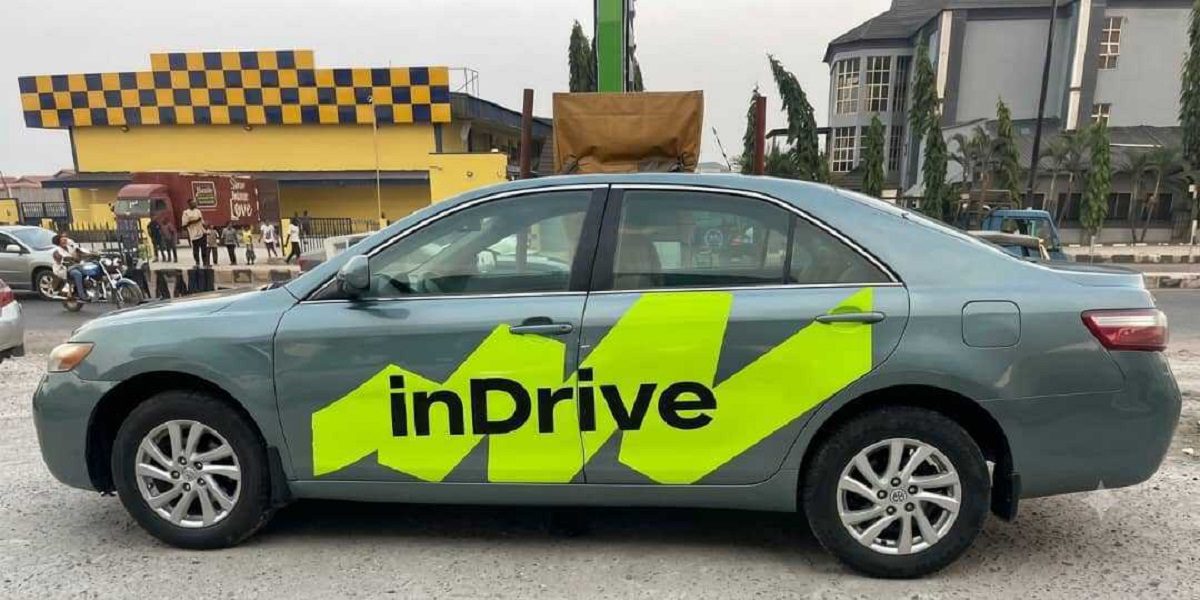
Following an analysis by Technext of inDrive’s Terms of Use, which found that the e-hailing company excludes itself from any form of liability to drivers and riders, the company has confirmed that it is now reviewing its Terms of Use for both drivers and passengers in Nigeria.
Read about it here: Liability clause: AUATON demands accountability from inDrive or risk mass driver exit
The company disclosed this in a statement sent to Technext, stating that while it appreciates public engagement with its policies, the analysis was based on an outdated version of its Terms of Use (ToU). The company said that the document is currently under review and will officially cease to be valid on October 30, 2026.
“As part of our ongoing commitment to greater transparency, fairness, and a more balanced legal framework, we have introduced revised Terms of Use across several African countries, including Nigeria, as well as in other key markets worldwide. Our users were formally notified of these updates on October 15, 2026, initiating a 15-day notice period ahead of the implementation date on October 30, 2026,” the company said.

Technext notes that the Terms of Use it reviewed were updated on July 23, 2026, a little over 2 months before the article was produced. Also, when it started analysing the terms, it was the only one available.
The company also confirmed that the document is still valid and will cease to be valid on October 30.
Technext’s analysis of inDrive’s Terms of Use
Technext examined inDrive’s Terms of Use and discovered that regardless of whatever happens before, during or after a trip, the company will not be liable or accountable to either its drivers or passengers. The terms, written by its legal team, have already been consented to by the thousands of drivers and riders who use the platform.
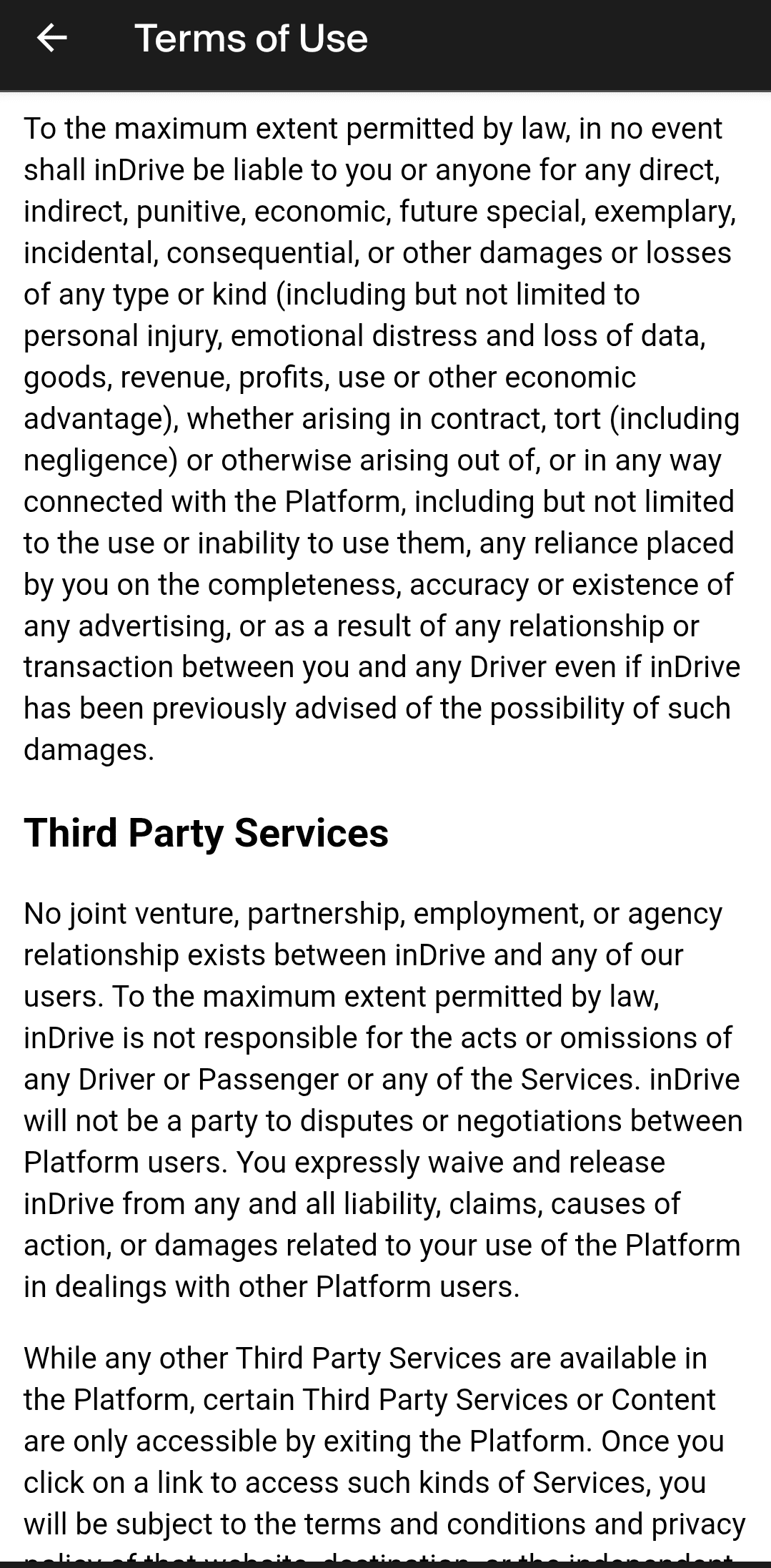
A section of the Terms states: To the maximum extent permitted by law, in no event shall inDrive be liable to you or anyone for any direct, indirect, punitive, economic, future special, exemplary, incidental, consequential, or other damages or losses of any type or kind (including but not limited to personal injury, emotional distress and loss of data, goods, revenue, profits, use or other economic advantage).
The indemnity section reads: You agree to defend, indemnify and hold inDrive and its affiliates, subsidiaries and their officers, directors, employees and agents harmless from any and all claims, demands, losses, liabilities, and expenses (including reasonable attorneys’ fees) arising out of or in connection with: (a) your use of the Platform or the Services; (b) your breach or violation of any of these Terms, any applicable law or regulation, or the rights of any third party (collectively, “Losses”).
Speaking about inDrive’s liability clause, Business Lawyer Tobi Adebowale explained that, in simple terms, the company has said that it only provides a middleman service and the driver bears all the risk for using their platform.
“If a rider sues inDrive and the driver, the driver bears the cost of the court case and has to pay inDrive the money the company spends on legal fees because of that court case. They have essentially denied responsibility for anything that goes wrong while the driver uses their platform and if they get involved in any dispute with a passenger,” he said.
But the company said it is about to change all that. According to its statement, the updated version will reinforce the core philosophy of its business model, which is fundamentally built around pricing autonomy and user agency.
It claimed that unlike traditional ride-hailing networks that rely on rigid, automated, algorithm-driven dynamic pricing, its platform champions a unique peer-to-peer negotiation model that shifts control back to the community.
“We believe it is essential that any public assessment of our policies reflects these updated provisions, which better represent our ongoing efforts to be responsive to our users’ needs and expectations. We remain deeply committed to engaging constructively with our riders, driver-partners, and media stakeholders as we continue to strengthen our policies, practices, and community trust,” the company said.
Technext checked out inDrive’s Terms of Use under review, and its Table of Contents now has a section (14) which outlines: What the company is responsible for; What it is not responsible for; Limits of its liability; and Responsibility between users.
However, the body of the document doesn’t reflect anything about this section yet. The document is clearly still under review, and one can only hope that by October 30 the full provisions will be made clear.
