





In late 2023, when the Federal Government set the target of building a $1 trillion digital economy by 2030, the ambition was set with numbers: sustaining an estimated 10% to 12% annual GDP growth, achieving 95% digital literacy, and moving from roughly $250 billion–$375 billion to $1 trillion by 2030.
Nigeria’s potential to achieve a $1 trillion digital economy (in terms of Gross Domestic Product) by 2030 will be tested as major projects that define its pace enter their deployment phase this October.
With the digital economy (technology and digital innovation) as core drivers, achieving this ambition means expanding broadband and telecom infrastructure, building digital literacy, leveraging AI for non-oil growth, boosting revenue collection, and scaling job creation.
This article spotlights projects the federal government is rolling out in October and how each will impact the $1 trillion digital economy’s pace.
1. Project BRIDGE fibre rollout
Unveiled: August 2025
Completion (Expected): 2030
Project Bridge is a national fibre backbone initiative that aims to add 90,000km (from 35,000km to 125,000km) of fibre-optic cable. With this, FG wants to deliver the core physical connectivity required for a high-speed digital economy.
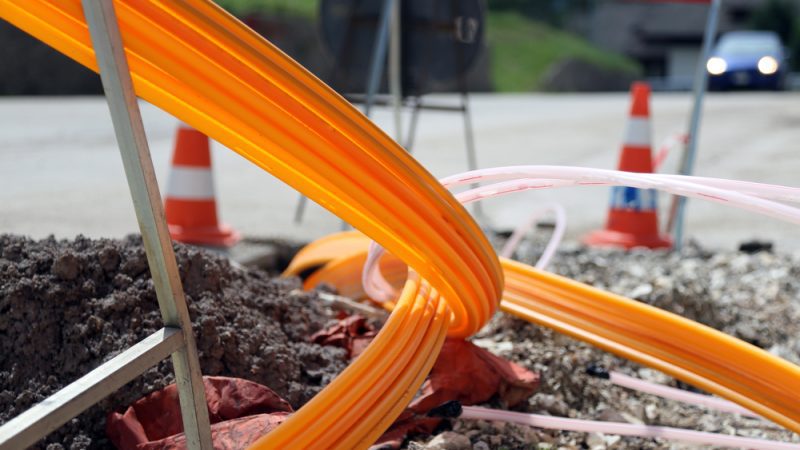
According to the Minister of Communications, Innovation and Digital Economy, Dr Bosun Tijani, the Project Bridge is set for deployment in October and will be rolled out in phases over five years. This follows the earlier incorporation of its special purpose vehicle, Bridge Open Access.
Impact on the $1 trillion goal: With over $900 million in funding already in the pipeline (though still short of the $2 billion funding plan), rolling out fibre optics drastically expands connectivity strengths nationwide and eliminates internet latency bottlenecks for individuals and businesses.
A fast and reliable internet accelerates inclusive digitalisation across banking, telecoms, cloud services, and e-commerce by allowing local tech startups and businesses to scale operations seamlessly within and beyond Nigeria’s borders.
Read Also: Why Nigeria is extending its $2 billion Project Bridge backbone to Burkina Faso.
2. Skills-to-Jobs initiative
Unveiled: September 2026
Completion (Expected): Late 2030
The $617 million iDICE Skills-to-Jobs, co-financed by AfDB, AFD, IsDB, and executed by the Bank of Industry, is an initiative that seeks to equip 300,000 Nigerian youths with market-ready tools and technical capabilities. It aims to reach 50,000 trainees per zone across all 6 zones, with a minimum of 40% female participation and at least 5% reserved for persons with disabilities.

Upon completion, the 5-year implementation programme is expected to generate upwards of 6.1 million jobs, build 66 innovation hubs, and support over 200 tech startups.
Impact on the $1 trillion goal: A key driver of GDP growth is valuable output. Shifting youths from informal work to technical roles such as software engineering, cybersecurity, data science, and AI development raises their income, expands their contribution to the national economy, and positions Nigeria as a top global destination for remote tech talent.
3. The digital postcode project
Unveiled: February 2026
Completion (Expected): December 2026
The digital postcode is a unique alphanumeric code that replaces the outdated postal system that barely functions. It seeks to establish a precise and nationwide digital address database across all 774 Local Government Areas (LGAs).
Using geographic information system technology, every location gets a unique code based on its precise coordinates. The project fixes identification and delivery gaps faced by e-commerce, emergency services, logistics companies and security activities. It’s an initiative that aims to improve how goods, services, and digital platforms reach Nigerians everywhere.

Impact on the $1 trillion goal: Unarguably, the ability to unlock a seamless e-commerce and logistics market requires accurate location verification. The digital postcode project eliminates address ambiguity, saves time, reduces logistics operational costs, improves delivery efficiency, and helps Nigerians verify physical residence.
4. 3,700 rural telecom towers deployment
Unveiled: December 2025
Completion (Expected): Mid/Late 2027
The federal government wants to install 3,700 telecom towers that bring an estimated 20 million rural and underserved Nigerians online, directly attacking the digital divide. While telecoms companies face significant cost bottlenecks in infrastructure rollout in rural areas, the government intervention seeks to connect rural communities to the world.
The full deployment is set to begin in October 2026, though initial installation phases such as in Delta State and near Abuja started ahead of the formal flag-off. It’s expected that 200 towers would be rolled out by December 2026.

Impact on the $1 trillion goal: Achieving digital economy expansion requires financial and digital inclusion for the millions of citizens in rural markets. Connecting these populations unlocks new consumer markets for fintech, agent banking, agritech and mobile commerce, drawing millions of unbanked citizens into the formal taxable economy.
5. 1,000 CNG stations infrastructure
Unveiled: November 2025
Completion (Expected): 2028
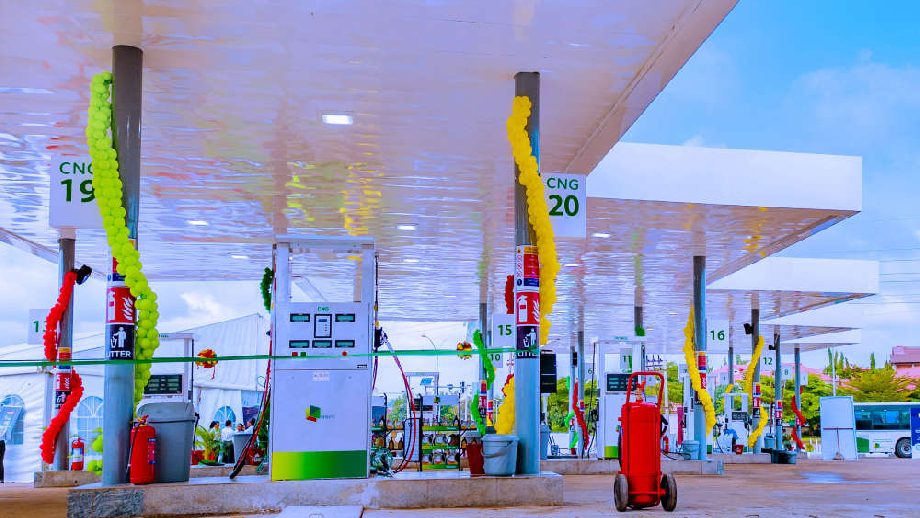
With the rollout of 1,000 Compressed Natural Gas (CNG) stations nationwide, the federal government wants to establish a cleaner and lower-cost energy alternative to already inflated petrol and diesel for mass transportation and commercial fleets.
During the unveiling in 2025, the project was set to capture 500 CNG stations. In August 2026, President Bola Tinubu ordered an additional 500, with the first batch set to be operational by late October 2026. The overall 3-year rollout completion is targeted for 2028 (three years from the late 2025 launch).
Impact on the $1 trillion goal: High transportation and energy costs directly drive up inflation, especially in a country where oil is a major economic driver. CNG stations provide a chance to reduce fuel costs for daily commuters, logistics providers, ride-hailing drivers, and e-commerce delivery networks. It also eases the cost of doing business and saves the digital economy from losses due to hiked fuel prices.
Project BRIDGE and Rural Towers provide connectivity, Digital Postcodes power the commerce and logistics pipelines, CNG infrastructure lowers physical distribution costs, and Skills-to-Job brings out tech talent.
But reaching a $1 trillion digital economy does not entirely rely on the above initiatives. Every major sector must operate with efficiency and an implementation blueprint.
